Fall seeding season is here.

UT Certified Lawn Care Professional Tennessee Turfgrass Association Member Turfgrass Water Conservation Alliance Member Nextdoor Neighborhood Favorite BBB A+ Accredited

Core Aeration & Liquid Aeration Service

Core aeration is the least aggressive way to create seed-to-soil contact for overseeding without damaging your existing grass. We combine mechanical core aeration with liquid aeration to improve moisture retention around the seed, giving your fall overseeding the best possible start.

TDA Charter #5537
TN Dept. of Agriculture
UT Certified
Lawn Care Professional
BBB A+ Accredited
Mr. Lawn Care LLC
Nextdoor Favorite
5+ Years Running

The primary reason we perform core aeration is not compaction relief, it is seed-to-soil contact. Core aeration is the least aggressive method available to create thousands of direct germination sites across your lawn without killing the existing grass stand. When fescue seed falls into those holes and is surrounded by soil on multiple sides, it has everything it needs to germinate: contact, moisture, and protection. The compaction relief is real, but it is temporary, soil settles back within a few weeks. The lasting benefit is what happens when you overseed immediately after.

We combine mechanical core aeration with liquid aeration on every job. Liquid aeration products improve moisture retention in the soil around the seed, which studies show speeds up germination, particularly in lawns without irrigation systems. Neither product alone is as effective as the two working together. The cores create the physical germination sites; the liquid aeration helps keep those sites moist long enough for the seed to establish. Both applications also provide a short-term boost to root growth in the weeks following the service.

High-traffic yards, the block party yard, the house where a kid is practicing soccer three to five times a week, genuinely benefit from aeration every spring and fall. For most lawns, once a year in the fall is the right call. Core aeration is not the silver bullet it is often marketed as, but it is absolutely the right tool for fall overseeding prep. When paired with premium Gold Tag Certified seed and proper post-seeding watering, it is the foundation of a successful annual lawn reset.

Why This Matters in Middle Tennessee

Middle Tennessee fescue lawns thin every single summer. The combination of heat stress above 90°F and the region's persistent fungal pressure, brown patch and dollar spot thriving in our humid, dew-soaked conditions, means fescue loses density every year without exception. That thinning is why annual overseeding is not optional here; it is essential maintenance. Core aeration is the best way to prepare for fall overseeding without damaging the existing grass stand, and fall is when fescue naturally wants to recover and grow. The clay soils throughout Maury, Williamson, and Davidson counties do compact and benefit from the physical channels aeration creates, but the real Middle Tennessee reason to aerate is to set up the best possible overseeding result.

Core aeration's real value isn't compaction relief, soil settles back within a few weeks. The lasting benefit is creating thousands of direct germination sites where fall seed is surrounded by soil on multiple sides, giving it the moisture and protection it needs to establish.

, AJ, UT Certified Lawn Care Professional

What's Included

  • Full-property core aeration with professional-grade equipment
  • Deep, clean soil cores (2.5 - 3 inches)
  • Double-pass aeration in high-traffic or heavily compacted areas
  • Marking of irrigation heads and invisible fences (if requested)
  • Coordination with fall overseeding (recommended)
  • Post-aeration care instructions

Get a Free Quote

Ready for professional aeration? Contact our UT Certified specialists today.

Request a QuoteOr call (615) 490-4082

UT Certified Lawn Care Professional

Tennessee Turfgrass Association Member

Turfgrass Water Conservation Alliance Member

Nextdoor Neighborhood Favorite

BBB A+ Accredited

By the Numbers

0"

how deep healthy fescue roots can reach in well-aerated soil

0 days

typical germination window when seed-to-soil contact is right

Real Middle Tennessee Results

Drag the slider to compare before and after a full treatment program.

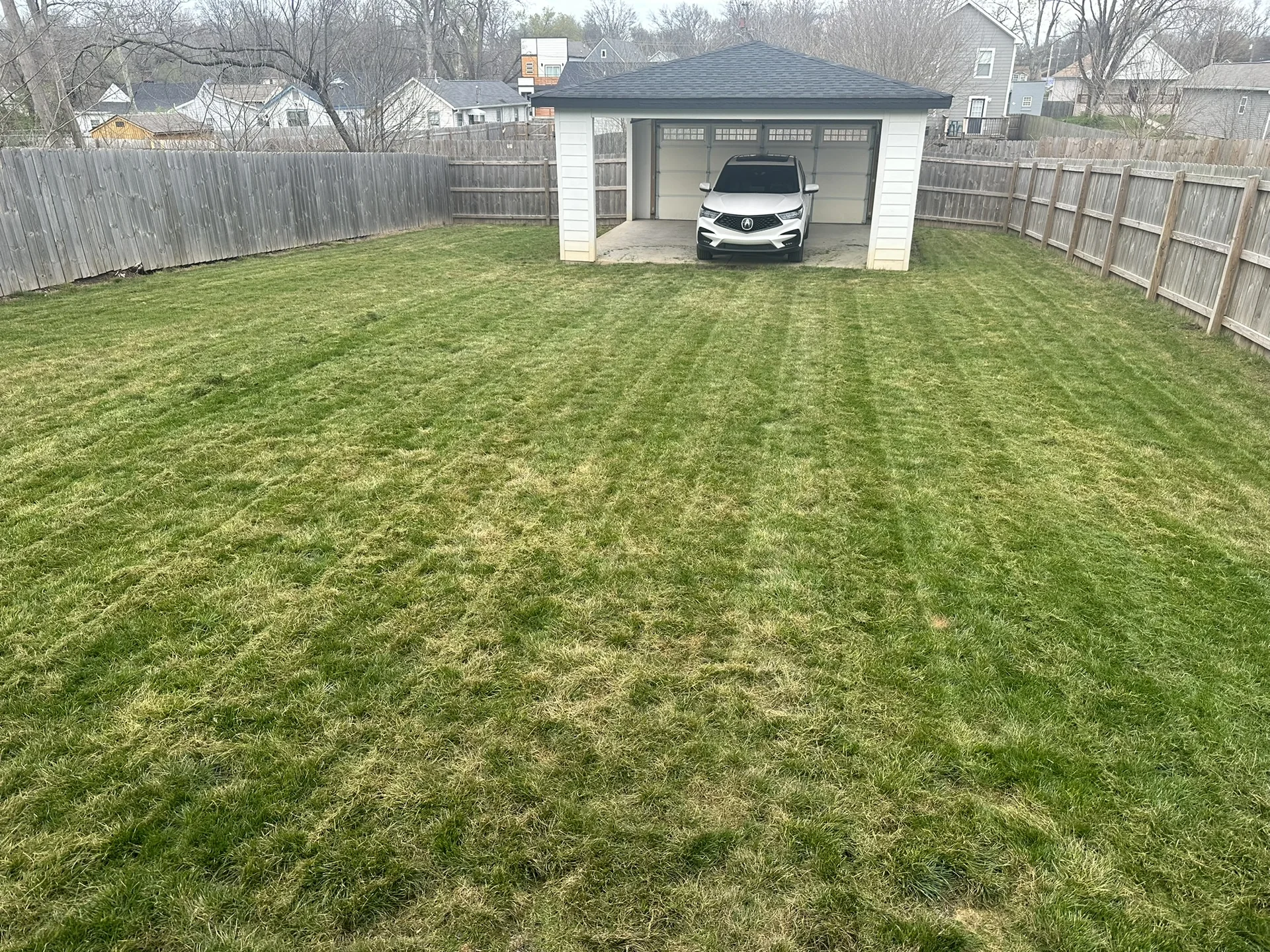
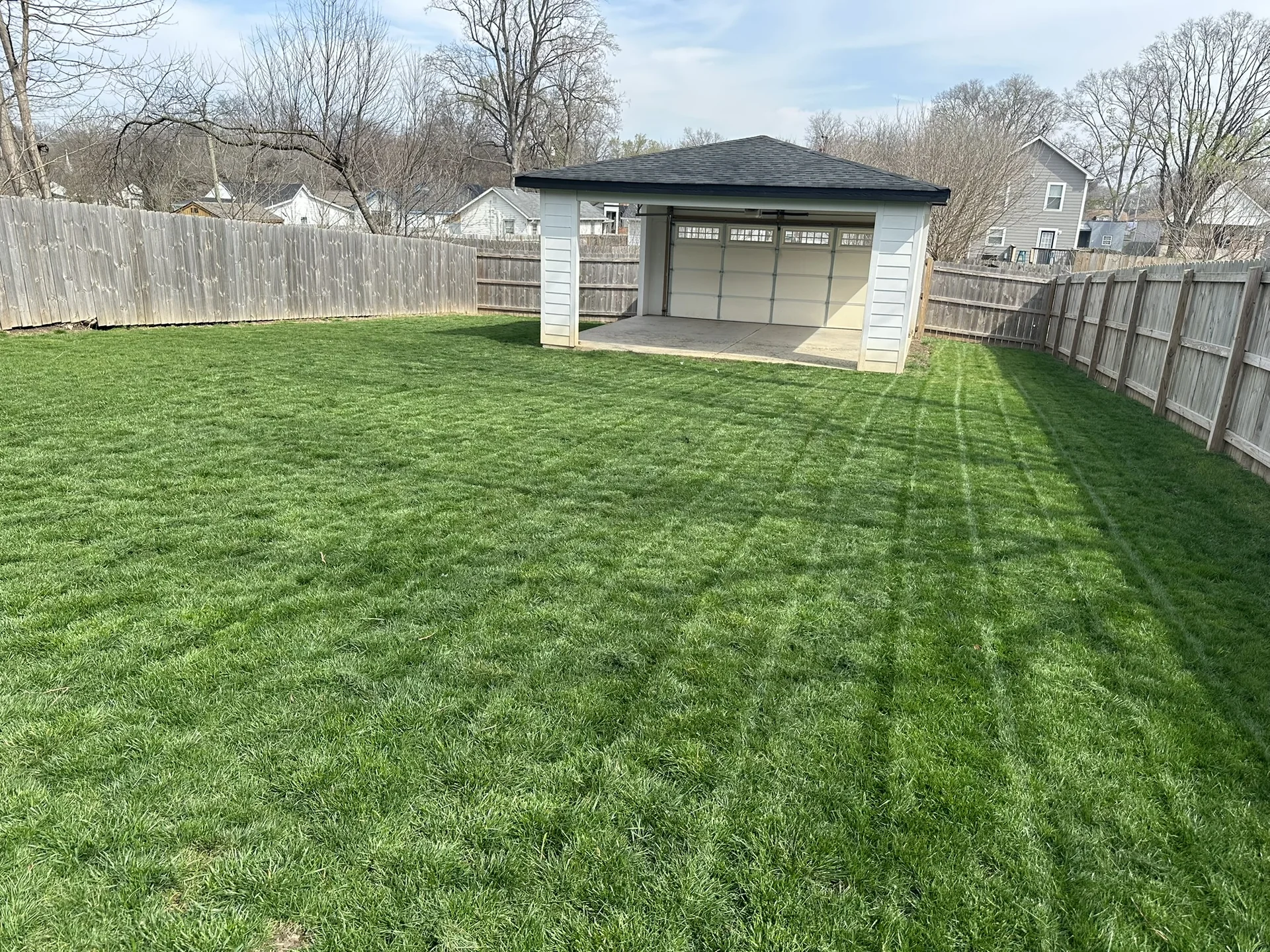
Thick striped fescue back yard in Middle Tennessee after a full year of Mr. Lawn Care treatment
After
Patchy thin back yard fescue lawn in Middle Tennessee before Mr. Lawn Care treatment
Before
← Drag to compare →

Middle Tennessee, regional guide

Spring Aeration Across the I-65 Corridor

What a standalone spring pass actually buys, which lawns genuinely earn one, and why most of my aeration still happens in September.

What a spring pass buys

A real green-up, and an honest expiration date

Every March the phone starts ringing from Pulaski to Belle Meade with the same question: should I aerate this spring? Most companies answer yes before asking anything about the yard. Here is my version. A spring core aeration does produce a legitimate green-up, and I have tested it. It runs a few weeks, six at the outside edge of what I have measured, and then it is gone.

Spring is the one window when the plant absorbs that kind of injury well. Fescue is putting on root and shoot growth at once, soil temperatures are climbing, and severing a few thousand roots per thousand square feet is something a healthy stand shrugs off and answers with growth. Pull cores in April anywhere along the I-65 corridor and you get darker color and a real flush.

What I will not do is pretend it lasts. What carries a Middle Tennessee lawn through July is root depth, cultivar genetics, mowing height, and whether the brown patch program holds once nights stay above 75 degrees and dew keeps the canopy wet twelve hours a day. In a Zone 6b to 7a transition climate, aeration does not buy heat tolerance. A spring pass will not change what your yard looks like two months later unless you seeded with it.

The numbers behind the pitch

What the research actually measures

15-30

Cores per square foot research puts at effective cultivation. One commercial pass delivers roughly half that.

0 wks

The outside edge of how long a standalone spring green-up has held in my testing. A few weeks is typical.

70%

Fewer cores per square foot from a big box tow-behind than from commercial equipment.

The compaction question

Real problem, right tool, much narrower audience than the ads suggest

Core aeration is the only practical way to relieve soil compaction without destroying the lawn in the process. Everything else that genuinely decompacts soil, tillage or a full renovation, kills the grass on the way through. So when a lawn is truly compacted, cores are the correct tool. I say that plainly because plenty of people now claim aeration does nothing for compaction, and that is not right either.

The honest qualifiers are density and duration. Research measures cultivation in cores per square foot, not passes, and one pass with a commercial spoon aerator delivers about half the recommended count or less. Going from one cultivation event a year to three cut soil bulk density 5 to 9 percent and surface hardness 5 to 19 percent. Real, modest, and repetitive. Across our clay counties the holes also close in weeks, not seasons. I walked through the core-density studies here.

The piece nobody selling aeration mentions: genuinely destructive compaction is uncommon in a lawn. Nature fights it constantly through root channels, soil biology, and the freeze-thaw cycling a Middle Tennessee winter delivers. Real compaction is almost always anthropogenic, concentrated repeated traffic in one footprint. Most of what gets called compacted soil around here is heavy clay behaving like heavy clay. Cores will not turn that into loam.

Who it is for

The two lawns that genuinely earn a standalone spring pass

They are the same two lawns in every town I serve. The first is the house that hosts: thirty pairs of shoes on the same forty feet of turf every other weekend, re-compacting that ground faster than a winter can undo it. The second is the kid, a soccer player on the same patch every evening from March through November. Dog runs count too.

Those lawns get two cultivation events a year out of a spring plus fall schedule, which is where the frequency research points, and I run two or three passes on them because core density is the entire point. There I am not selling a green-up. I am maintaining a surface people are actively wearing out.

If your yard is not that, a standalone spring aeration is a few weeks of color. That is a legitimate thing to buy and I will sell it to you. It is not a lawn improvement, and I would rather you hear that in March than work it out in July.

The companies that market aeration as a silver bullet are usually the same ones selling bugs in a jug, peptides, liquid micronutrients, and carbon. Grass does not need those things. I am telling you, it just does not.

AJ, UT Certified Lawn Care Professional

Sequencing

Spring cores raise crabgrass pressure, and that has to be planned around

Pulling cores in spring pushes crabgrass pressure up, and the mechanism is unavoidable. You expose buried seed to light right as soil temperatures cross the germination threshold, and you punch through the pre-emergent barrier, a thin chemical layer sitting in the very top of the soil profile. Aerate a lawn that got one February application and you may well spend June looking at crabgrass growing out of the holes.

That is not a reason to refuse spring aeration. It is a reason to have it done by somebody whose pre-emergent program can absorb it. Mine runs two passes, so the cores get sequenced against the applications instead of dropped on a barrier and hoped for.

The craft

How I actually pull cores

  1. Pass one, parallel

    Parallel passes, never circles. Circles crowd cores toward the inside of every turn and starve the outside radius, and if seed is involved you will read that pattern from the road for a season.

  2. Pass two, 45 degrees

    The second set runs at 45 degrees to the first, not 90. A diamond puts more holes per square foot on the ground than a square crosshatch, and more uniform holes means more uniform germination.

  3. Pass three, where traffic warrants it

    On a trafficked lawn the goal is core density rather than seed delivery, so I add passes until the count reaches something the research would recognize.

  4. If you are doing it yourself

    Rent the walk-behind unit. Those are heavy enough to pull a real two-inch core. The tow-behind aerators sold at the big box stores are a different machine: too light to penetrate our clay, with tine spacing so wide you get roughly 70 percent fewer cores per square foot. Water the lawn the night before either way.

Liquid aeration

What the liquid half honestly does

Liquid aeration goes down alongside the cores, and here is what it does rather than what the category gets sold as. It holds moisture in the top of the soil profile. Paired with seed that changes germination speed, not germination rate, which matters where most properties run no irrigation. On a standalone spring pass with no seed, moisture retention in the top few inches is the whole of it.

Where the value really is

Why most of my aeration still happens in September

I own an aerator because it is the least aggressive method on earth for getting seed into contact with soil, and that work belongs to late summer. Most of my volume is aeration paired with seeding, run alongside the early fall treatment.

Here is the honest accounting of what the holes contribute. Throw seed onto open ground and most of it comes in fine. I have never seen a tree drop an acorn with a core aerator attached to it. In my experience the holes buy 10 to 15 percent better establishment across a typical lawn. Where they change everything is under a mat: common Bermuda woven across the surface, heavy thatch, deep leaf litter. There the improvement runs closer to 75 or 90 percent, because a hole is the only route seed has to reach dirt.

So if you call me in March and yours is not a traffic lawn, the answer is not no. It is that the same money buys considerably more in September.

Aeration FAQ

Why is core aeration so important for Middle Tennessee lawns?

The most important reason is fall overseeding preparation. Fescue thins every summer in Middle Tennessee due to heat stress and fungal pressure, so annual overseeding is not optional, it is essential maintenance. Core aeration creates thousands of direct seed-to-soil contact points across your lawn, which is the single most important factor in successful germination. The clay soils throughout our region do compact and benefit from the physical channels aeration creates, but the compaction relief is temporary. The lasting value is what it does for your overseeding results.

What is the best time of year to aerate a fescue lawn?

Fall, September through mid-October, is the right time for the vast majority of Middle Tennessee fescue lawns. Here is why: fescue thins every summer from our heat and fungal pressure, and fall is the season when it naturally wants to recover and grow. Aerating and overseeding in the fall gives new seed the best germination conditions and the entire cool season to establish before the following summer. Spring aeration is beneficial for high-traffic yards that need extra help, but it can disrupt your pre-emergent weed barrier, so the timing requires careful coordination.

Should I leave the soil cores (plugs) on the lawn after aeration?

Yes. Leave the cores on the surface and let them break down naturally. They typically disappear within one to two weeks through rainfall and mowing. As they decompose, they return beneficial microbes and organic matter back to the surface, which helps break down the thatch layer over time. There is no need to rake them up.

Do I need to mark my irrigation heads or invisible fence?

Yes. While our operators are experienced, they cannot see what is underground. Please mark all irrigation heads, valve box covers, and invisible fence wires with flags prior to our arrival. This prevents accidental damage from the aerator tines and ensures we can cover your entire lawn without interruption.

Is liquid aeration as effective as core aeration?

Liquid aeration is not a replacement for core aeration, but we use both together on every job because they work better as a combination than either does alone. Mechanical core aeration physically creates the germination sites your seed needs. Liquid aeration improves moisture retention in the soil around those sites, which studies show speeds up germination, especially in lawns without irrigation systems. Think of it this way: the cores create the opportunity, and the liquid aeration improves the conditions. Together, they give your fall overseeding the best possible environment to succeed.

More Services

Mr. Lawn Care handles every treatment need your Middle Tennessee fescue lawn has, all from one specialist.

What Customers Say About Our Aeration

5.0·100+ verified reviews across Google, Yelp, Nextdoor & Facebook

T.P.

Spring Hill, TN

Google

AJ is a lawn expert. Mr. Lawn costs around what I was spending at Homedepot and lowes to buy my own misery. We started together late season of 2022. The yard was barely ok after 4 years of me trying. We had 1 acre of… Read T.P.'s full review

View on Google

A.C.

College Grove, TN

Google

AJ is a great guy with an incredible knowledge about lawn care. His focus is weed control, fertilization, aeration and overseed, etc....he doesn't mow. I'm glad he doesn't mow as he's laser focused on making your lawn… Read A.C.'s full review

View on Google

T.P.

Spring Hill, TN

Facebook

AJ is a lawn expert. Mr. Lawn costs around what I was spending at Homedepot and lowes to buy my own misery. We started together late season of 2022. The yard was barely ok after 4 years of me trying. We had 1 acre of…

J.S.

Spring Hill, TN

Google

We have used many different lawn treatment companies throughout our almost 15 years in the area. Last fall, we had grown leery of our old service. They were inconsistent in both communicating expectations and they did… Read J.S.'s full review

View on Google

J.H.

Arrington, TN

Google

I probably had the worst lawn on our street before I contacted AJ (Mr Lawn). But a few weeks after treatments began, the lawn has become much thicker and greener. A few of my neighbors even signed up after noticing the… Read J.H.'s full review

View on Google

P.R.

Arrington, TN

Yelp

I've been using Mr. Lawn (AJ) for over a year. I am new to the state and saw his signs in a few of my neighbors' yards. Their yards looked the best so I called him first. From the first phone call and throughout this…

Ready for Professional Aeration?

Get a free quote from our UT Certified team. We serve the entire I-65 corridor from Pulaski to Belle Meade, no contracts, no credit card fees.