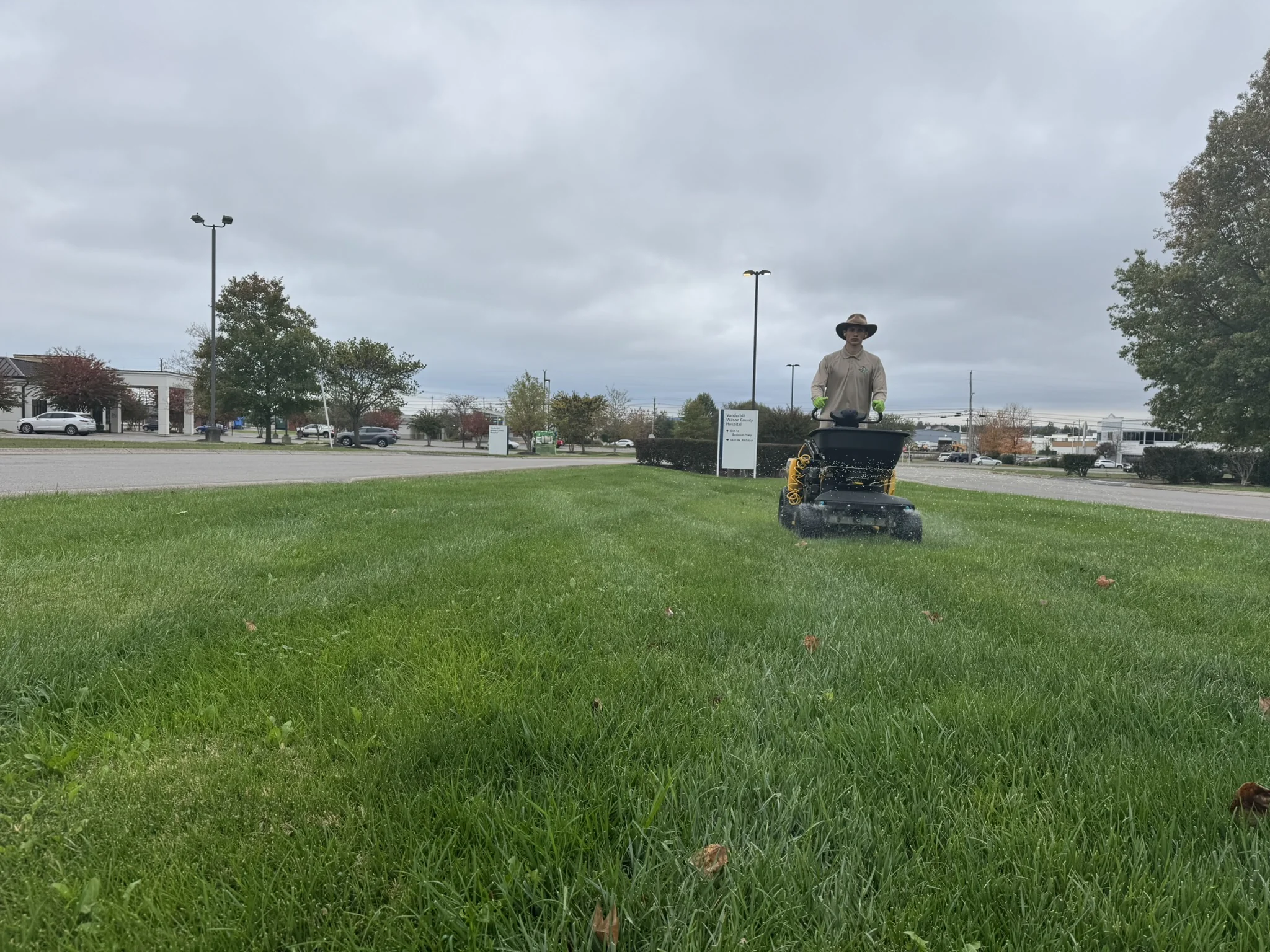
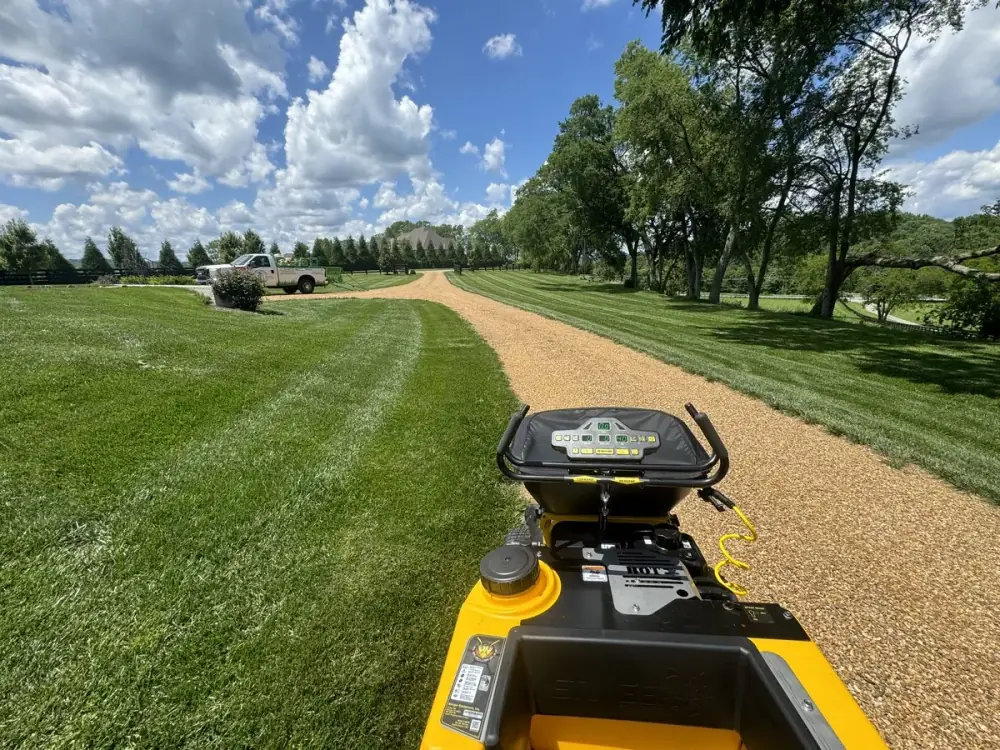
I own the machine because it is the least aggressive way there is to put seed in contact with soil, and that work belongs to late summer. Most of my volume is aeration paired with overseeding, sold in August and run alongside the early fall treatment.
Honest accounting of what the holes contribute: throw seed on open ground and most of it takes anyway. I have never seen an oak drop an acorn with a core aerator attached to it, and Fairview has no shortage of oaks proving the point. In my experience the cores buy something like 10 to 15 percent better establishment on clean ground. Where they change the outcome completely is under a mat, and out here that mat is usually a season of hardwood leaves rather than Bermuda. There the improvement runs closer to 75 or 90 percent, because a hole is the only route seed has to reach dirt.
Under a canopy, seeding is the fix and aeration is just the delivery. Shade thins a stand a little further every year, tree roots take the water the turf wanted, and tall fescue puts out short rhizomes but spreads so little that it cannot refill its own thin spots. How often you have to do it is decided by genetics, not by your soil. A stand on old cultivar genetics is on an annual reseed clock, while modern improved cultivars average about every three years in the same yard under the same mower, with Kentucky bluegrass (Poa pratensis) in the mix supplying the lateral repair fescue cannot manage alone. The genetics case for that mix is here.