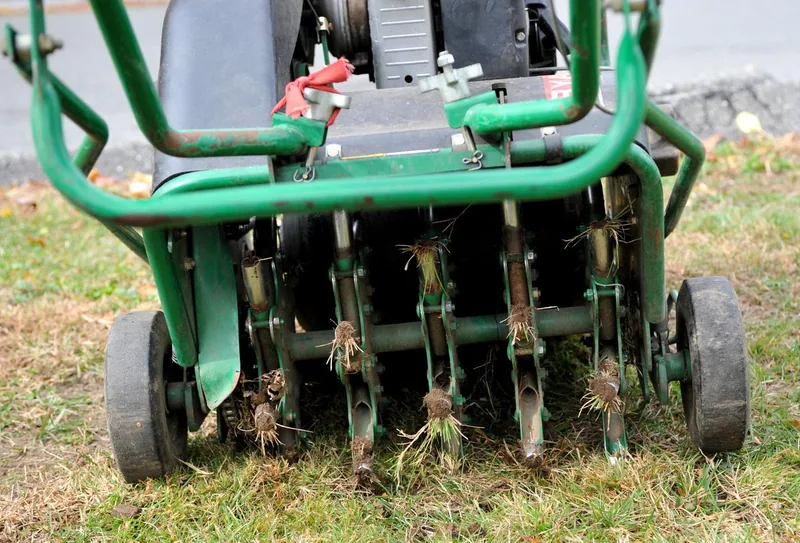
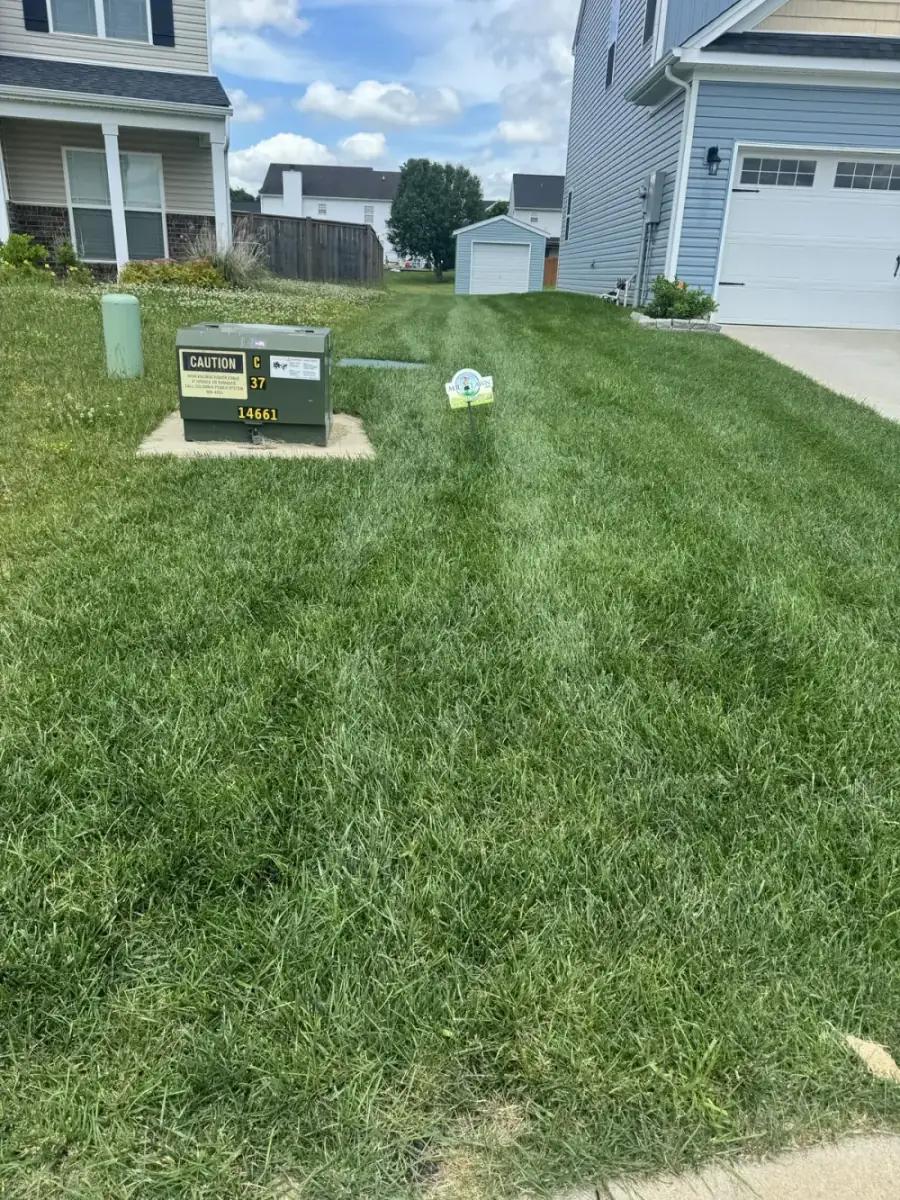
Core aeration is the only practical way to relieve compaction without destroying the lawn to do it. Everything else that genuinely decompacts soil, tillage or a full renovation, kills the grass on the way through. So when a lawn is truly compacted, cores are the right tool. I want to be clear about that, because plenty of people say aeration does nothing for compaction and that is not correct either.
The two honest qualifiers are density and duration. Research measures cultivation in cores per square foot, not in passes. K-State puts effective cultivation at 15 to 30 cores per square foot, and a single pass with a commercial spoon aerator delivers roughly half that or less. Two to three passes is what it takes to move the needle. The aerification frequency work backs this up: going from one event a year to three cut soil bulk density by 5 to 9 percent and surface hardness by 5 to 19 percent. Meaningful, modest, and it takes repetition. I laid out the core-density numbers here if you want the studies.
Duration is where Maury County clay gets a vote. Our holes close in weeks, not seasons. The clay swells, settles, and takes its shape back, which is why one pass a year is not a compaction program.
The last piece is the one nobody selling aeration will tell you: genuinely destructive compaction is uncommon in a lawn. Nature fights it constantly through root channels, earthworm and soil biology activity, and the freeze-thaw cycling a Middle Tennessee winter delivers in a Zone 6b to 7a transition climate. Real compaction is almost always something people did, concentrated repeated traffic in the same footprint. Most of what gets called compacted soil in Columbia is heavy clay behaving like heavy clay: slow to drain, tight when it dries, hard underfoot in August. Cores will not turn that into loam.