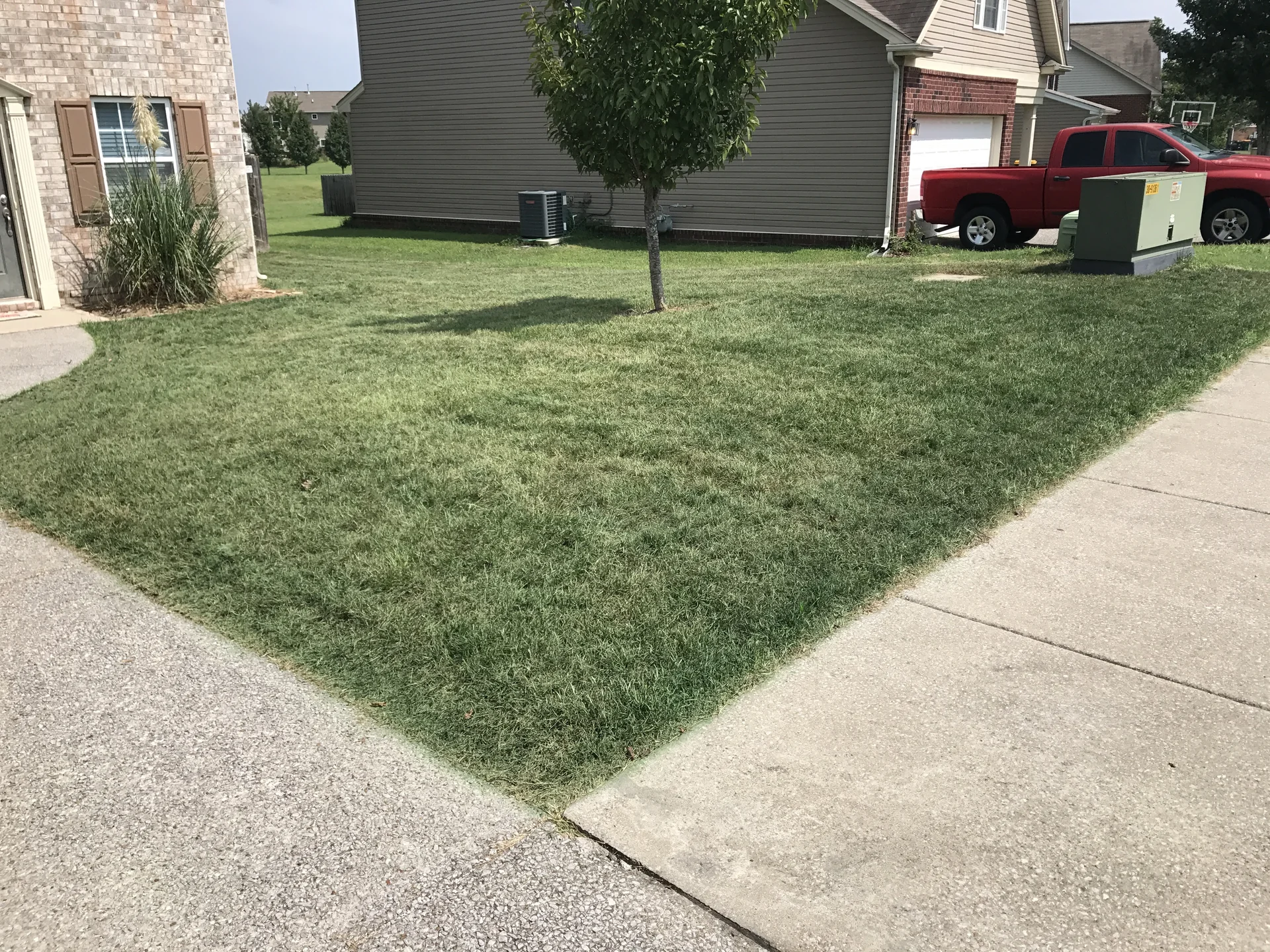
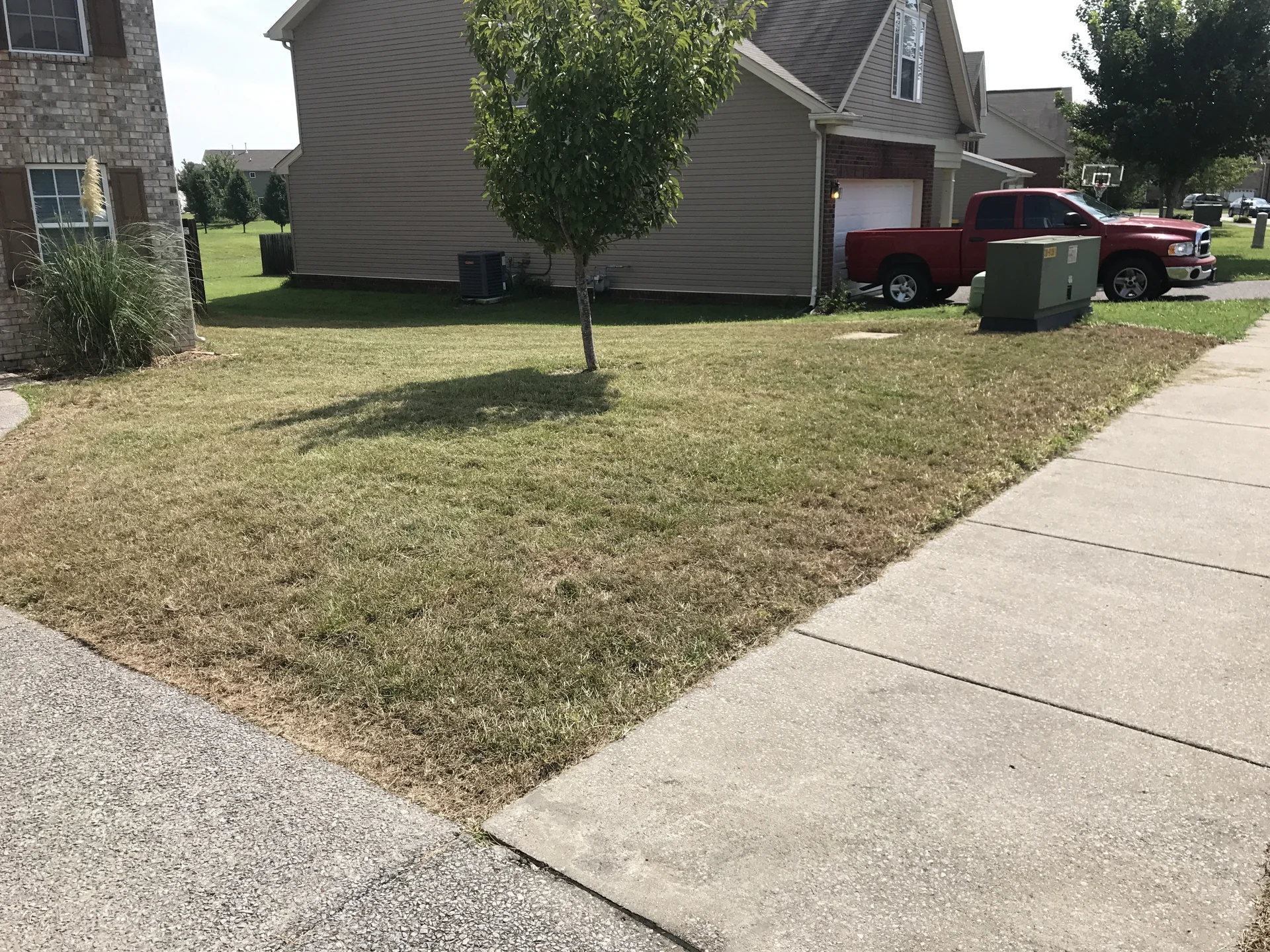
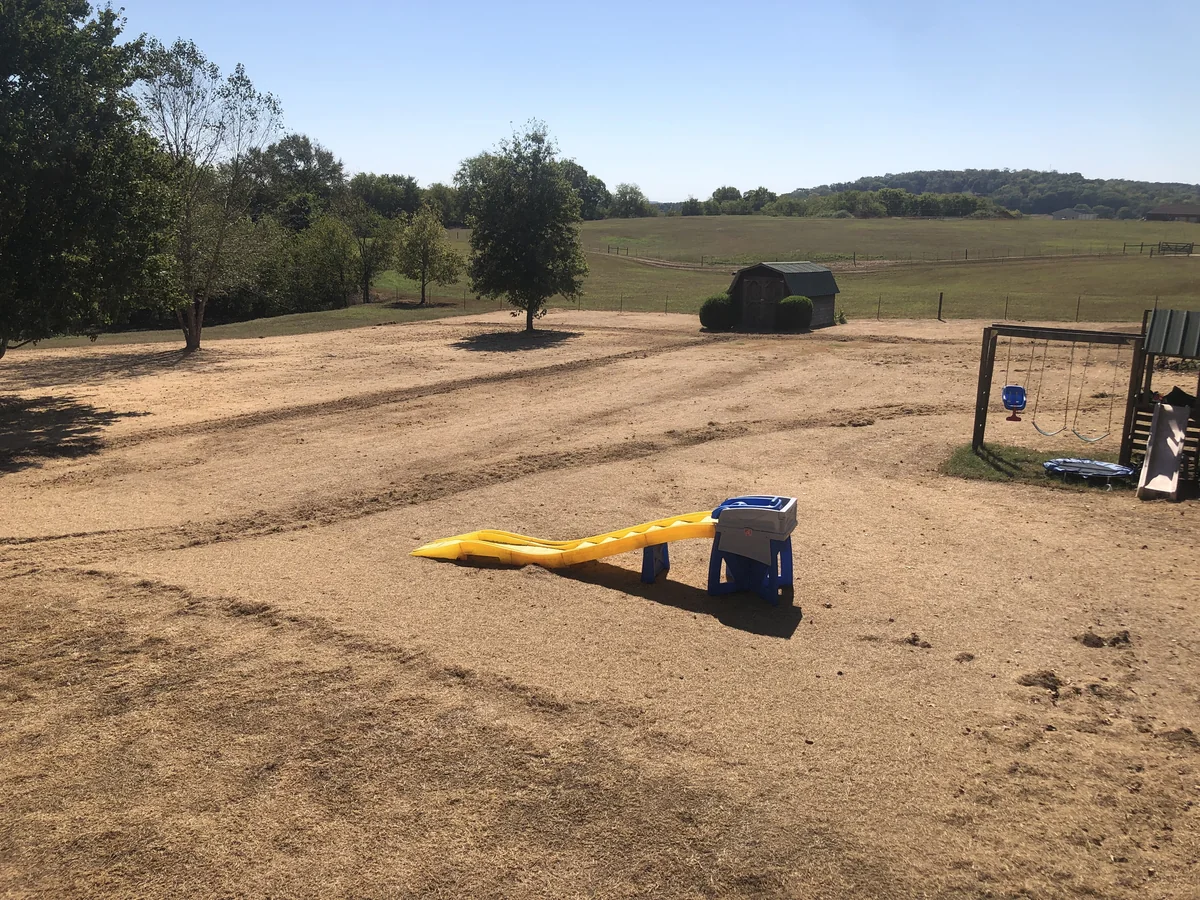
I buy Sod Quality Certified seed, the gold tag: roughly six times the sample size of blue tag seed, zero tolerance on noxious weeds, field inspections through the growing year, and third-party inspection at every transfer point. It is expensive and hard to source, which is why I contact 70 to 80 growers a year rather than buying a pre-made blend off a shelf.
The body of the mix is three turf-type tall fescues: Traverse 2 SRP, 4th Millennium SRP, and Triad. All three are on UT Extension's list of statistically top-performing tall fescues for Tennessee (NTEP trials). Traverse 2 SRP brings rhizomatous self-repair, improved brown patch resistance, and top turf quality marks in Transition Region trials. 4th Millennium SRP posted the highest overall quality of 116 varieties in a national NTEP trial, and its producer spec calls for mixing it with 5 to 10 percent Kentucky bluegrass, which is how I build the blend. Triad is the dark one: deep green, strong gray leaf spot and brown patch numbers, real traffic-stress recovery.
The bluegrass fraction is Barvette HGT, out of Barenbrug's Healthy Grass Technology program, and it is the component I would point at first. It is an aggressive transition-zone Kentucky bluegrass that establishes unusually fast for a bluegrass, which matters when you are asking it to knit into a fall seeding rather than a sod field. Its rhizomes are the self-repair layer of the mix, it has shown stand persistence and summer patch tolerance in transition-zone trials, and it makes up 35 percent of Barenbrug's Turf Blue HGT blend. I wrote up each cultivar here.