
L.F.
Arrington, TN
Great quality, superb customer service, and would highly recommend!
View on GoogleWilliamson County · Lawn Aeration & Seeding
Professional lawn aeration & seeding for Arrington homeowners, delivered by Middle Tennessee's UT Certified lawn treatment specialists.
Almost every lawn in Arrington started the same way: a builder, a grader, and a bag of contractor seed.
Kings Chapel is where I treat more turf than in almost any other single neighborhood on my route, and the yards around it tell the same story, HOA new builds on the eastern edge of Williamson County, decent construction, young families who actually use their backyards. That shared history matters more than most homeowners here realize, because a lawn seeded with a builder blend is running old genetics, and old genetics put you on a reseed clock of once a year instead of once every three. Add the airflow problem these neighborhoods were platted with and you get turf that loses plants every summer and has no way of putting them back. Fall is when you put them back.
Roughly half the builds I work here also have construction fill left in the soil, gravel the graders covered over and never pulled back out. It is genuinely hit or miss lot to lot, and where it is present roots stay shallow and heat stress compounds what the disease already took.
01
Tall fescue, Festuca arundinacea, does produce short rhizomes, but the lateral spread is minimal and shrinks further the lower you mow. A fescue plant lives and dies within an inch or two of where its seed landed. So when summer takes plants out, the stand does not close over the gap. It gets thinner, and nothing puts those plants back except new seed.
Arrington takes more plants out than open country does, and the neighborhood layout is why. These developments were platted with preserved tree lines sitting fifty feet off three-story houses, which leaves almost no airflow moving across the turf in between. Dew that has burned off an open lot by nine in the morning is still sitting on your grass an hour or two later. Brown patch, Rhizoctonia solani, wants leaf wetness plus night temperatures above 75 degrees, and this town hands it both.
How often you need seed comes down to genetics more than to any of that. A stand still running the blend your builder put down is old genetics and needs seed every year just to stay full. A stand rebuilt from modern improved cultivars averages about once every three years. Same yard, same mower, different plants. Which is why my question every August is one line: do you have enough grass where you want grass? If the answer is yes, skip it this year and keep the money.
02
Everybody waits for October. The humidity finally breaks, the nights cool off, and it feels like the moment to put seed down. It is late.
A grass seed does not need good conditions to start. It needs them about four weeks in. Put a fescue seed in a wet paper towel inside a ziplock bag in a dark drawer, no light, no soil, no nutrients at all, and it will still push three or four inches on nothing but the reserves in its seed pod. The seedling eats its own groceries first and only needs weather once those reserves are spent.
Seed that goes down the last week of August runs out of reserves right as September and October arrive, and it spends that whole window growing. October seed is still germinating as the same window closes. In Middle Tennessee that difference is three to six weeks of growth and a noticeably more mature stand heading into winter. UT Extension puts the preferred fescue window at late August through mid September in publications PB 1576 and W 160-F, and warns that late seeding produces immature plants prone to low-temperature stress. I laid the full case out in why late August beats October for fescue seeding.
There is no slack in that calendar. Germination takes five days minimum under perfect conditions and seven to fourteen in a real yard. And what you do this fall decides what the lawn survives next summer, because the root depth built in September and October is exactly what carries an Arrington yard through July heat and the disease pressure your tree lines create.
03
There are three certification levels on grass seed and most people have only ever seen the weakest one. The white tag on every bag is federal law, a statement of contents rather than a quality standard. Blue tag means a land-grant university verified the cultivar and tested it against thresholds for noxious weed, other crop, and weed seed. Gold tag, Sod Quality Certified, is what I buy: roughly six times the sample size, zero tolerance on noxious weeds, field inspections through the growing year, and third-party inspection at every loading and blending step. It is hard to source, and I contact seventy to eighty growers a year to build a blend out of it.
Right now that blend is three turf-type tall fescues, Traverse 2 SRP, 4th Millennium SRP, and Triad, with Barvette HGT Kentucky bluegrass as the ten percent. All three fescues are on UT Extension's list of statistically top-performing tall fescues for Tennessee (NTEP trials), and I chose them for brown patch resistance and traffic recovery, which is exactly what an Arrington backyard asks of a plant. Barvette HGT is the one worth dwelling on. It establishes unusually fast for a bluegrass, its rhizomes are what knit the stand together and give the lawn real self-repair, and it came out of Barenbrug's Healthy Grass Technology program, which stress-tests for the transition-zone persistence we need on this side of the county.
The alternative is what your builder used. Contractor mix is cheap fescue, often Kentucky 31, cut with annual ryegrass, and its entire job is to look green at the final walkthrough. Cheap seed traces back to a low standard of care in the production field, where weeds the grower could not control get harvested with the crop. Dallisgrass, Paspalum dilatatum, is the expensive one: Oregon seed testing classifies it as other crop seed rather than a weed, so it carries a higher allowable threshold. You plant it in fall, see nothing all winter, and meet it the next July as a coarse straight-bladed clump that takes me three to five years to clear. Johnson grass and quackgrass ride in the same way, and straw used as cover is worse than any of them.
04
I blend ninety percent turf-type tall fescue with ten percent Kentucky bluegrass, Poa pratensis, by weight. Bluegrass seed is much smaller, so ten percent by weight lands closer to thirty or thirty-five percent by plant count. That is the sod farm ratio, and it is no coincidence: bluegrass rhizomes are what physically hold a roll of sod together.
In Arrington that ratio earns its keep three ways. Overseeded ground blends into existing sod instead of leaving a visible seam. The lawn gains genuine self-repair, so a zero-turn divot or the hole left under a fallen limb closes in a month or two. And the bluegrass works as a disease firebreak, since brown patch spreads by plant-to-plant contact and some bluegrass cultivars are close to immune to it. In neighborhoods designed this tight, that firebreak is not a bonus feature. Research on tall fescue and Kentucky bluegrass mixtures shows lower brown patch severity than fescue alone, and stands built from at least seventy-five percent brown-patch-resistant cultivars cut disease severity seventy-one to eighty-three percent.
05
I have never seen an oak drop an acorn with a core aerator attached to it. Throw seed on open ground and most of it comes up anyway. In my experience the holes buy something like ten to fifteen percent better establishment across a typical lawn, which is real but modest. Where they change the outcome completely is under a mat. Common Bermuda, Cynodon dactylon, cannot hold in the shade your tree lines throw, so in Arrington it works in from the sunny edges instead: driveway aprons, sidewalk strips, south-facing front yards. Seed landing on that mat never touches soil. Punch it through and the improvement runs closer to seventy-five or ninety percent.
I run parallel passes, then a second set at forty-five degrees rather than ninety, which lays down a diamond and puts more holes per square foot on the ground. Seed drops through a metered seeder built into the aerator, straight into the open holes, instead of being flung by a spinner into the mulch beds and the driveway.
On compaction, here is the accurate version. Core aeration does relieve compaction, and it is essentially the only method that does so without tearing the lawn out to get there. What it is not is permanent, because the holes close within weeks, and it takes real core density: K-State puts effective cultivation at fifteen to thirty cores per square foot, and a single commercial pass delivers about half of that. I went through the core density research here. Genuine compaction is also narrower than the industry admits, since root channels and freeze-thaw cycling work against it all winter. The Arrington lawns that truly have it are the ones being re-compacted on purpose, the backyard that hosts every other weekend and the patch where a kid runs drills every evening. Those are the yards I also put on a spring pass through the standalone core and liquid aeration service. In fall, the holes earn their price on seed. Everything I put down is guaranteed to germinate within thirty days, and if an area does not come in, I re-aerate and reseed it at no charge.
Liquid aeration goes down with the cores as part of this service, and I would rather describe it than sell it. It holds moisture in the top of the soil profile, right at seed depth, through the weeks the seedling is still living off its own reserves. That buys germination speed, not rate. The same percentage of seed comes up either way; it just comes up sooner. On an Arrington lawn with no irrigation, that is the part that matters.
Middle Tennessee sits in the transition zone where both cool-season and warm-season grasses struggle. Fescue is the best choice for the region, but it requires annual overseeding to maintain density because it does not spread laterally like bermuda or zoysia. The summer heat stress common in the I-65 corridor thins fescue lawns every year, making fall overseeding an essential annual maintenance practice.
Get a customized lawn aeration & seeding plan for your Arrington property.
Request a QuoteOr call (615) 490-4082★ UT Certified Lawn Care Professional
★ Tennessee Turfgrass Association Member
★ Turfgrass Water Conservation Alliance Member
★ Nextdoor Neighborhood Favorite
★ BBB A+ Accredited
Late August through mid September. That is the window UT Extension names in publications PB 1576 and W 160-F, and it matches what I see in the field here. Almost everyone in Williamson County waits for October and gives away the front of the window doing it. Fescue takes five days minimum to germinate and realistically seven to fourteen in a real yard, and the seedling lives off its seed reserves for roughly its first four weeks. You want those reserves running out as the good fall weather arrives, not weeks before you ever put seed down.
Almost certainly, and sooner than you think. Contractor blends are built to look green at the final walkthrough, not to last, and they are old genetics. That puts a new Arrington build on an annual reseed clock from the day you closed. They also carry contamination risk, so expect a couple of summers of grassy weed cleanup along the way. Reseed with certified modern cultivars inside the first year or two and the same yard moves to roughly a three-year clock, which is the real long-term savings.
Two things are stacked against you here. Your neighborhood was platted with tree lines fifty feet off three-story houses, so airflow is poor and dew sits on the turf an extra hour or two every morning, which is exactly what brown patch needs. And tall fescue barely spreads laterally, so every plant disease takes out in July is a permanent hole until seed fills it. A good treatment program slows the losses considerably. It cannot replace plants. Only fall seeding does that.
No, and I would rather say so before you spend the money. Nutsedge, Cyperus esculentus, shows up where water sits, and water sits because of grading and where the lot sheds. Drainage problems are common in these neighborhoods and they have to be solved as drainage, not as turf work. Seed dropped into standing wet ground rots or comes up and drowns. Fix the water first, then seed that area the following fall and it will actually hold.
You can broadcast it and a lot of it will come up. The problem is that the seed which fails is never randomly scattered. It is the driveway apron and the sunny front strip where common Bermuda has matted over the surface, and the shaded ground under heavy leaf drop. Aeration puts seed through that mat and into soil it could not otherwise reach, worth ten to fifteen percent on open turf and far more where Bermuda is competing. That is why I sell the holes on seed delivery in the fall rather than on compaction.
L.F.
Arrington, TN
Great quality, superb customer service, and would highly recommend!
View on GoogleN.D.
Arrington, TN
AJ is by far one of the best at what he does. Truly a winner and has taken our lawn from newly installed, stressed yellow grass to a beautiful carpet of green lush grass. We love AJ and Mr. Lawn!
J.H.
Arrington, TN
I probably had the worst lawn on our street before I contacted AJ (Mr Lawn). But a few weeks after treatments began, the lawn has become much thicker and greener. A few of my neighbors even signed up after noticing the… Read J.H.'s full review
View on GoogleP.R.
Arrington, TN
I've been using Mr. Lawn (AJ) for over a year. I am new to the state and saw his signs in a few of my neighbors' yards. Their yards looked the best so I called him first. From the first phone call and throughout this…
S.B.
Spring Hill, TN
AJ is wonderful. We are so happy that we chose him to do our yard. We now have carpet grass instead of weeds and dirt. After trying to create a carpet of grass for 14 years and failing, We hired AJ (Mr. Lawn). He tested… Read S.B.'s full review
View on GoogleT.O.
Lewisburg, TN
In just one year Mr Lawn has transformed my yard. I trust AJ with my yard. Here are before and after photos.
View on GoogleActual photos from lawn aeration & seeding jobs in Arrington and surrounding Middle Tennessee areas.

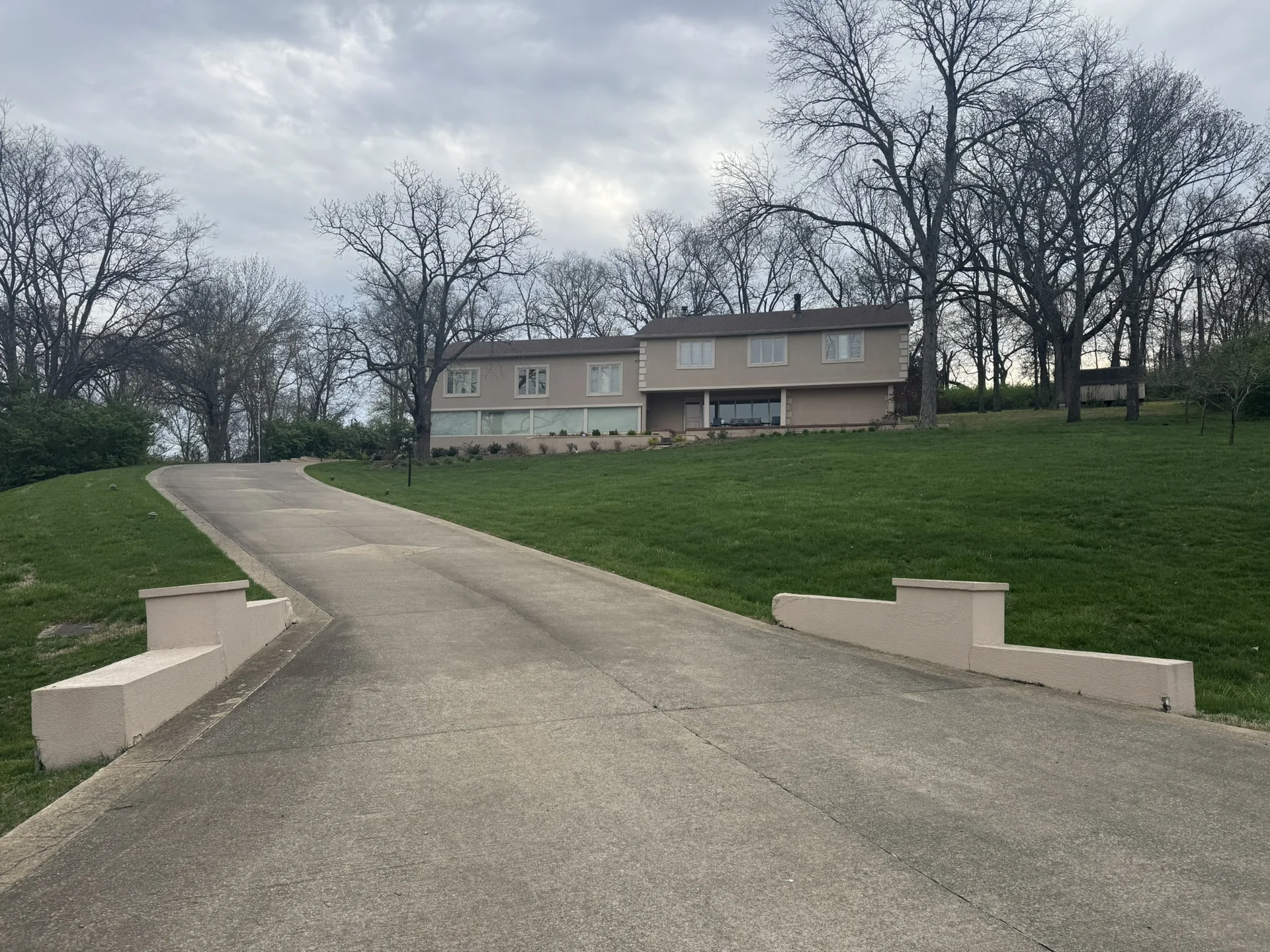
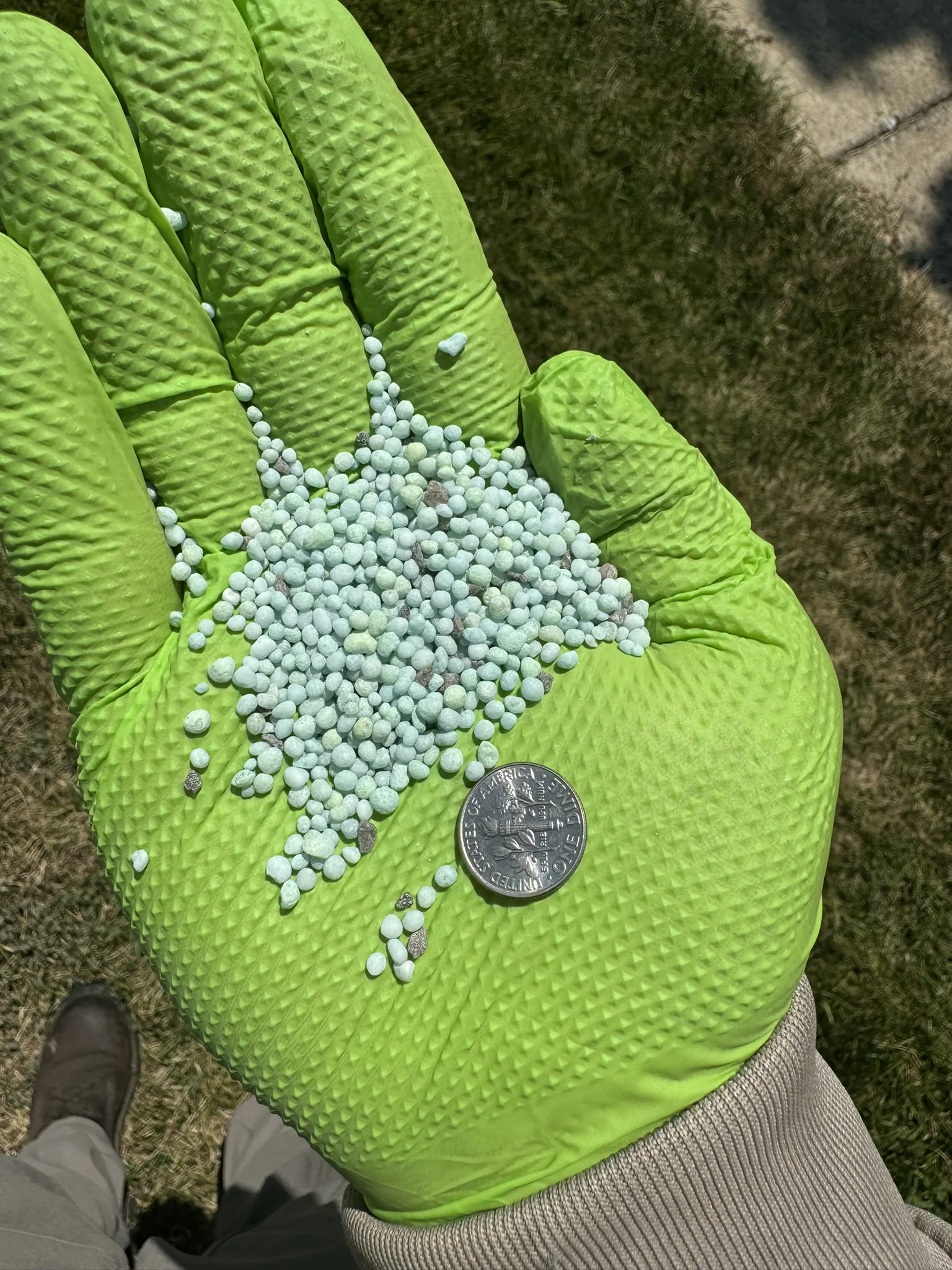
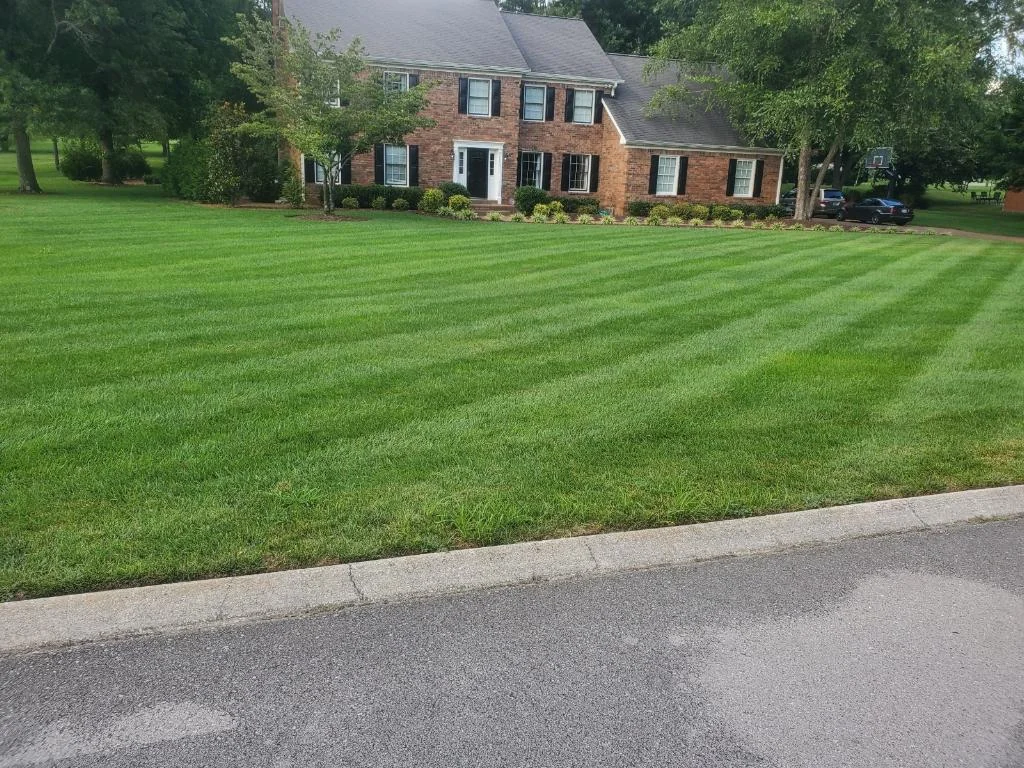
Get a free quote for professional lawn aeration & seeding from our UT Certified team. We serve all of Arrington and surrounding Williamson County areas.