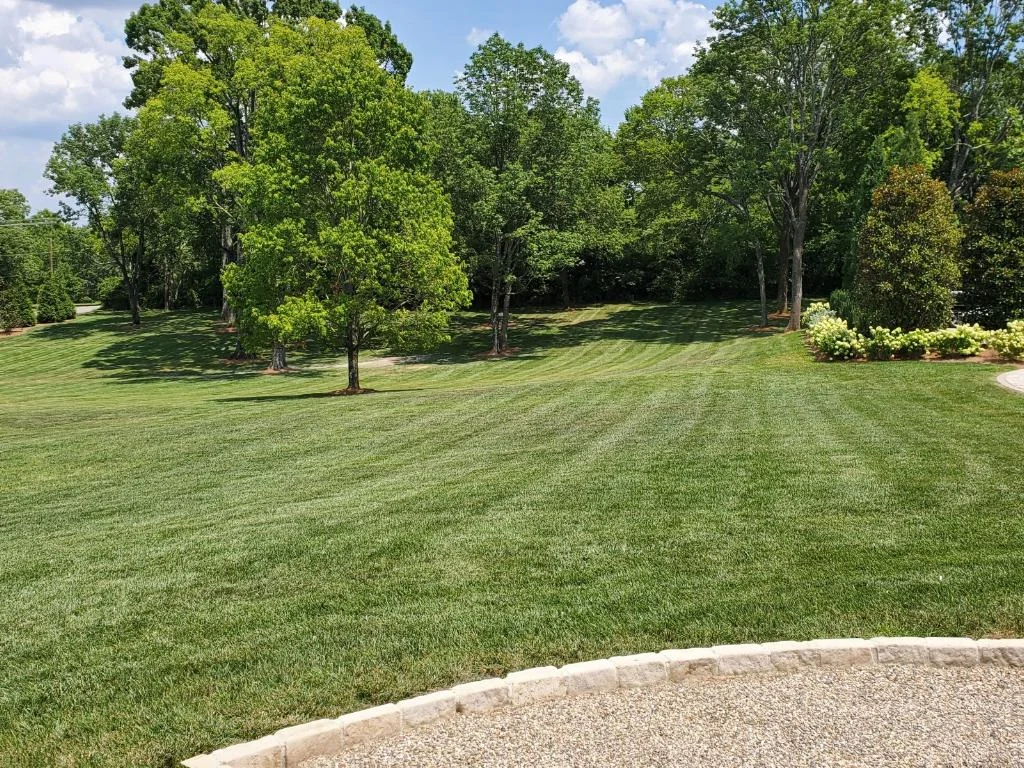
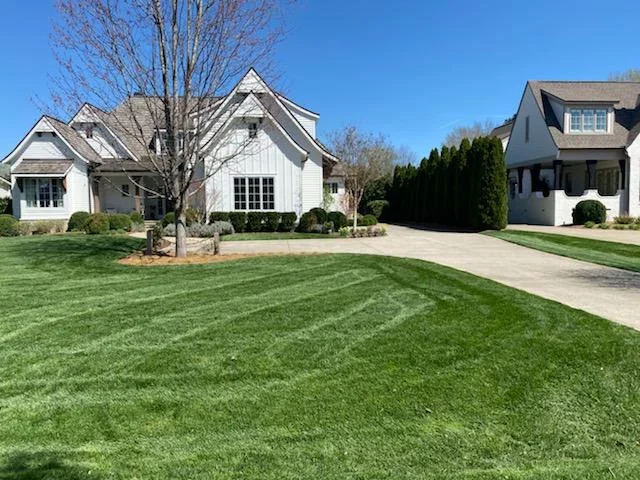
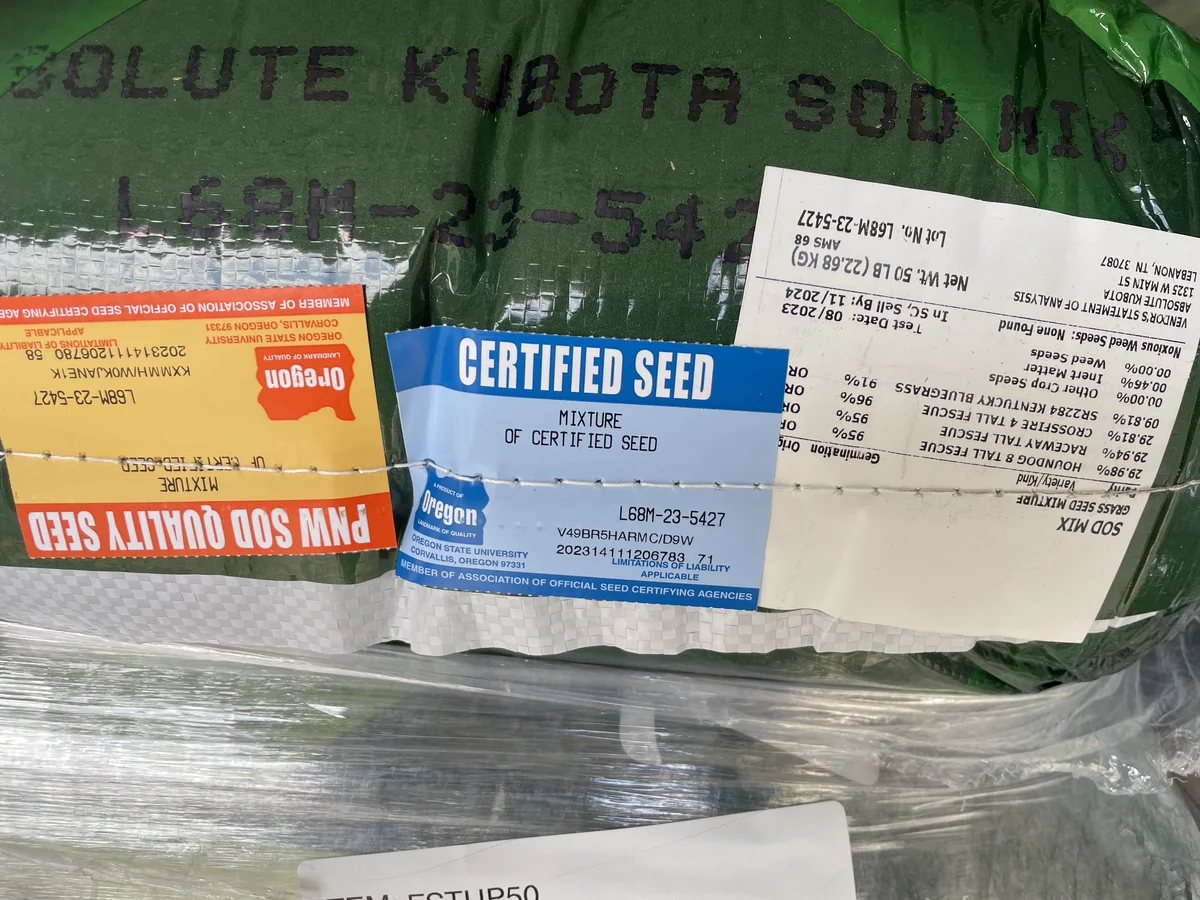
The body of the mix is three turf type tall fescues: Traverse 2 SRP, 4th Millennium SRP, and Triad. The two SRP cultivars carry rhizomatous self repair and improved brown patch resistance, and 4th Millennium SRP posted the highest overall quality of 116 varieties in a national NTEP trial. Triad is the dark one, with wear recovery and resistance to both gray leaf spot and brown patch, and it is the cultivar I lean on where Fairview's hardwood canopy cuts the light. All three are on UT Extension's list of statistically top-performing tall fescues for Tennessee from NTEP trials.
The remaining ten percent by weight is Barvette HGT Kentucky bluegrass, Poa pratensis, out of Barenbrug's Healthy Grass Technology program, where cultivars are selected under deliberate stress instead of easy conditions. It establishes unusually fast for a bluegrass, which matters when the calendar is tight, it knits the stand together with rhizomes in a way tall fescue cannot, and it holds through transition zone summers rather than thinning out the way older bluegrass does down here. Ten percent by weight lands closer to thirty five percent by plant count, because bluegrass seed is so much smaller, and that is the sod farm ratio on purpose: bluegrass rhizomes are what physically hold a sod roll together.
On a Fairview lawn that buys two things. A zero turn divot or the hole under a fallen limb closes on its own over a month or two instead of sitting open as an invitation for crabgrass. And the bluegrass works as a disease firebreak, since brown patch spreads by contact between plants and some bluegrass cultivars are close to immune, which is why tall fescue and Kentucky bluegrass mixtures carry lower brown patch severity than fescue alone.