The Disease Argument, With Numbers
This is the part that convinced me, and it is where the research has gotten notably better in the last couple of years.
Brown patch (Rhizoctonia solani) is the defining disease of fescue in this climate. Between subtropical humidity, blades that stay wet up to twelve hours a day from dew alone, and nighttime temperatures above 75 degrees, it is not a question of whether your lawn gets it. It is a question of whether you prevented it.
Work published in the International Turfgrass Society Research Journal in 2017 found that brown patch severity decreased in tall fescue and Kentucky bluegrass mixtures compared with tall fescue alone. The finding that stuck with me is what mattered most: the bluegrass cultivar choice influenced disease severity more than the fescue cultivar did. The species you are treating as a minor component is doing a disproportionate amount of the work.
The mechanism is not mysterious. Brown patch spreads by mycelial contact, Rhizoctonia does not produce spores, it grows plant to plant. Seed a species through the stand that is far less susceptible, some cultivars nearly immune, and you have interrupted the chain. It is a firebreak, physically.
Then there is the genetics half, and it is dramatic. A 2024 Agronomy Journal paper out of Purdue and Virginia Tech, from 2022-23 field trials, quantified what resistant cultivars are worth. Stands built with at least 75 percent brown-patch-resistant cultivars cut disease severity, measured as area under the disease progress curve, by 71 to 83 percent versus stands of susceptible cultivars.
Seventy-one to eighty-three percent, from seed selection alone. No additional chemistry, no different program. That is the single largest lever I have seen quantified in turf disease management, and it is decided at the moment you choose what goes in the bag.
Your Mower Is Steering the Stand
One more thing worth knowing if you run a mixed lawn: the two species do not hold a fixed ratio. Research on mowing height in tall fescue and Kentucky bluegrass mixtures shows that cutting height shifts which species gains ground over time.
That means your mower is not a neutral instrument. It is a selection pressure applied weekly for decades, and it compounds the fescue point from earlier, whatever small lateral spread fescue is capable of shrinks further at low cutting heights. I keep fescue tall through Middle Tennessee summers for heat-stress reasons anyway, and this is one more reason not to drop the deck.
Genetics Decide How Often You Reseed
Now the money argument, which nobody in this industry says out loud.
A transition-zone fescue lawn running old genetics needs reseeding every single year. A lawn built from modern improved cultivars averages about every three years. Same climate, same homeowner, same mower. Different seed. That is a two-thirds reduction in how often you write this check, purchased once at the seed bag, and it is why I will not put a cheap blend on a customer's lawn even when they ask me to.
Which brings up new construction. If a builder seeded your lawn it was almost certainly a contractor-style blend, and contractor blends do not use improved modern cultivars, cheap tall fescue, often Kentucky 31, which is the oldest cultivar there is and scores poorly across the board on NTEP trials, cut with annual ryegrass for fast green-up at the final walkthrough. The contractor gets paid at closing. What the lawn looks like nine months later is not on their scorecard.
So a new build starts life on the annual-reseed clock before you have made a single decision. The cheap seed also arrives carrying passengers, dallisgrass and Johnson grass ride in as contaminants in low-certification seed, and dallisgrass takes me three to five years to clear because almost nothing is labeled to selectively kill a monocot inside a monocot lawn. Upgrading the stand's genetics is what moves you off that clock. It is not a cosmetic upgrade.
What This Looks Like in Practice
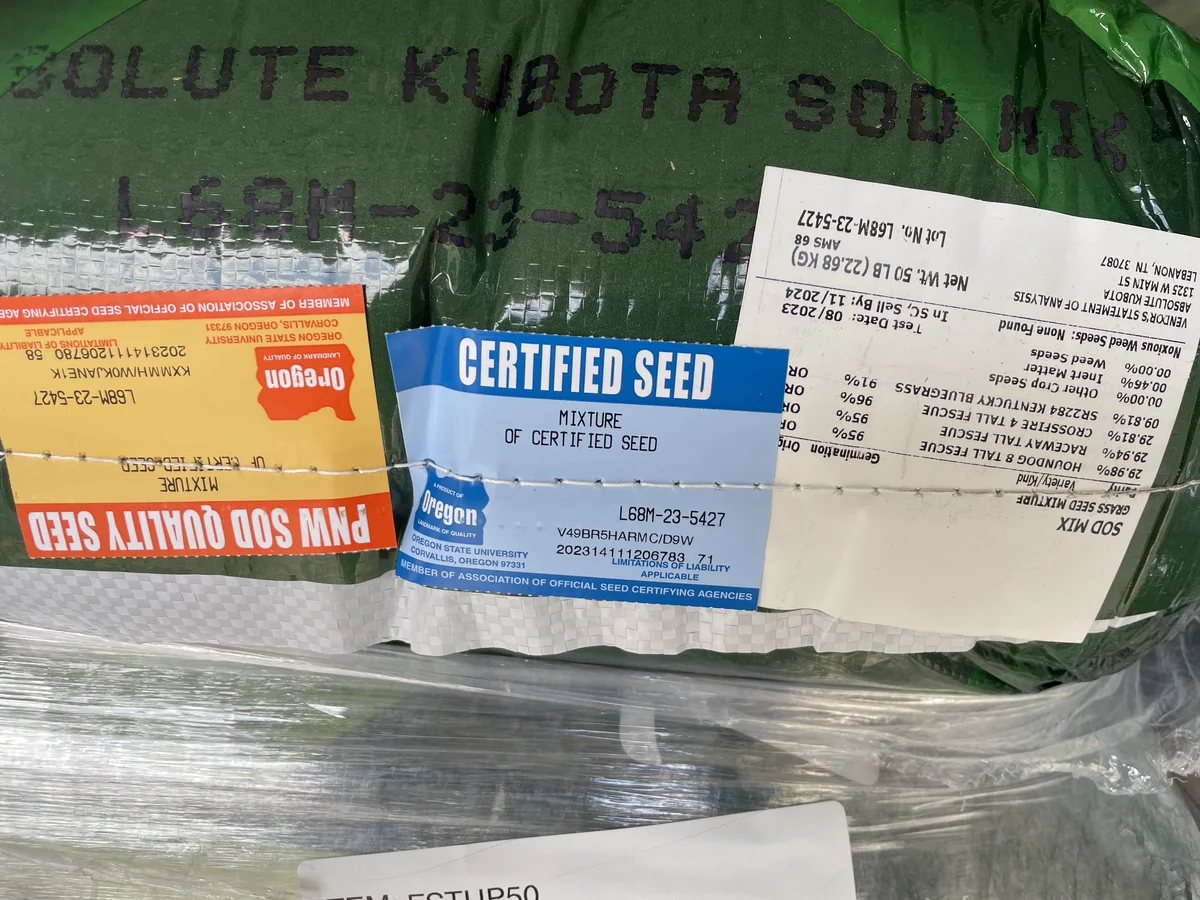
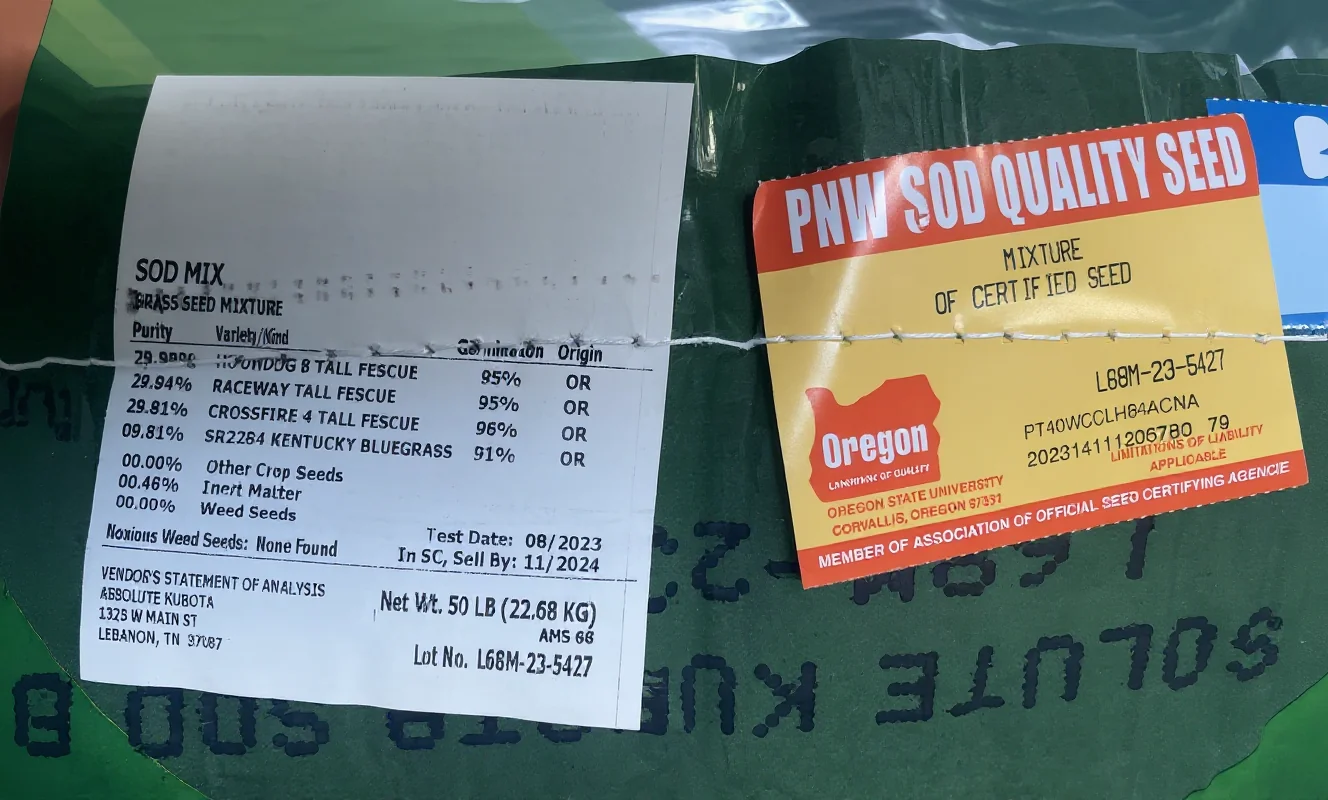
My blend is 90 percent turf-type tall fescue and 10 percent Kentucky bluegrass by weight, every cultivar chosen off NTEP trial data averaged across sites with growing conditions like ours, Mississippi, Knoxville, North Carolina, New Jersey, and sourced as Gold Tag, Sod Quality Certified seed. Brown patch resistance is weighted heavily on both species, and the bluegrass is picked for drought tolerance and disease scores while deliberately not being the aggressive type that would take the lawn over.
That blend goes down through aeration and overseeding in the fall, dropped straight into open holes rather than broadcast. If your lawn is thin, or new, or came from a builder, that is the fix, not more product, better plants.
Look at your yard and ask whether you have enough grass where you want grass. If the answer is no, the answer is not a stronger chemical program. It is genetics.
Sources