About Southern Red Mite
Southern Red Mite
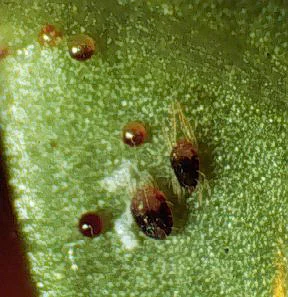
Identification: Oligonychus ilicis, the southern red mite, is a cool-season spider mite, this is the defining management characteristic that separates it from the twospotted spider mite, which peaks in summer heat. Adults are dark red to brick-red, 0.4-0.5 mm, with reddish legs. Eggs are round, red, and often found on leaf undersides, bearing a distinctive vertical stipe (hair-like projection). Primary hosts include hollies (Ilex spp.), camellias, and azaleas, broadleaved evergreens common in Middle Tennessee landscapes. Stippling on upper leaf surfaces produces a bronze to gray cast similar to twospotted spider mite damage.
Life cycle: Active fall through spring in Tennessee, with population peaks in October-November and March-May. Populations collapse when summer temperatures exceed 86-90°F. Overwinters as eggs on leaf undersides of broadleaved evergreens. Spring generation builds rapidly as temperatures warm in March, reaching damaging levels by April-May on hollies and camellias before the summer heat suppresses them. This cool-season activity pattern means chemical timing must differ from summer mite programs.
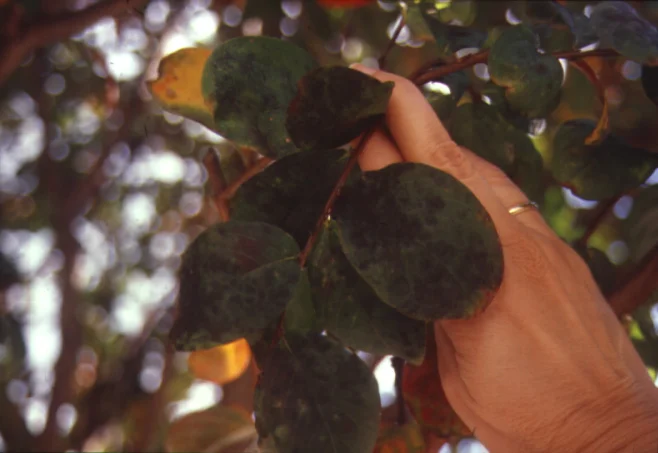
Damage signs: Bronze to reddish stippling on upper leaf surfaces of hollies and camellias starting in fall and intensifying through spring. Leaves may appear dusty or gray from a distance. Fine webbing is less pronounced than with twospotted spider mite. On hollies, severe spring infestations cause premature leaf drop before summer flush. In the I-65 corridor, mass plantings of Ilex cornuta (Chinese holly) and Ilex vomitoria (yaupon) are consistently susceptible.
Treatment window: October to November (fall generation) and March to April (spring generation) before temperatures reach the suppressive summer range. Summer applications are ineffective, the population is already crashing.
UT-recommended approach: Horticultural oil applied in late March to early April and/or late October targets active populations and smothers overwintering eggs. Abamectin or bifenazate provide effective knockdown on heavily infested hollies. Avoid midsummer treatments, they kill predatory mites without targeting the pest, leaving plants vulnerable to secondary twospotted spider mite infestations.
Quick Facts
- Common Name
- Southern Red Mite
- Scientific Name
- N/A
- Category
- Landscape Pest
- Region
- Middle Tennessee