About Glasshouse Whitefly
Glasshouse Whitefly
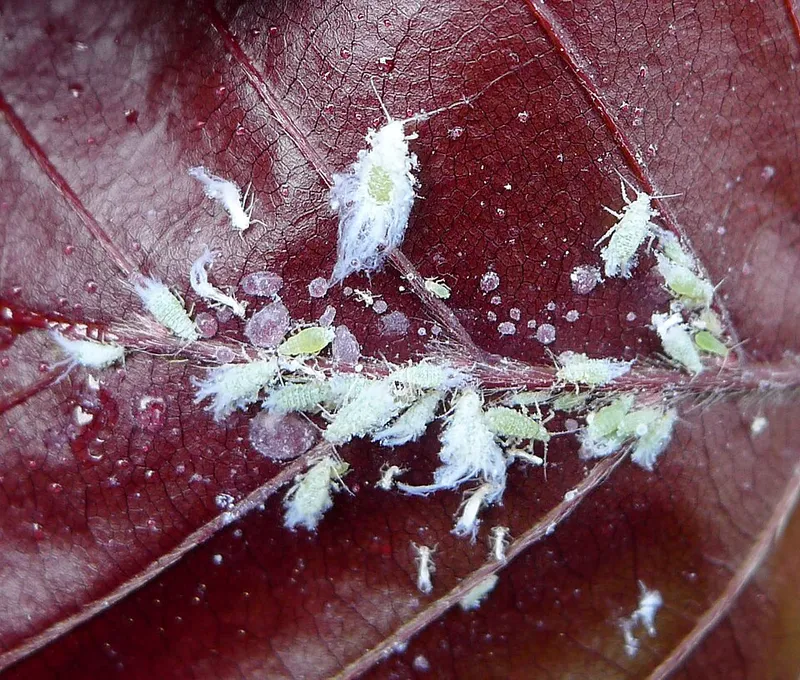
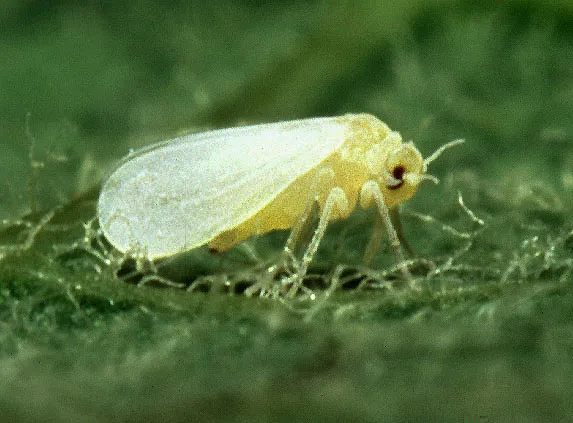
Identification: Tiny white-winged insects, 1-1.5 mm, with a powdery wax coating. Trialeurodes vaporariorum is the primary species in greenhouse and indoor plant settings; adults rest on leaf undersides and fly in a cloud when disturbed. Immature scales (nymphs) are flat, oval, and translucent green, cemented to leaf undersides and easily mistaken for scale insects.
Life cycle: In Middle Tennessee landscapes, glasshouse whitefly is primarily a greenhouse and overwintered ornamental pest, it does not reliably overwinter outdoors in Zone 6b/7a. Generations are continuous under glass: egg to adult in 25-30 days at 70°F. Eggs are laid in circular arcs on leaf undersides. Multiple overlapping generations make populations difficult to suppress once established indoors.
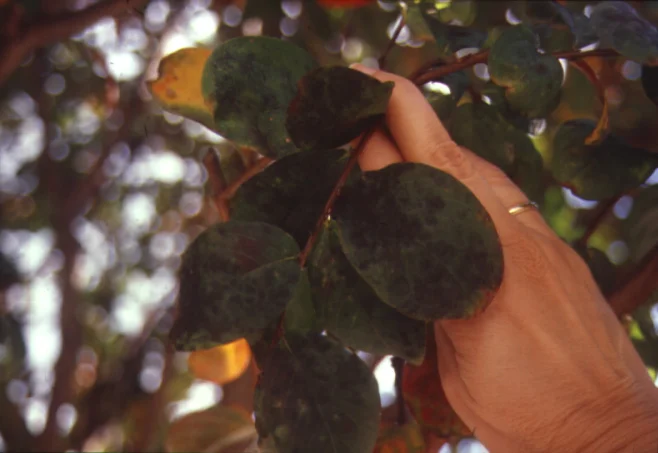
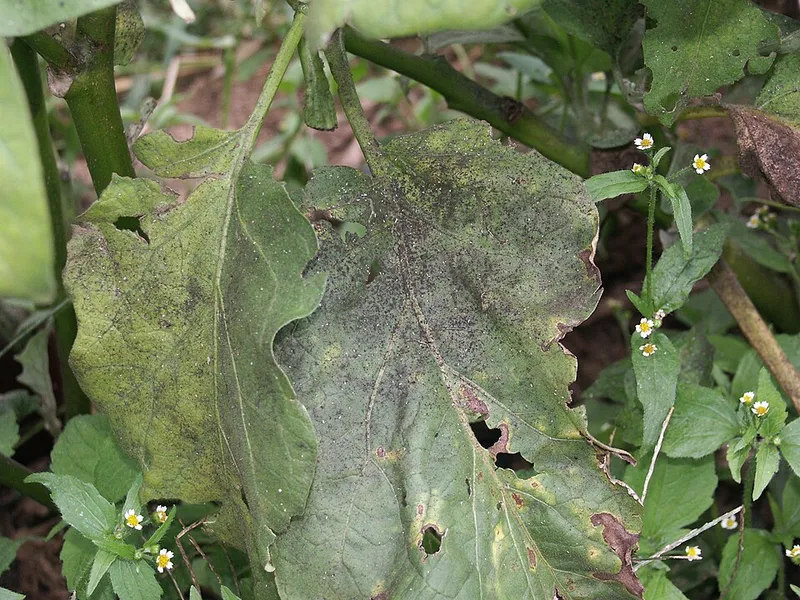
Damage signs: Nymphs and adults extract phloem sap, causing chlorotic stippling, leaf yellowing, and premature drop on susceptible hosts including poinsettia, tomato, cucumber, and many tropical ornamentals. Honeydew deposits lead to sooty mold that further reduces photosynthetic capacity. Glasshouse whitefly is also a vector of several plant viruses.
Treatment window: Year-round in greenhouse settings. On outdoor ornamentals where plants are brought outside in summer, treat before re-entry in fall to avoid establishment indoors.
UT-recommended approach: Yellow sticky traps monitor adult populations and provide suppression when densely placed. Insecticidal soap and neem oil control crawlers on leaf undersides; thorough coverage is essential. Rotate chemistries to prevent resistance, this species develops resistance rapidly to pyrethroids and organophosphates. Biological control with Encarsia formosa (parasitic wasp) is the standard in commercial greenhouse production.
Quick Facts
- Common Name
- Glasshouse Whitefly
- Scientific Name
- N/A
- Category
- Landscape Pest
- Region
- Middle Tennessee