About Twospotted Spider Mite
Twospotted Spider Mite (Tetranychus urticae)
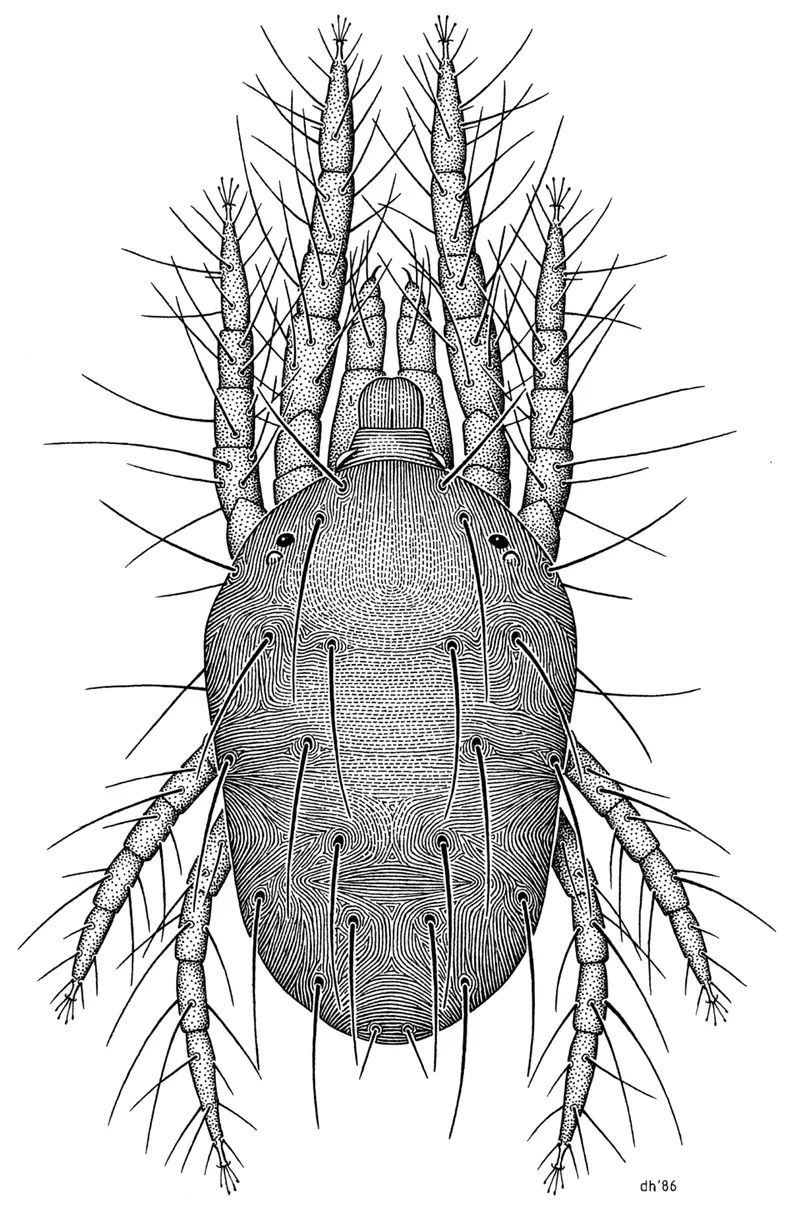
Identification: Adults 0.4-0.5 mm, oval, pale yellowish-green with two dark spots on either side of the abdomen (the spots are digestive system contents visible through the cuticle). Females darken to orange-red before overwintering. Fine silk webbing on leaf undersides and stippled, bronzed upper leaf surfaces are the primary field signs without magnification. Eggs are spherical, translucent, laid on leaf undersides among webbing. Infests an extremely wide range of landscape and garden plants including roses, hollies, junipers, maples, and annuals.
Life cycle: Extremely rapid under hot, dry conditions, the full egg-to-adult cycle takes 5-7 days at 90°F. Eight or more generations per year in Tennessee summers. Females overwinter under bark, in leaf litter, and in soil crevices, becoming active when temperatures exceed 55°F in spring. Population explosions occur during hot, dry periods from June through September; drought stress on host plants greatly amplifies damage. Natural predators (predatory mites, Phytoseiidae) suppress populations in undisturbed landscapes but are killed by broad-spectrum insecticide applications.
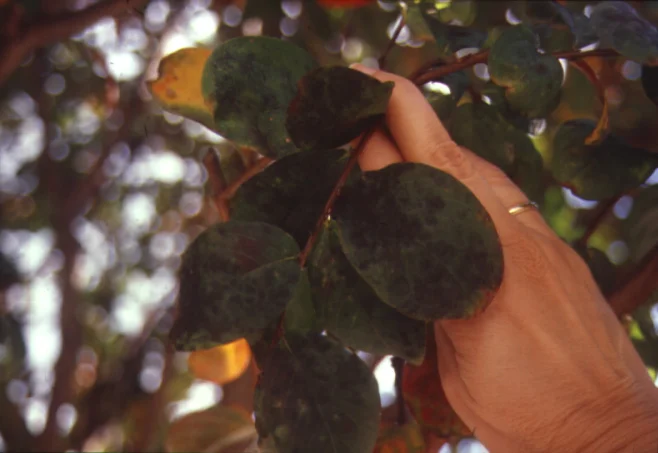
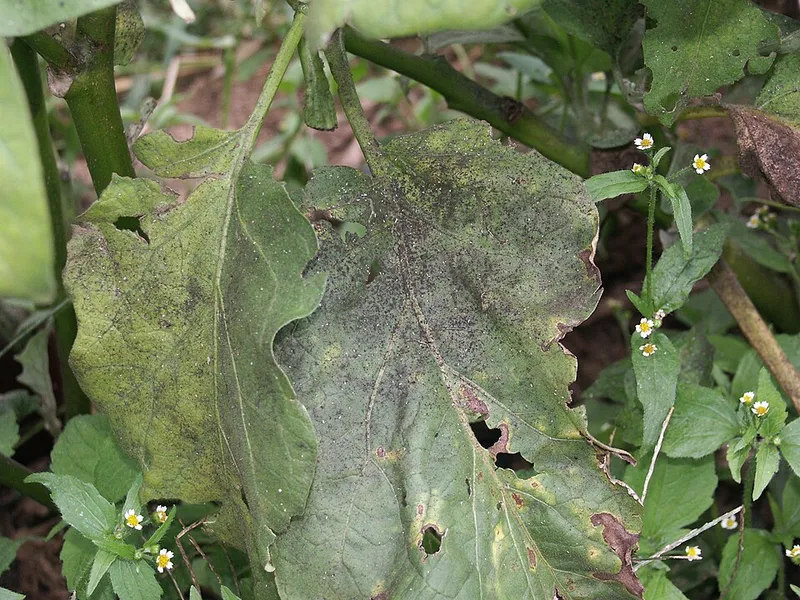
Damage signs: Fine stippling on upper leaf surface from individual feeding punctures that destroy chloroplasts. Stippled leaves take on a grayish, bronzed, or silvery appearance. Severe infestations cause leaf drop. Fine webbing on leaf undersides and at growing tips in heavy infestations. Middle Tennessee's July-August heat and periodic drought create ideal conditions for rapid mite population buildup, particularly on junipers, roses, and ornamental grasses under water stress.
Treatment window: At first sign of stippling in June, before populations exceed 10-15 mites per leaf. Hot, dry July and August conditions require monitoring every 7-10 days on susceptible plants.
UT-recommended approach: Miticides (abamectin, bifenazate, hexythiazox) are the most effective chemical controls; rotate modes of action due to documented resistance development in T. urticae. Insecticidal soap and horticultural oil applied to leaf undersides are effective on small plantings. Avoid pyrethroids, they kill predatory mites while leaving spider mites, typically making infestations worse. Increase irrigation during drought to reduce mite-favorable host stress.
Quick Facts
- Common Name
- Twospotted Spider Mite
- Scientific Name
- Tetranychus urticae
- Category
- Landscape Pest
- Region
- Middle Tennessee