About Silverleaf Whitefly
Silverleaf Whitefly
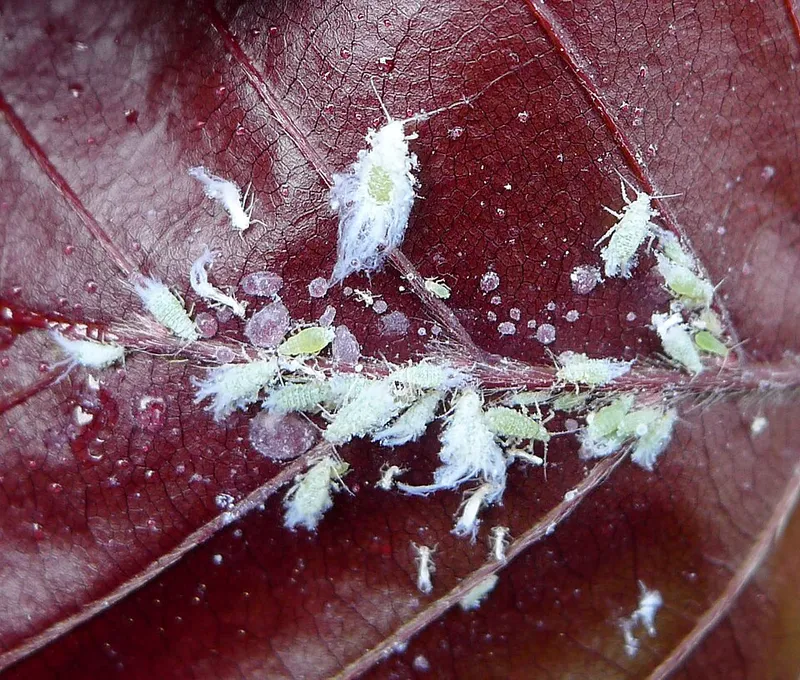
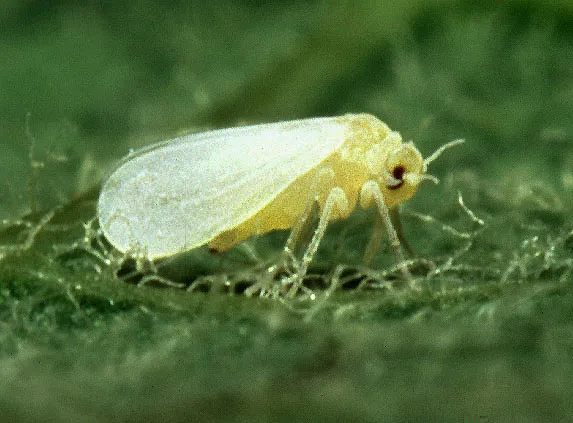
Identification: Bemisia argentifolii (also treated as B. tabaci biotype B). Adults are slightly smaller and hold wings more tent-like compared to glasshouse whitefly (Trialeurodes vaporariorum). Nymphs are flat oval scales, pale yellow to greenish, on leaf undersides. The common name references silverleaf disorder it causes in squash, a feeding-induced plant response distinct from sooty mold.
Life cycle: Not cold-hardy in Middle Tennessee; outdoor populations establish each season from infested transplants or greenhouse stock. In warm years with mild falls, outdoor populations persist into October on landscape annuals and vegetables. Continuous generations at warm temperatures, egg to adult in 18-20 days at 80°F. High reproductive rate and pesticide resistance make this the more problematic whitefly species in Tennessee commercial horticulture.
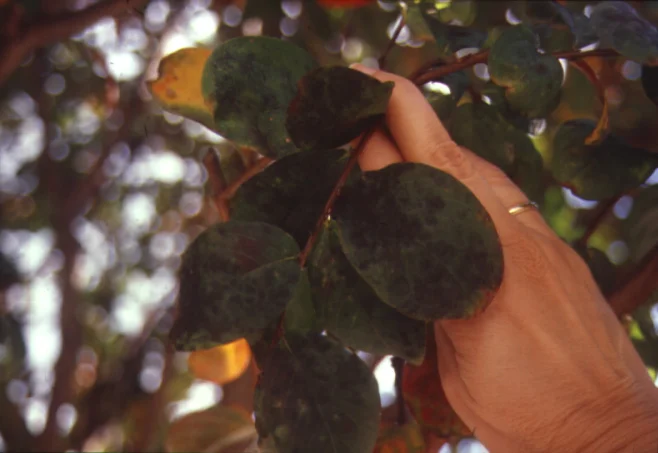
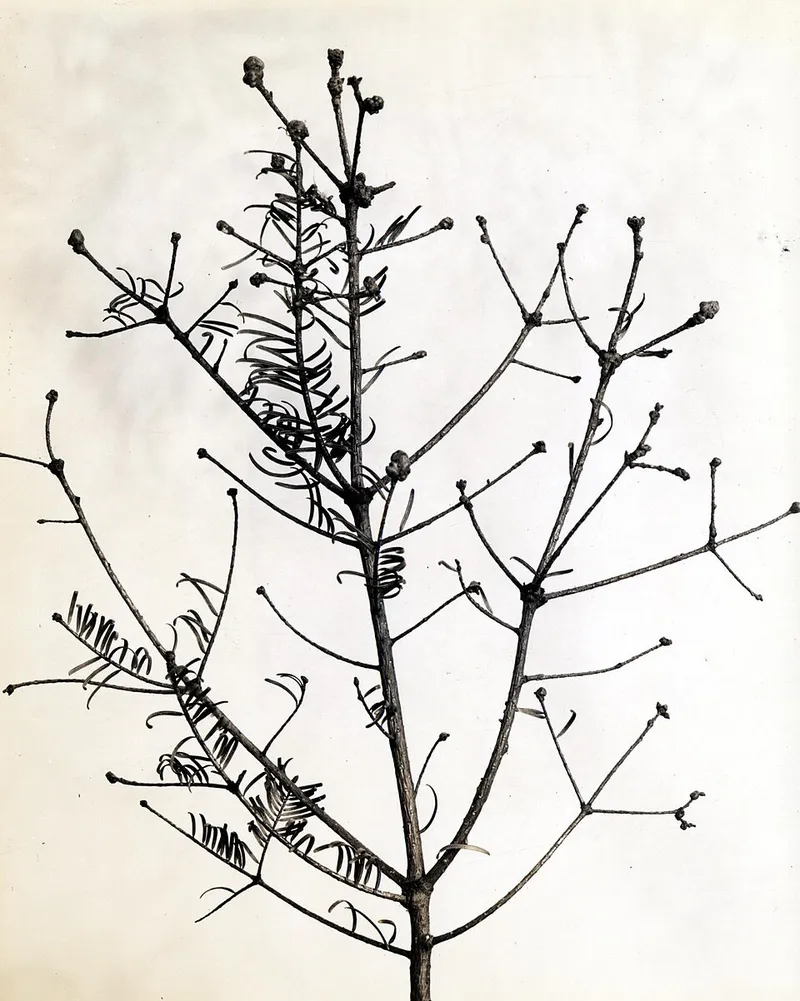
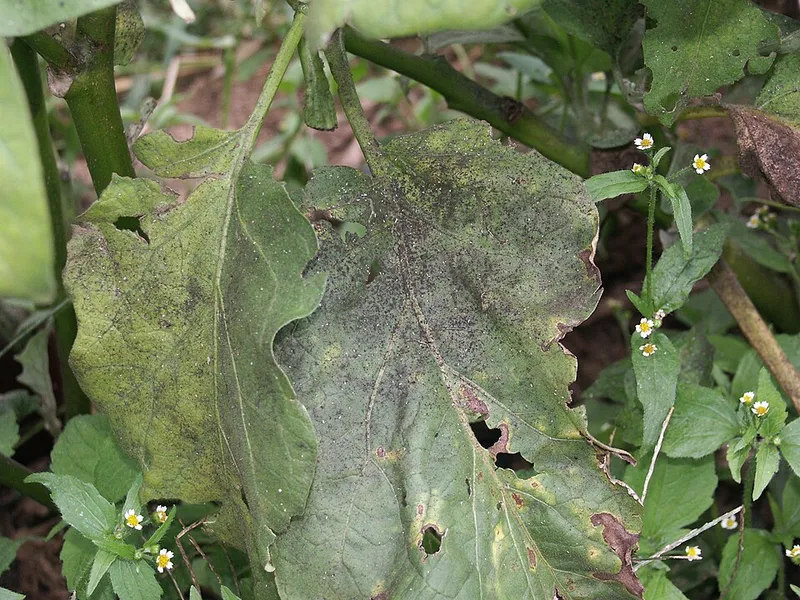
Damage signs: Direct feeding causes chlorosis and leaf drop on a wide host range including lantana, hibiscus, poinsettia, and vegetable crops. Silverleaf disorder (silvery-white discoloration of squash and other cucurbits) results from saliva toxins independent of virus transmission. This species is a more efficient vector of begomovirus and tomato yellow leaf curl virus than glasshouse whitefly.
Treatment window: Treat infested transplants before setting out in landscape beds, early intervention prevents establishment. Outdoor populations require treatment from June through first frost in Columbia-area landscapes.
UT-recommended approach: Inspect transplant stock for nymphs on leaf undersides before purchase or planting. Imidacloprid systemic applied at transplanting provides residual protection on ornamentals. Rotate to spirotetramat or pyriproxyfen when resistance to neonicotinoids is suspected. Yellow sticky traps near susceptible hosts allow early detection before populations spike.
Quick Facts
- Common Name
- Silverleaf Whitefly
- Scientific Name
- N/A
- Category
- Landscape Pest
- Region
- Middle Tennessee