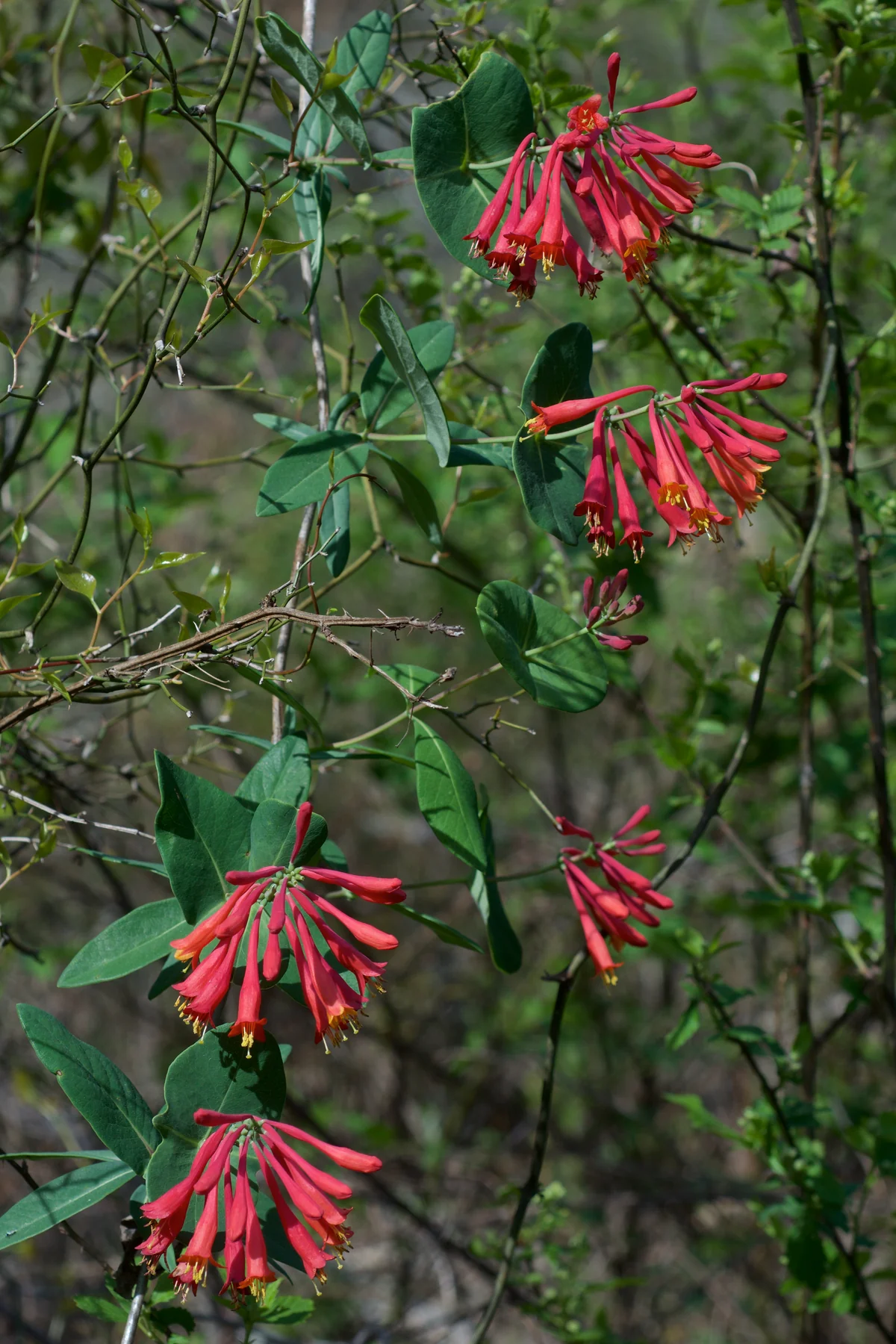
About Trumpet Honeysuckle
Trumpet Honeysuckle (Lonicera sempervirens)
Coral Honeysuckle, Scarlet Honeysuckle
Full sun to part shade, medium to well-drained moisture, tolerates clay and sandy soils, pH 5.5-7.5.
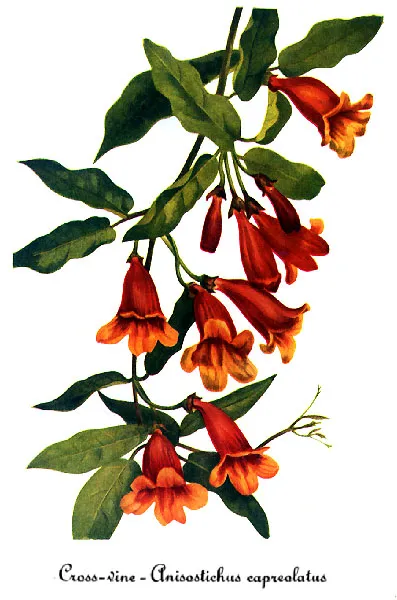
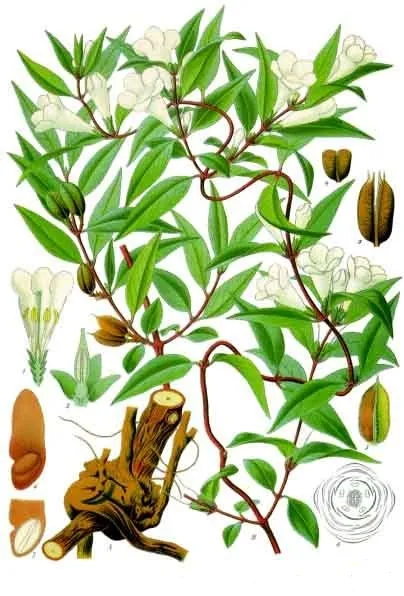
Semi-evergreen to evergreen twining vine reaching 10-20 feet; blooms April-September in flushes with 1.5-2-inch tubular flowers, scarlet to orange-red outside and yellow within; small red berries ripen late summer through fall; climbs by stem twining, not adhesive.
Propagation by semi-hardwood cuttings in summer or by fresh seed stratified at 40°F for 60 days.
Native region: Statewide in Tennessee, in forest margins, thickets, and disturbed roadsides throughout Middle Tennessee.
Trumpet honeysuckle is the correct native alternative to invasive Japanese honeysuckle (Lonicera japonica), it does not spread by runners, does not form dense ground-smothering mats, and its tubular flowers are inaccessible to non-native bees, making it an exclusive food source for ruby-throated hummingbirds (Archilochus colubris) in spring migration. In Columbia-area gardens, the extended bloom season from April through the first frost provides near-continuous hummingbird activity at fence posts and trellises. The vine is well-behaved enough to train on mailbox posts without aggressive management. Aphid infestations (Hyadaphis spp.) are the primary pest concern, typically worst in spring on new growth; a strong water spray is usually sufficient without chemical intervention. The cultivar 'Major Wheeler' is widely available in Middle Tennessee nurseries and reblooms more reliably than straight species.
Quick Facts
- Common Name
- Trumpet Honeysuckle
- Scientific Name
- Lonicera sempervirens
- Plant Type
- Vine
- Region
- Middle Tennessee