About American Bittersweet
American Bittersweet (Celastrus scandens)
False Bittersweet, Climbing Bittersweet
Full sun to part shade, medium to well-drained moisture, tolerates clay and loamy soils, pH 5.0-7.5.
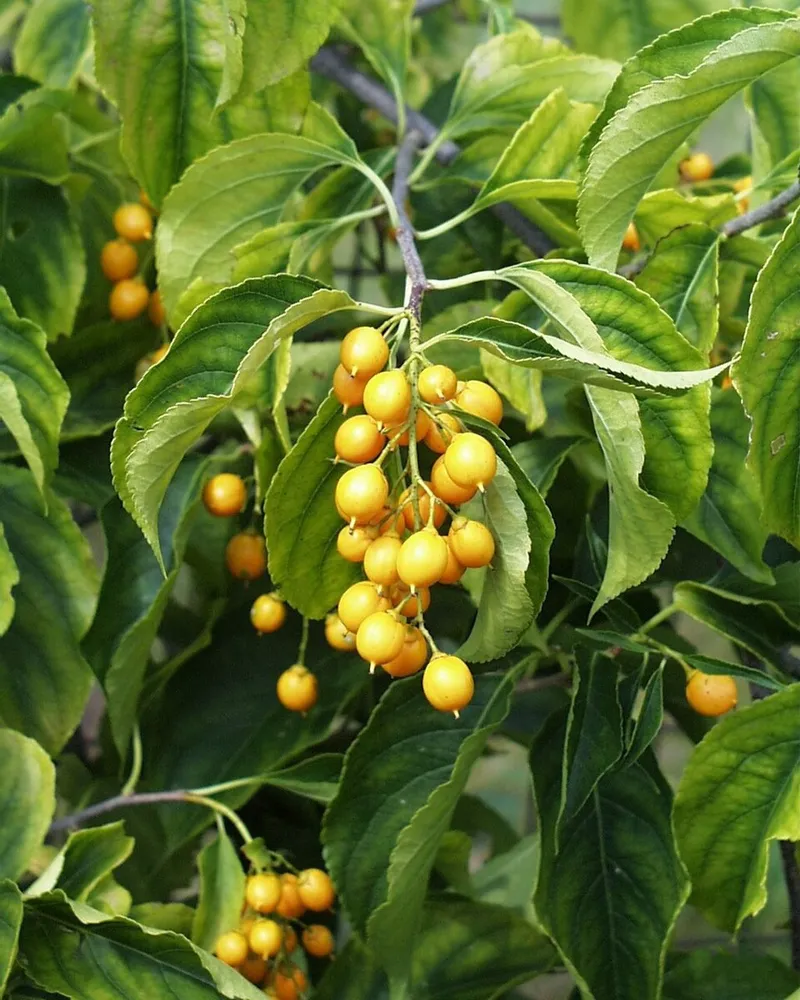
Deciduous woody vine climbing 15-30 feet by twining stems; inconspicuous greenish-white flowers in May-June; fruit clusters at stem tips, orange-yellow capsules splitting to reveal scarlet arils, ripening October-November; dioecious, both male and female plants required for fruit set.
Propagation by softwood cuttings in summer or by seed after cold stratification 60-90 days.
Native region: Middle and East Tennessee, less common in West Tennessee; occurs in forest margins, thickets, and stream edges.
American bittersweet is increasingly rare in the wild because of competition from the invasive Oriental bittersweet (Celastrus orbiculatus), which has spread throughout Middle Tennessee and is frequently sold mislabeled as the native species. Distinguish them by fruit placement: C. scandens bears fruit only at stem tips, while C. orbiculatus bears fruit along the entire stem length. Do not purchase unlabeled bittersweet from nurseries or roadside stands. C. scandens is far less aggressive than its Asian counterpart, it twines but does not produce the prolific seedbank that makes Oriental bittersweet so difficult to control. The fall fruit display is significant wildlife value: cedar waxwings (Bombycilla cedrorum) and American robins strip the berries.
Quick Facts
- Common Name
- American Bittersweet
- Scientific Name
- Celastrus scandens
- Plant Type
- Vine
- Region
- Middle Tennessee