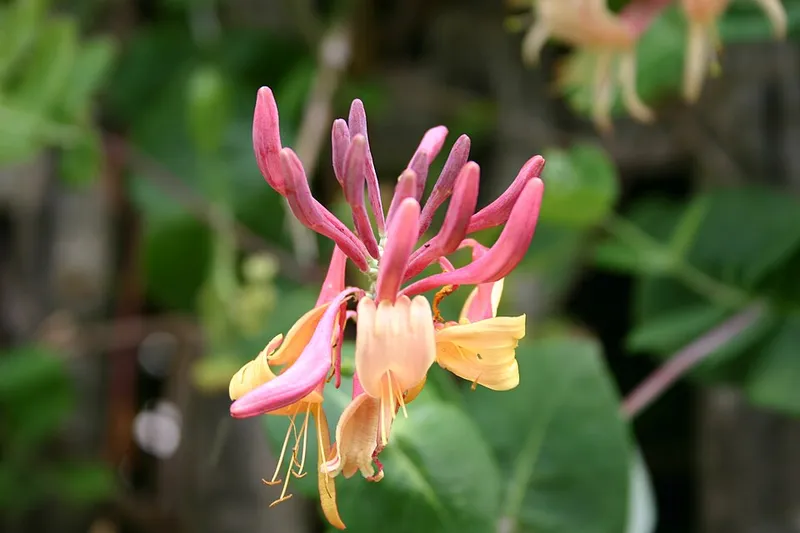
About Coral Honeysuckle
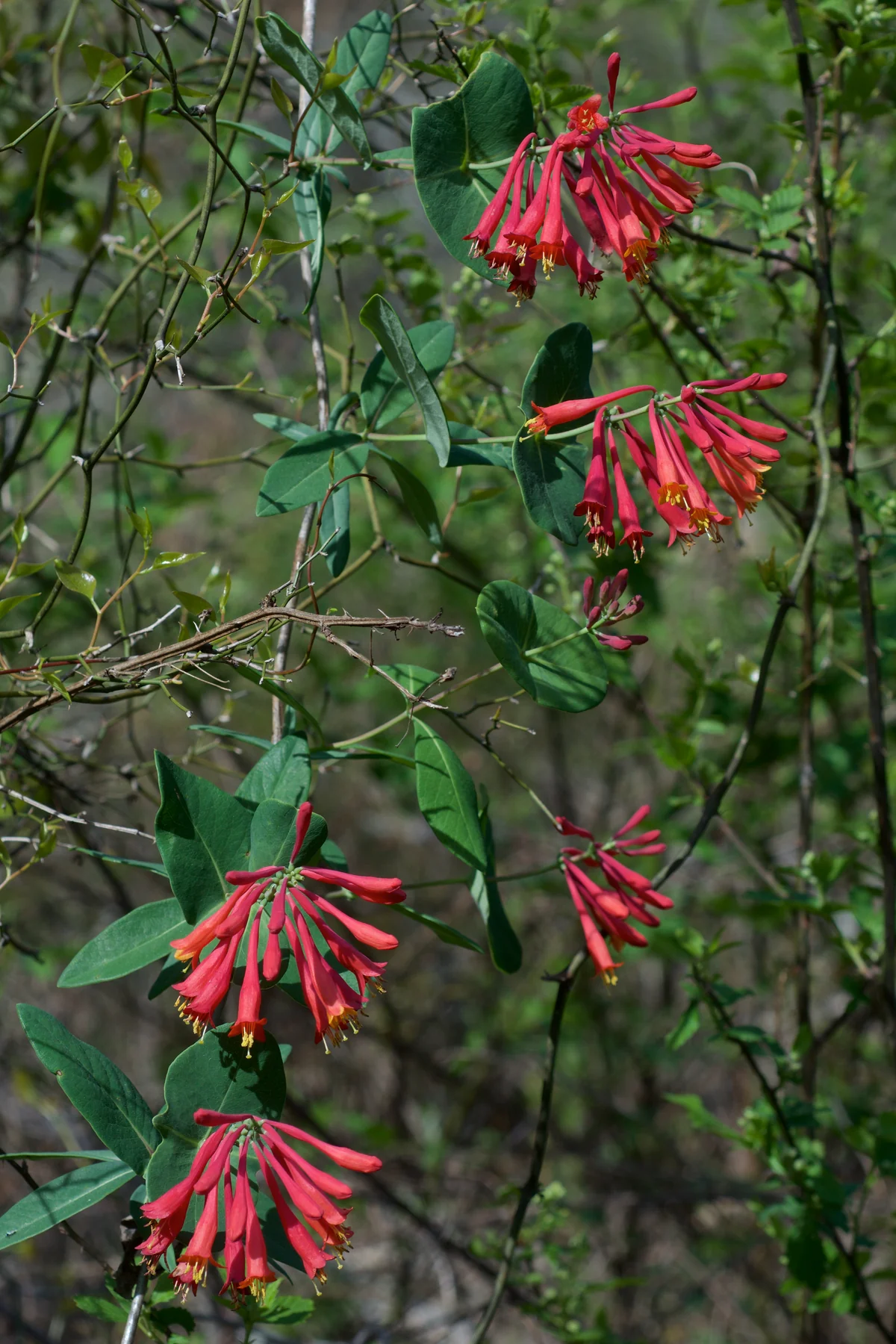
Coral Honeysuckle (Lonicera × heckrottii)
Goldflame Honeysuckle, Everblooming Honeysuckle
Full sun to part shade, medium well-drained soil, tolerates clay loam, pH 5.5-7.0.
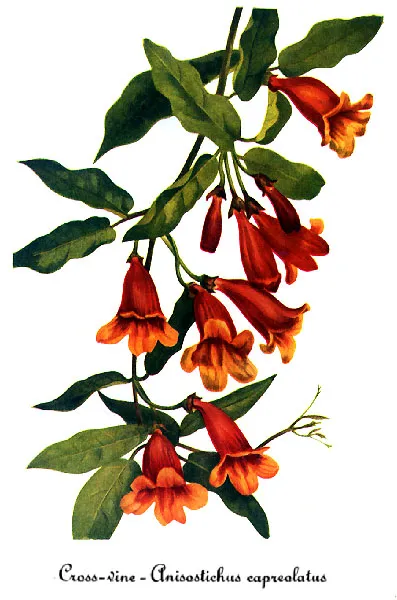
Deciduous to semi-evergreen twining vine reaching 10-15 feet; blooms May through frost in flushes with 1.5-2-inch tubular flowers, carmine-pink outside and yellow to gold within; lightly fragrant; small red berries in fall; hybrid origin, does not produce viable seed.
Native region: Not native to Tennessee; garden hybrid of uncertain parentage (likely involving Lonicera sempervirens and Lonicera americana), widely cultivated.
Coral honeysuckle (L. × heckrottii) is a hybrid distinct from the native trumpet honeysuckle (Lonicera sempervirens) and from invasive Japanese honeysuckle (Lonicera japonica), it is non-invasive, does not spread by runners or viable seed, and is well-behaved on trellises and fence posts in Middle Tennessee. The extended bloom season from May through October makes it one of the most consistent hummingbird resources in Columbia-area gardens. It is reliably hardy through Zone 5b, so Middle Tennessee's Zone 6b/7a presents no cold hardiness concerns. Aphids (Hyadaphis spp.) are the most common pest, particularly in spring, tolerate light infestations or knock off with water; avoid broad-spectrum insecticides during bloom when pollinators are active. The cultivar 'Goldflame' is the most common form in Tennessee nurseries and is often sold simply as "honeysuckle."
Quick Facts
- Common Name
- Coral Honeysuckle
- Scientific Name
- Lonicera × heckrottii
- Plant Type
- Vine
- Region
- Middle Tennessee