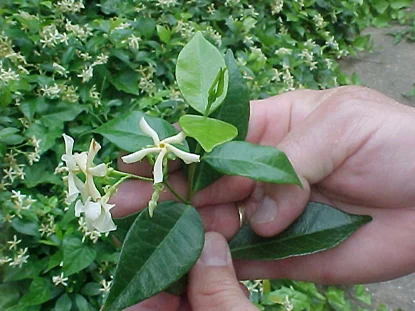
About Confederate Jasmine
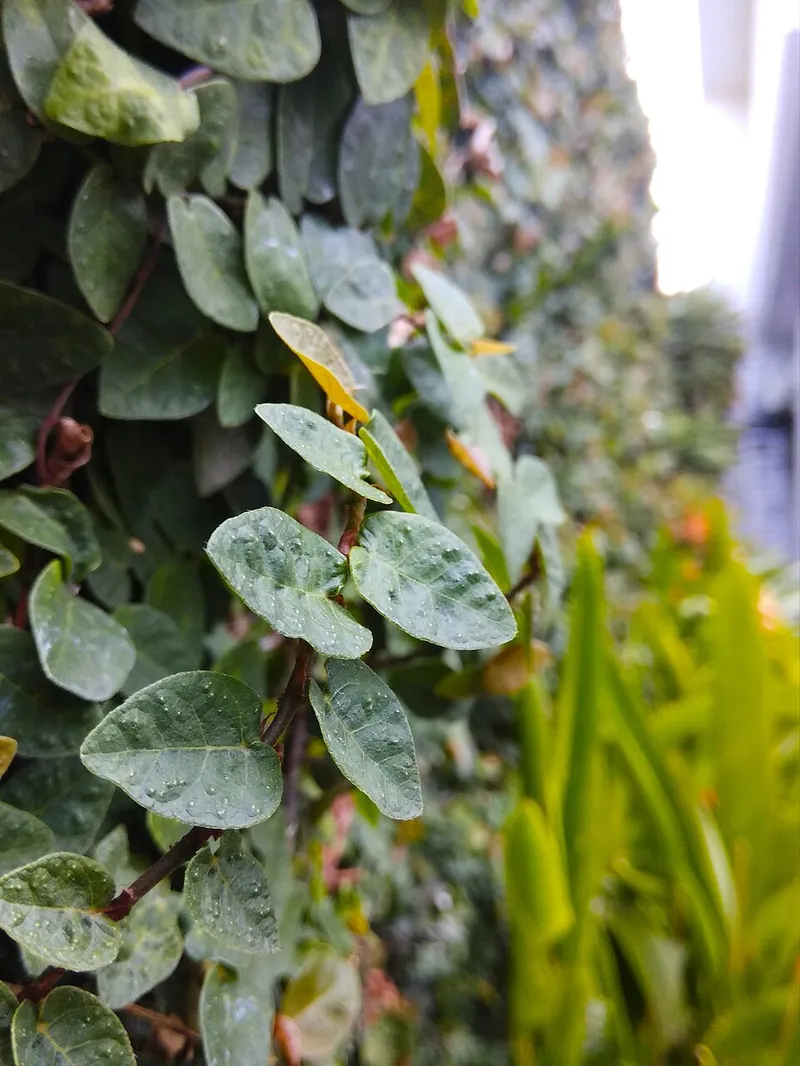
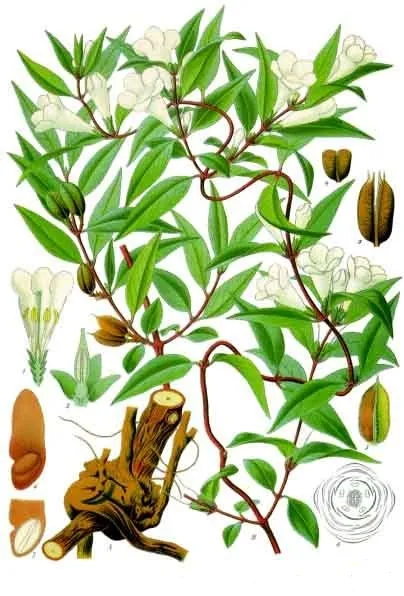
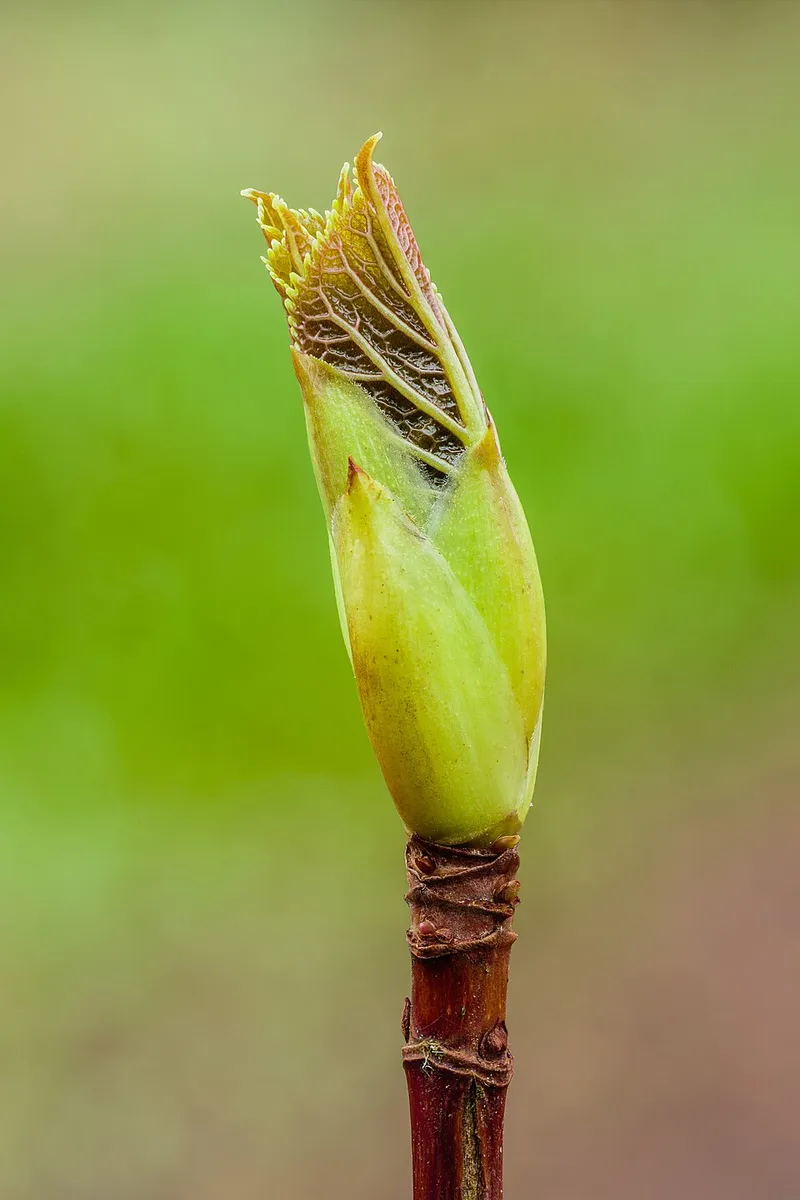
Confederate Jasmine (Trachelospermum jasminoides)
Star Jasmine
Full sun to part shade, medium well-drained soil, tolerates clay loam when not waterlogged, pH 5.5-7.0.
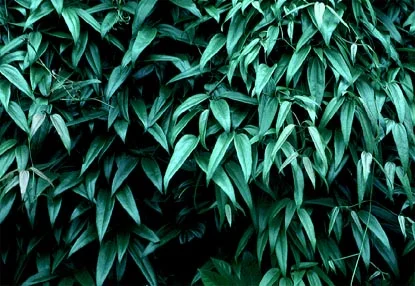
Evergreen twining vine or ground cover reaching 10-20 feet as a climber; blooms May-June with pinwheel-shaped white flowers, 1 inch across, intensely fragrant; milky latex sap; spreads by layering and rooting at stem nodes.
Native region: Not native to Tennessee; ornamental introduction from China and Japan.
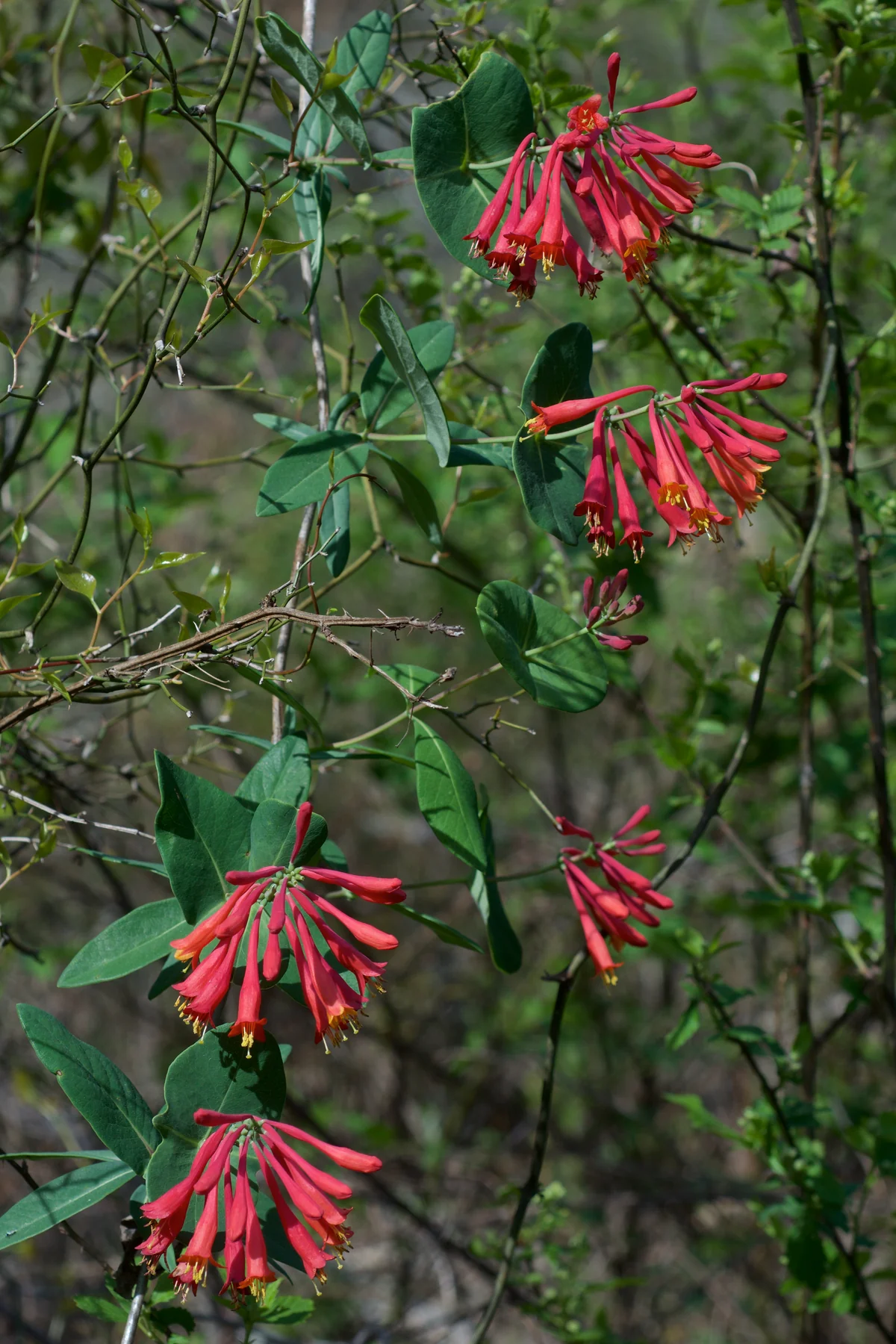
Confederate jasmine is sold widely in Middle Tennessee garden centers but is reliably hardy only to Zone 7b, most of Columbia and the I-65 corridor sits in Zone 6b/7a, meaning foliage bronzes or drops in a typical winter and plants die back to the ground in temperatures below 10°F. It performs better in the warmer pockets of the Nashville metro (urban heat island) and protected south-facing microclimates. In Zone 6b/7a, treat it as a perennial that may resprout from the root crown rather than a permanent evergreen screen. The fragrance during bloom is pronounced enough to scent an entire yard. As a ground cover on a slope rather than a climber, the lower profile reduces wind desiccation damage through winter. The milky latex causes contact dermatitis in sensitive individuals. Coral honeysuckle (Lonicera sempervirens) is a native evergreen alternative with better cold hardiness.
Quick Facts
- Common Name
- Confederate Jasmine
- Scientific Name
- Trachelospermum jasminoides
- Plant Type
- Vine
- Region
- Middle Tennessee