About Sycamore Lace Bug
Sycamore Lace Bug (Corythucha ciliata)
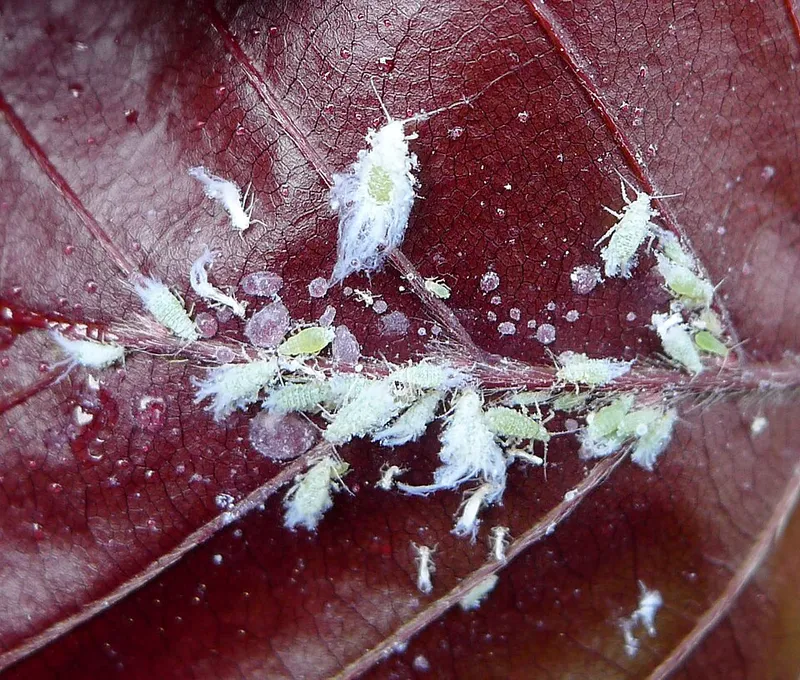
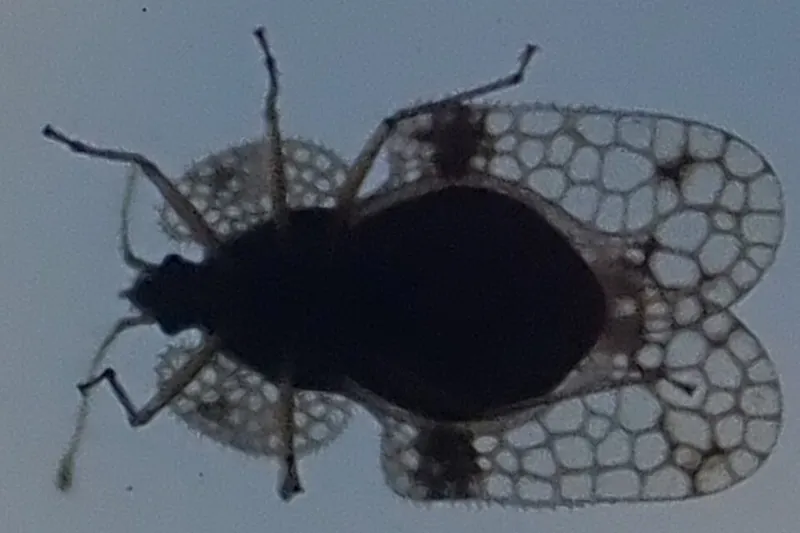
Identification: Adults 3-3.5 mm with elaborately lacy, transparent wings and a distinctive hooded pronotum, the lacework wing venation is shared with other lace bugs but C. ciliata is specific to sycamore (Platanus spp.) and plane trees. Found on leaf undersides in all life stages. Upper leaf surface develops a coarse, whitish stippling from feeding punctures; lower surface shows characteristic brown tar-like fecal deposits and cast nymph skins. Damage pattern closely resembles azalea lace bug (Stephanitis pyrioides) but host specificity immediately separates the two.
Life cycle: Two to three generations per year in Tennessee. Overwinters as adults in bark crevices and debris around the base of host trees. Adults become active in early spring as sycamore leaves expand and move onto the new foliage. First-generation nymphs appear May-June; subsequent generations overlap through September. Hot, dry summers in the I-65 corridor concentrate sycamore lace bug pressure, populations spike during periods of heat and moisture stress.
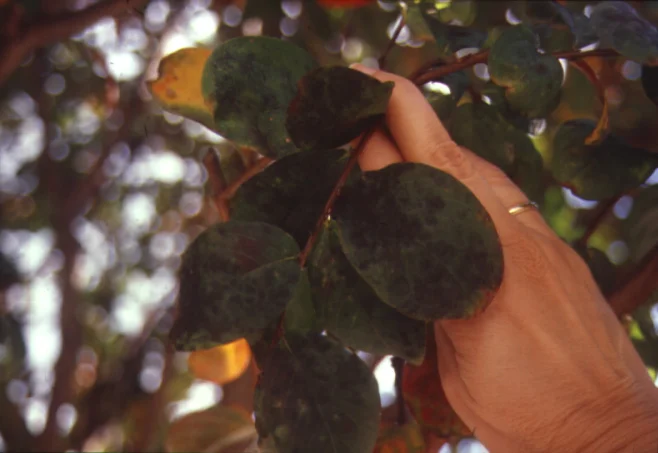
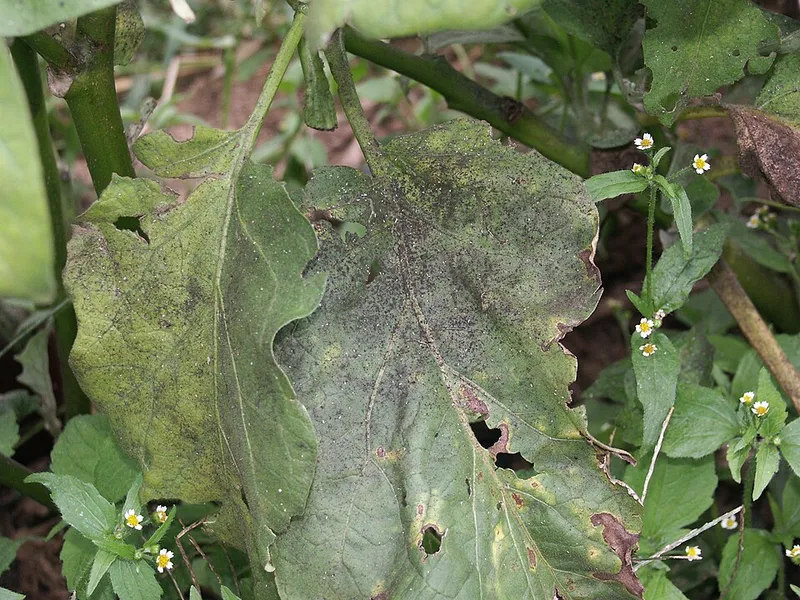
Damage signs: Heavy stippling on upper leaf surfaces producing a bleached, whitish-gray appearance visible from the ground on mature sycamores by midsummer. Black fecal deposits on leaf undersides are diagnostic. Severely stippled leaves drop prematurely in July-August. Repeated defoliation over multiple seasons weakens established sycamores and makes them susceptible to secondary pathogens. American sycamore (Platanus occidentalis), a common large specimen tree in Middle Tennessee bottomlands and residential properties, is the primary host.
Treatment window: At egg hatch and first nymph emergence in May. A second application in late June-early July targets the second generation before populations peak in the late-summer heat.
UT-recommended approach: Systemic imidacloprid soil drench in early spring provides residual phloem protection through the primary feeding period and is the most practical treatment for large mature sycamores where canopy coverage with contact insecticides is impractical. Insecticidal soap or horticultural oil applied to leaf undersides is effective on young trees and accessible foliage. Maintain sycamore soil moisture during summer drought to reduce lace bug pressure.
Quick Facts
- Common Name
- Sycamore Lace Bug
- Scientific Name
- Corythucha ciliata
- Category
- Landscape Pest
- Region
- Middle Tennessee