About Azalea Lace Bug
Azalea Lace Bug (Stephanitis pyrioides)
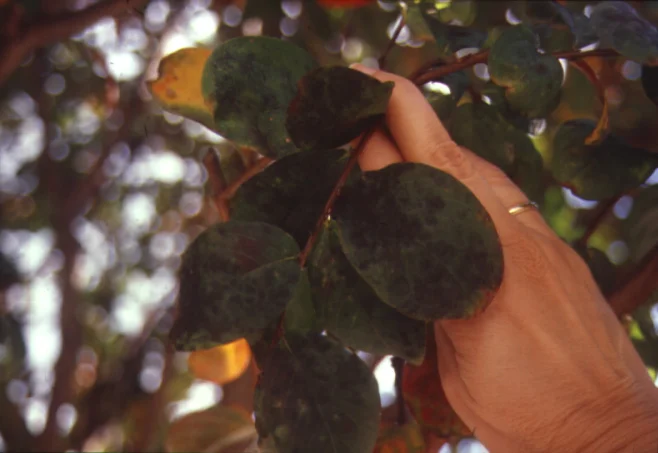
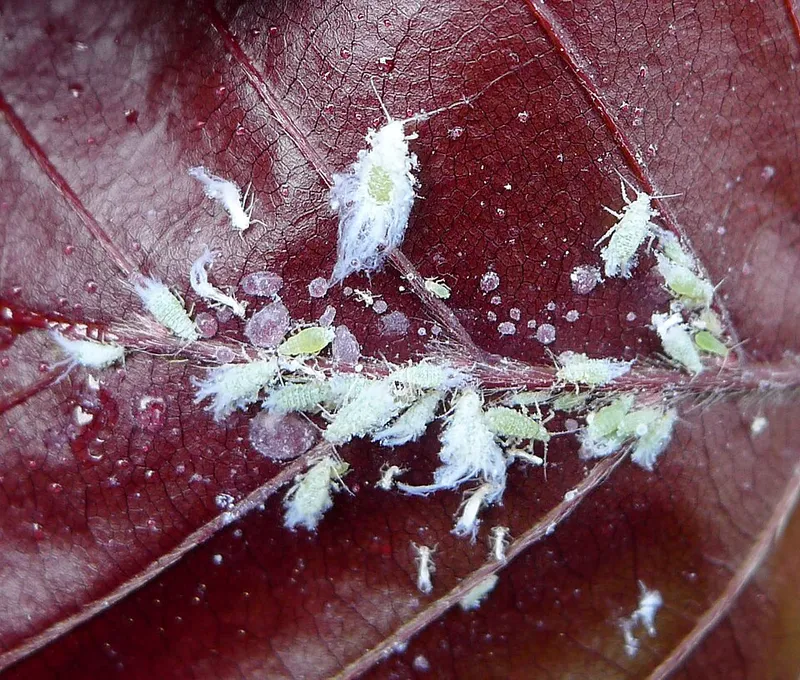
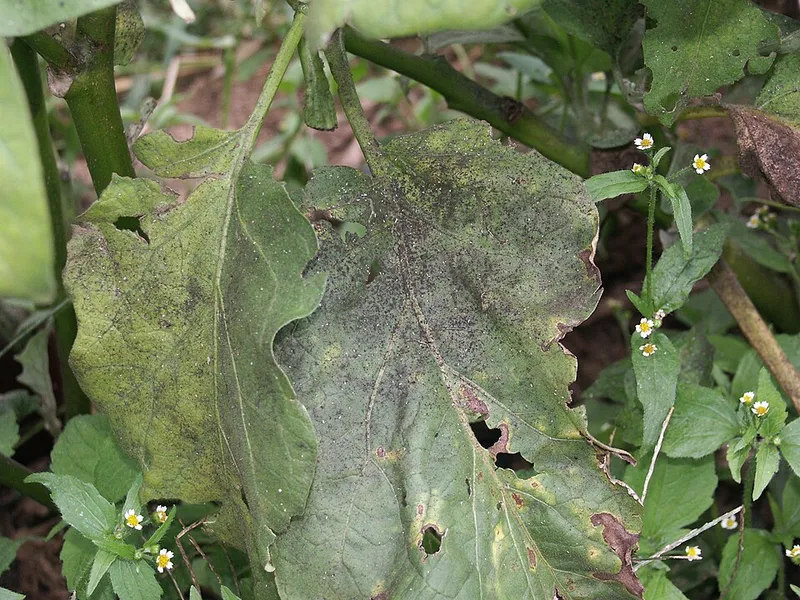
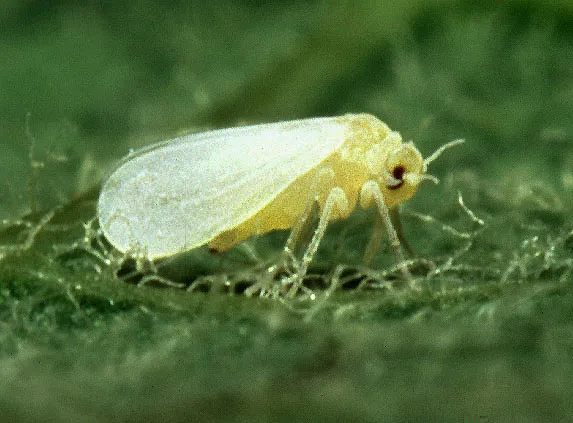
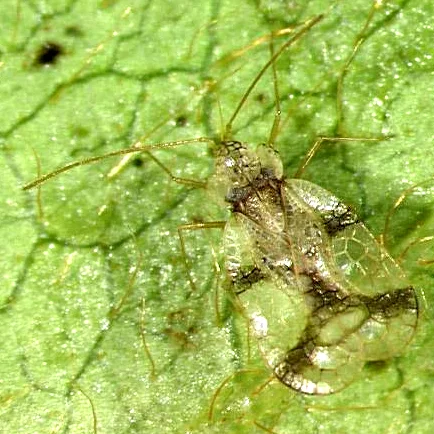
Identification: Adults 3-3.5 mm, with elaborately lacy, transparent wings held flat over the body, the hood and wing venation pattern is distinctively ornate. Found exclusively on azalea (Rhododendron spp.). Upper leaf surface develops a coarse, grayish stippling from feeding; lower surface shows characteristic black tar-like fecal spots and cast nymph skins, which distinguish lace bug damage from spider mite or whitefly injury.
Life cycle: Two to three generations per year in Middle Tennessee's Zone 6b/7a climate. Overwinters as eggs inserted into leaf tissue along the midrib of evergreen azalea varieties. Eggs hatch in late April to May; nymphs are dark, spiny, and gregarious. Adults of the first generation are present by mid-June; subsequent generations overlap through September. Sun-exposed azaleas consistently support larger populations than shaded specimens.
Damage signs: Progressively bleached, grayish upper leaf surface from feeding punctures that destroy chloroplasts. Heavy infestations turn foliage nearly white by midsummer. Black fecal deposits on leaf undersides persist as a diagnostic marker even after the insects disperse. Repeated defoliation and stress over 2-3 seasons can kill established azaleas, particularly those growing in full or part sun in clay soils.
Treatment window: At egg hatch in late April to early May targeting first-instar nymphs before they mature and disperse. A second treatment in late June-early July addresses the second generation. Treating adults only is less effective, nymphs are the most vulnerable stage.
UT-recommended approach: Imidacloprid systemic soil drench in early spring provides season-long residual through the primary feeding period and is the most effective single treatment for evergreen azaleas. Contact insecticides (insecticidal soap, horticultural oil) applied to leaf undersides with thorough coverage kill nymphs on contact. Relocating azaleas from full sun to part shade significantly reduces infestation pressure, this species thrives in heat and direct sun.
Quick Facts
- Common Name
- Azalea Lace Bug
- Scientific Name
- Stephanitis pyrioides
- Category
- Landscape Pest
- Region
- Middle Tennessee