About Parasitic Wasp
Parasitic Wasp (Braconidae)
Braconid Wasps, Parasitoid Wasps
Found wherever caterpillar, aphid, or fly pest populations occur; tiny adults are most visible on flowering herbs and composites where they feed on nectar and pollen between hosts.
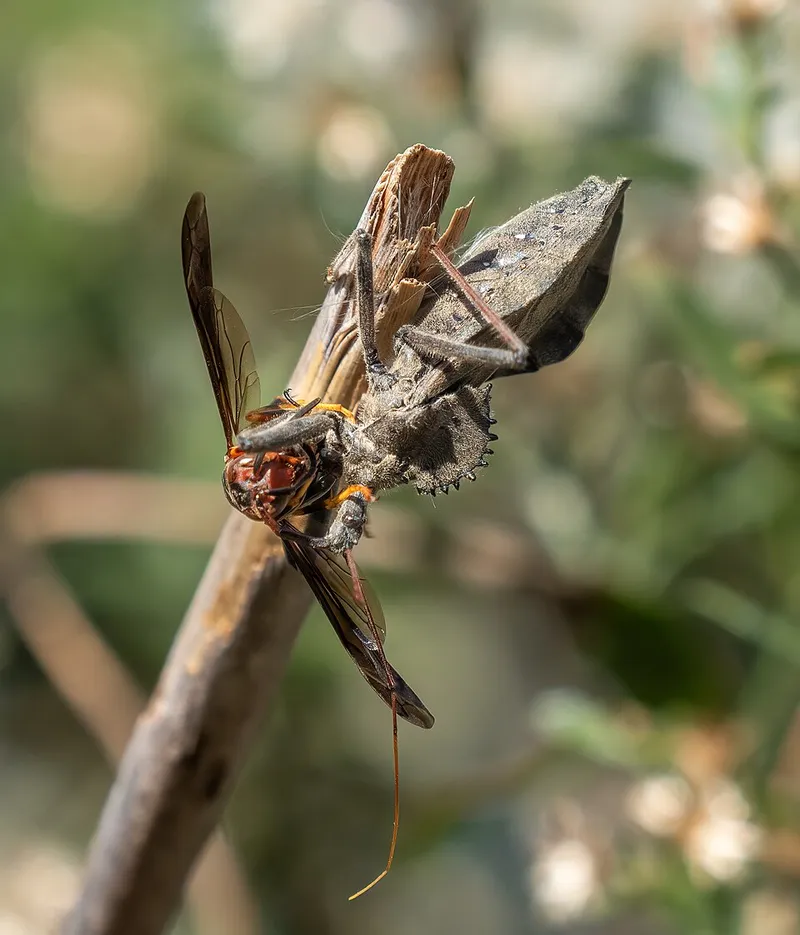
Family Braconidae contains thousands of species in the order Hymenoptera, most are 0.1-0.5 inches, threadwaisted, with variable coloration from black to orange-banded. Females deposit eggs in or on host insects (caterpillars, aphids, fly larvae, beetle larvae) using a specialized ovipositor. Larvae develop inside the living host, killing it upon emergence. Some braconids are solitary endoparasitoids; others are gregarious, producing clusters of white silk cocoons on the outside of a still-living but paralyzed caterpillar. These cocoon clusters on sphinx moth or hornworm caterpillars are the most recognizable field sign of Braconidae activity.
Native region: Braconidae represented by hundreds of native species throughout Tennessee, with diversity highest in areas with diverse native plantings.
Braconid wasps are critical biological control agents in Middle Tennessee vegetable gardens and ornamental beds, suppressing tobacco hornworms, imported cabbageworms, aphids, and squash vine borers. A caterpillar covered in white braconid cocoons is already dying, do not kill it, as the adult wasps emerging from those cocoons will parasitize additional hosts. Broad-spectrum pyrethroids and organophosphates applied to foliage kill adult braconids feeding on nectar. Planting small-flowered species, dill, fennel, cilantro, sweet alyssum, near vegetable beds increases adult braconid populations by providing accessible nectar and pollen sources.
Quick Facts
- Common Name
- Parasitic Wasp
- Scientific Name
- Hymenoptera: Braconidae
- Category
- Beneficial Insect
- Region
- Middle Tennessee