About Ground Beetle
Ground Beetle (Scarites quadriceps)
Burrowing Ground Beetle
Inhabits soil of turf, gardens, and bare ground; strictly nocturnal, spending daylight hours in self-excavated burrows; most active in spring and fall when soil temperatures are between 55-75°F.
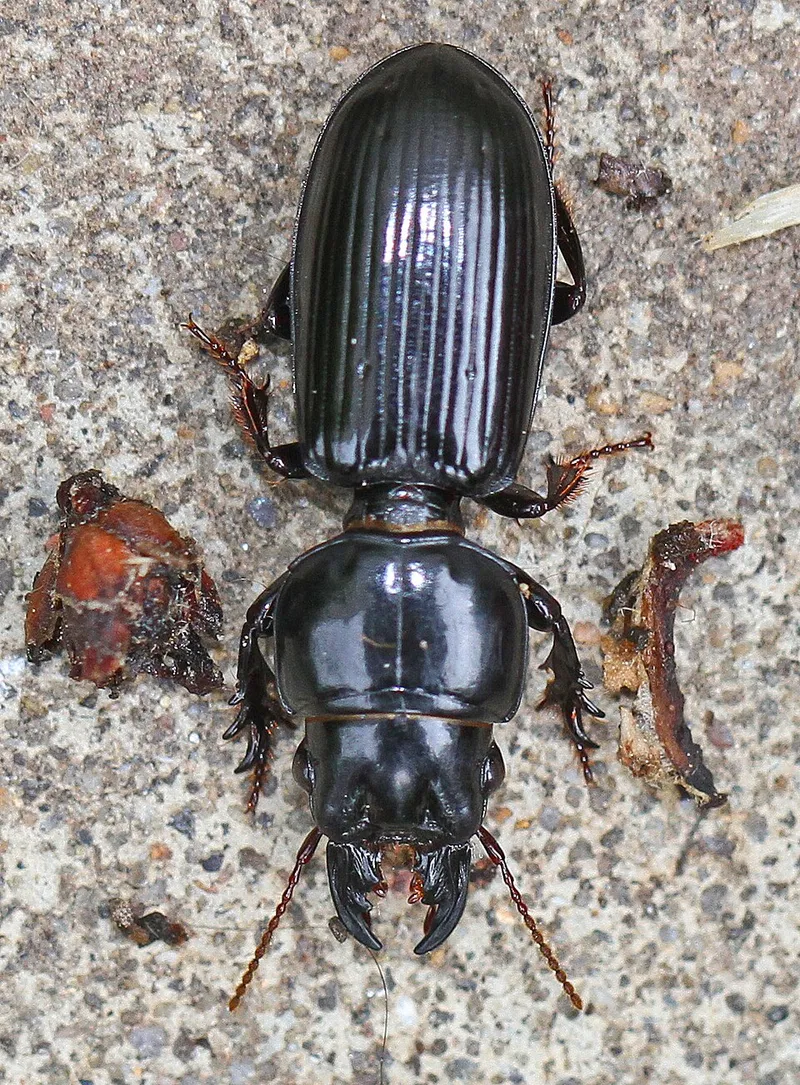
Scarites quadriceps adults are 0.6-1.0 inch, jet-black, heavily built, with constricted "waist" between thorax and abdomen, a hallmark of the genus Scarites. Powerful mandibles are adapted for capturing and subduing soil-dwelling prey. Both adults and larvae are predators of cutworm larvae, grub-stage beetles, root-feeding caterpillars, and other soil invertebrates. Scarites is among the most turf-active genera in the subfamily Scaritinae, with burrows often visible as clean round holes at turf-soil interface.
Native region: Scarites quadriceps occurs throughout the eastern United States including Tennessee, particularly in moist, compacted soils along stream edges and in maintained turf.
In Middle Tennessee lawns, Scarites quadriceps is a quiet but consistent predator of black cutworm and fall armyworm larvae in the thatch-soil zone. Its nocturnal habit means it rarely surfaces during daylight; small, perfectly round burrow entrances (4-6 mm diameter) in bare or thin turf areas are the primary evidence of activity. Insecticide applications targeting cutworms or armyworms in the soil layer, particularly granular chlorpyrifos or bifenthrin, reduce ground beetle populations. Where armyworm pressure is moderate, preserving Scarites populations by using targeted surface sprays rather than soil-incorporated materials allows natural predation to extend the control window.
Quick Facts
- Common Name
- Ground Beetle
- Scientific Name
- Scarites quadriceps
- Category
- Beneficial Insect
- Region
- Middle Tennessee