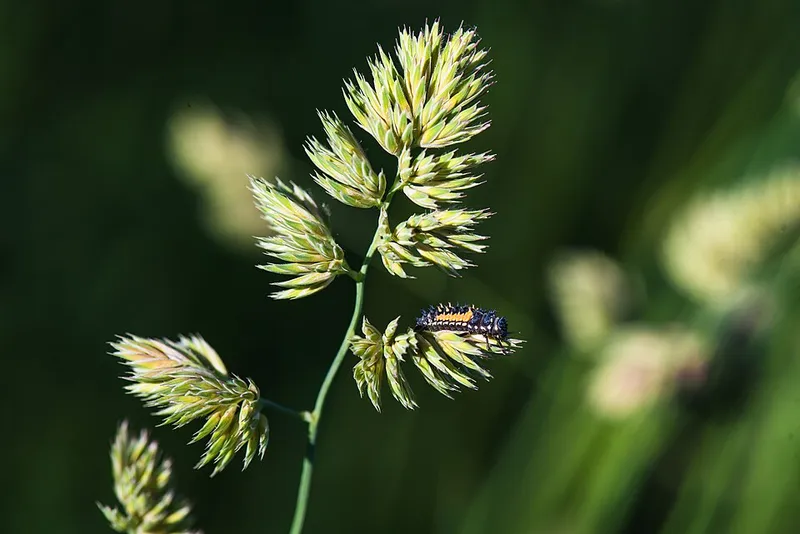
About Lady Beetle
Lady Beetle (Harmonia axyridis)
Multicolored Asian Lady Beetle, Halloween Lady Beetle
Found on ornamental shrubs, trees, and garden plants wherever aphid or scale colonies are present; adults overwinter in large aggregations inside structures.
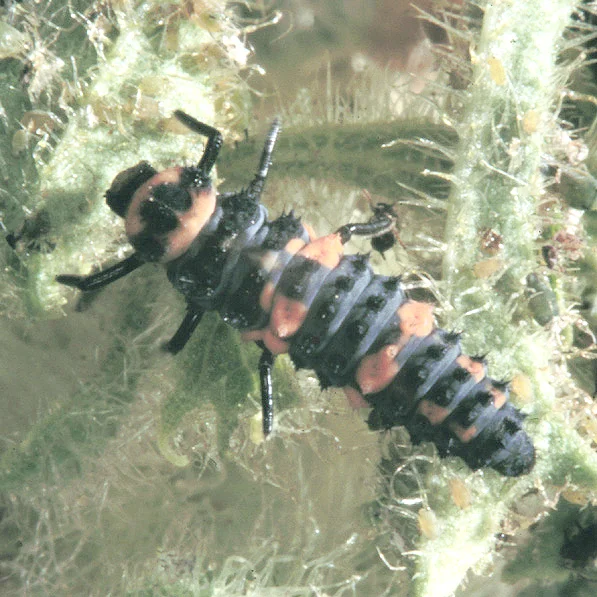
Harmonia axyridis adults are 0.25-0.35 inches, highly variable in color from pale yellow to deep orange-red with 0-19 black spots; the white cheek patches (mouthparts area) with a dark M-shaped mark are the most reliable field character. Introduced from Asia for biological control in the 1980s-1990s, now the dominant lady beetle species in most Middle Tennessee landscapes. Adults and larvae consume 100-300 aphids per day at peak activity; also feeds on scale crawlers, mealybugs, and psyllids.
Native region: Not native to Tennessee; ornamental introduction from eastern Asia, now naturalized statewide.
Harmonia axyridis is a highly effective aphid predator on crape myrtles, roses, and ornamental trees throughout the Columbia-to-Franklin corridor. Adults aggregate on south-facing walls and enter structures in October, which makes them a nuisance pest despite their predatory value. Neonicotinoid soil drenches applied to landscape shrubs for aphid control persist in plant tissue for months and eliminate both pest aphids and the lady beetles feeding on them, disrupting the natural control cycle for the following season. Where aphid pressure is moderate, tolerating the colony long enough for Harmonia axyridis populations to build typically eliminates the need for any foliar treatment.
Quick Facts
- Common Name
- Lady Beetle
- Scientific Name
- Harmonia axyridis
- Category
- Beneficial Insect
- Region
- Middle Tennessee