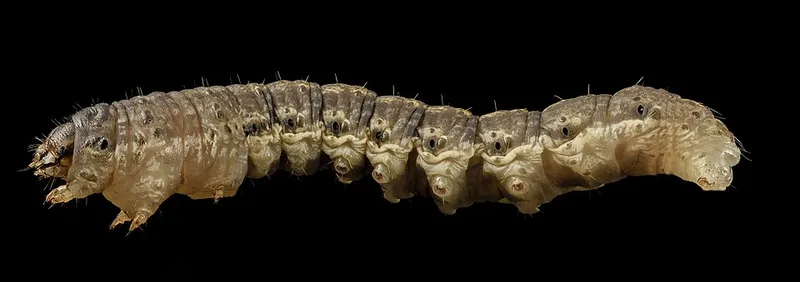
About Black cutworm
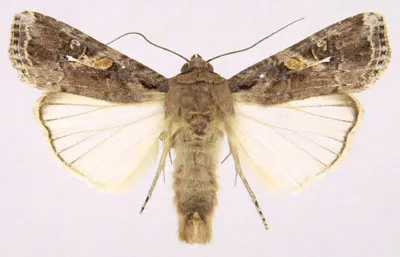
The Black Cutworm (Agrotis ipsilon) is a moth larva, not a true grub, whose caterpillars feed on turfgrass shoots at or just below the soil surface. Adults are dark gray-brown moths with a wingspan of about an inch and a half; they're nocturnal migrants that move north from overwintering areas in the Gulf states each spring. In Middle Tennessee, moths arrive on southerly winds in March and April and begin laying eggs in low-cut turf and bare soil. The larvae hatch as small caterpillars, feed on grass blades initially, then burrow just below the soil surface as they mature, feeding on stems and crowns at night and retreating underground during the day.
Mature black cutworm larvae are stout, one and a quarter to nearly two inches long, smooth-skinned, and gray to nearly black above with a paler underside. The characteristic identification: when disturbed, they curl tightly into a C-shape. The damage pattern they create is distinctive, small, round depressed spots of closely cropped or missing turf, often with a small entrance hole at the center. In residential fescue lawns this shows up as scattered circular bare spots, an inch to two inches across, scattered irregularly across the lawn. Golf course superintendents deal with far worse damage on closely mown putting greens, but in home lawns at normal mowing heights the damage is real but typically less catastrophic.
Black cutworm is covered by the same bee-safe insecticide chemistry I include in the standard treatment plan. Agrotis ipsilon is a Lepidoptera larva feeding on grass shoots, that puts it squarely in the category of insects the plan's chemistry targets. The systemic insecticide moves into the plant tissue, so when cutworm caterpillars feed on stems and crowns at the soil surface at night, they're contacting treated tissue. The timing of the May application catches the bulk of first-generation larvae before they mature. The armyworm and cutworm coverage is one of the most underappreciated parts of the plan, people think about grubs, but it's the shoot-feeding Lepidoptera larvae like cutworms and fall armyworms that can do the most visible overnight damage to a fescue lawn in Middle Tennessee's humid summer season.
Quick Facts
- Common Name
- Black cutworm
- Scientific Name
- Agrotis ipsilon
- Category
- Turf Pest
- Region
- Middle Tennessee