About Lacewings
Lacewings (Chrysopidae, Hemerobiidae)
Green Lacewings, Brown Lacewings
Occur across a wide range of garden, turf, and woodland-edge habitats; adults and larvae most abundant in summer and early fall when prey populations are highest.
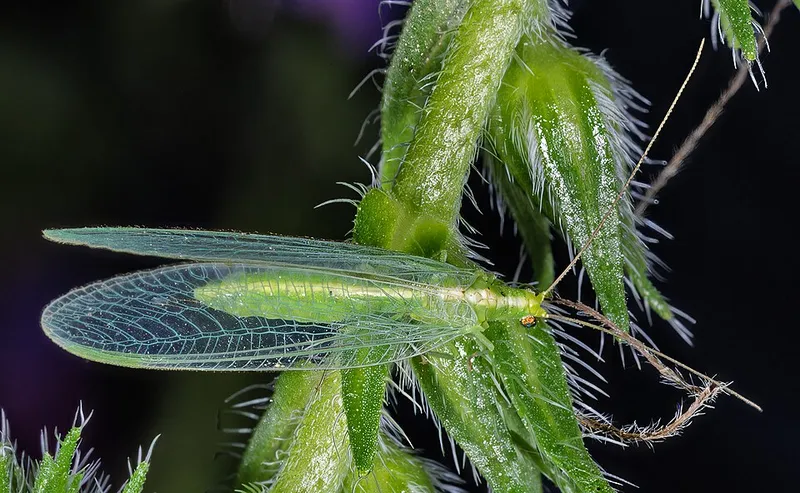
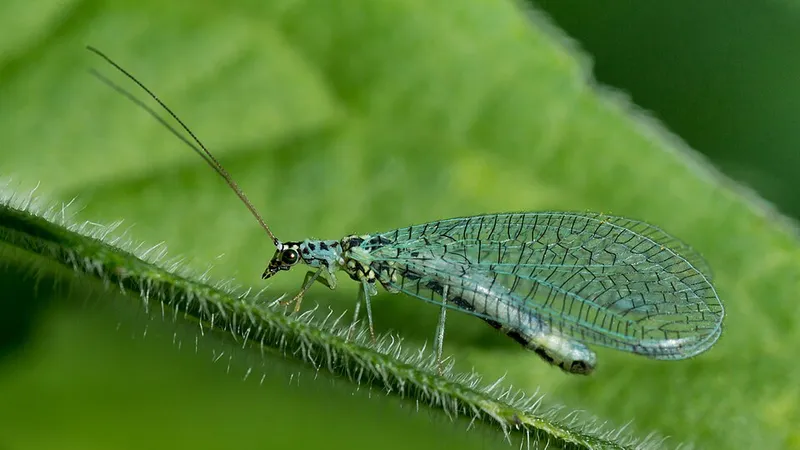
Order Neuroptera includes two families of lacewings common in Middle Tennessee: Chrysopidae (green lacewings) and Hemerobiidae (brown lacewings). Adults are 0.5-0.75 inches with large, veined wings and prominent eyes. Larvae are flattened, tufted predators called aphid lions, they use hollow, sickle-shaped mandibles to pierce and drain soft-bodied prey including aphids, thrips, whiteflies, mites, and small caterpillars. Green lacewing adults are largely pollen and nectar feeders; brown lacewing adults also prey on soft-bodied insects.
Native region: Both families represented statewide throughout Tennessee.
Lacewing larvae are among the most effective biological control agents in Middle Tennessee ornamental and vegetable gardens. A single larval stage can destroy 200 or more aphids before pupating. Adults are attracted to light, so finding adults on window screens near gardens is common in summer. Lacewing eggs are distinctive, each is mounted on a slender silk stalk attached to a leaf surface, protecting the egg from cannibalism by earlier-hatched larvae. Broad-spectrum foliar sprays (pyrethroids, malathion) eliminate both larval and adult lacewings; spot-treating rather than broadcast spraying preserves these populations in ornamental beds.
Quick Facts
- Common Name
- Lacewings
- Scientific Name
- N/A
- Category
- Beneficial Insect
- Region
- Middle Tennessee