About Assassin Bug
Assassin Bug (Arilus cristatus)
Wheel Bug
Found in gardens, woodland edges, and ornamental shrub plantings; most visible in late summer and fall when adults are fully developed and prey populations are high.
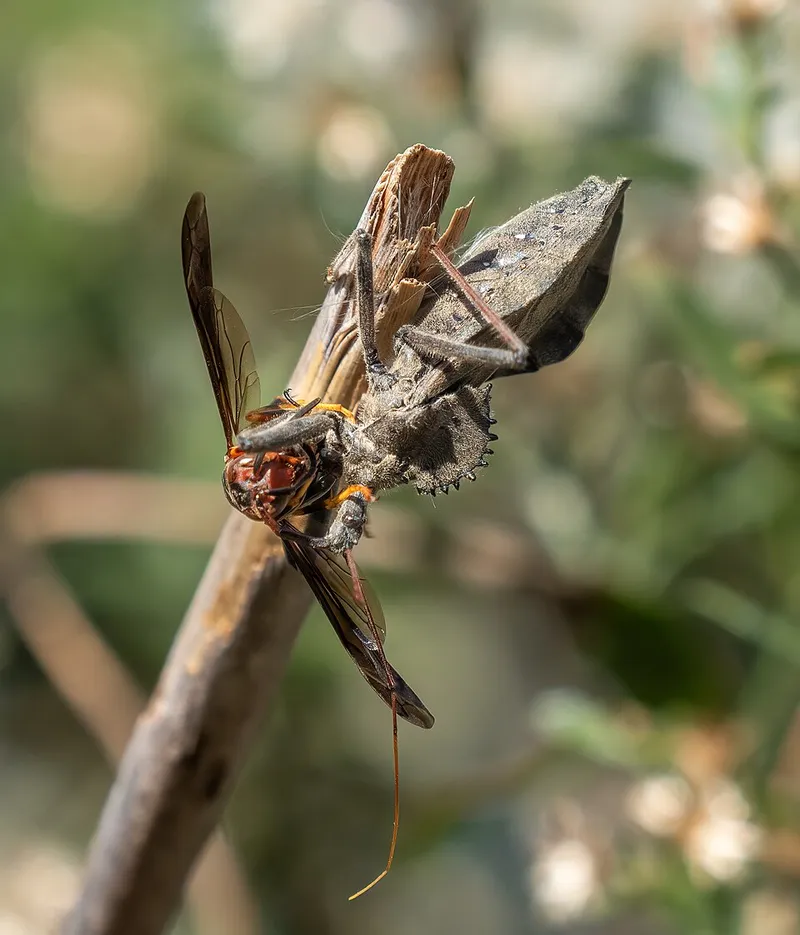
Arilus cristatus, the wheel bug, is the largest assassin bug in North America, adults reach 1.0-1.5 inches. Named for the prominent cog-shaped crest on the thorax, unique among Tennessee insects. Both nymphs and adults are generalist predators: they use a stout, curved beak to inject paralytic saliva and drain prey including caterpillars, stink bugs, beetles, and other insects large enough to subdue. One adult can take multiple large caterpillars per day.
Native region: Statewide in Tennessee; common along the I-65 corridor and throughout Middle Tennessee woodland edges and ornamental plantings.
Wheel bugs provide meaningful suppression of soft-bodied caterpillar pests in late summer, a period that coincides with fall webworm and various looper populations in Middle Tennessee. They are slow-moving and cryptically colored, making them easy to miss against tree bark or woody stems. Handle with caution, the beak delivers a painful bite if the insect is grasped. Pyrethroid sprays applied to tree foliage for caterpillar control also kill wheel bug nymphs and adults. Where wheel bug populations are present, spot-treating individual caterpillar colonies rather than broadcasting insecticide preserves this predator.
Quick Facts
- Common Name
- Assassin Bug
- Scientific Name
- Arilus cristatus
- Category
- Beneficial Insect
- Region
- Middle Tennessee