About Leafcutting Bees
Leafcutting Bees (Megachile spp.)
Leafcutter Bees
Associated with open, sunny habitats; nest in pre-existing cavities in wood, hollow stems, or bare soil; most active in summer when flowering plants are in peak bloom.
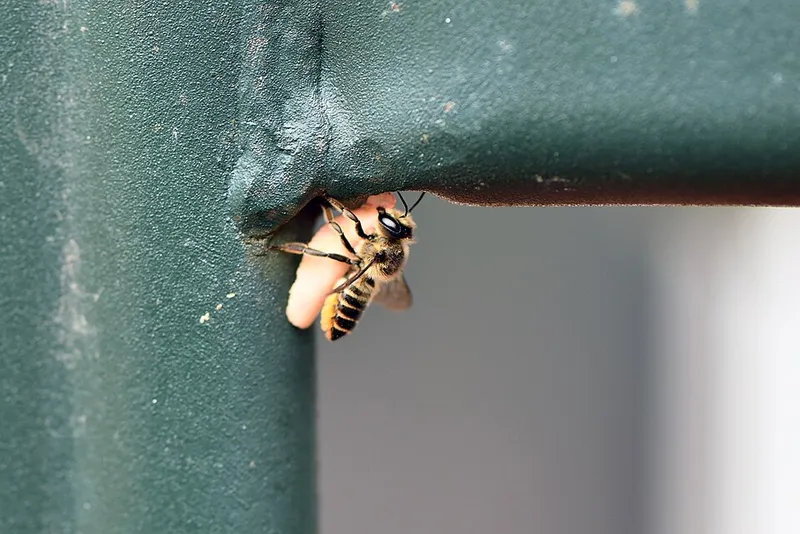
Solitary bees, 0.4-0.6 inches long; females carry pollen on the underside of the abdomen (scopa) rather than in corbiculae. Nest cells are constructed from precisely cut discs of leaf material, typically from roses, redbuds, or other smooth-leaved plants. Adults active June-August in Middle Tennessee.
Native region: Multiple Megachile species are native throughout Tennessee; ornamental species and non-native taxa also present.
Leafcutting bees are among the most efficient pollinators in Middle Tennessee landscapes, their dry-pollen-carrying method releases pollen at high rates during flower contact. Circular or semicircular cuts on rose or redbud leaves are diagnostic evidence of nesting activity; this cosmetic damage does not harm established woody plants and is far outweighed by pollination benefit. These bees are non-aggressive; females rarely sting unless directly handled. Avoid broad-spectrum contact insecticides (pyrethroids, organophosphates) on flowering plants during peak bee season, a single spray event can eliminate the local population that took a full season to establish. Ground-nesting Megachile prefer compacted bare soil; a managed, lightly mulched border provides nesting habitat without compromising turf.
Quick Facts
- Common Name
- Leafcutting Bees
- Scientific Name
- N/A
- Category
- Beneficial Insect
- Region
- Middle Tennessee