About Green Lacewing
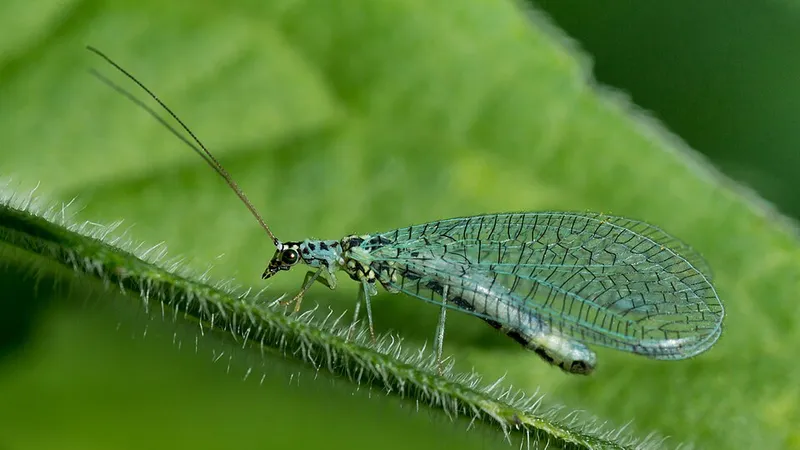
Green Lacewing (Chrysoperla carnea)
Common Green Lacewing, Aphid Lion (larval stage)
Found in gardens, ornamental plantings, and crop edges; adults most common in late spring through early fall; overwinters as an adult in sheltered sites.
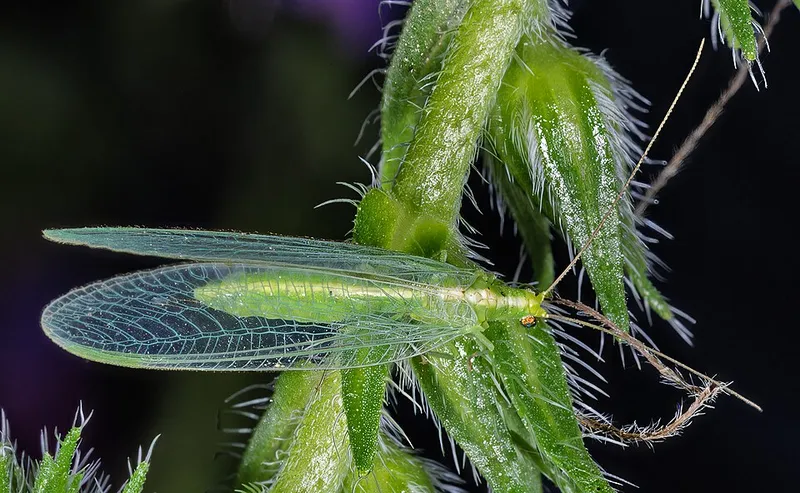
Chrysoperla carnea adults are 0.5-0.75 inches with large, bright green wings patterned with a fine network of veins and golden or copper-colored eyes. Adults feed primarily on nectar, pollen, and honeydew. The larvae, called aphid lions, are tan with tufted lateral projections and elongated, hollow mandibles; they actively hunt and drain aphids, small caterpillars, thrips, mite eggs, and whitefly nymphs. A single larva can consume 200-400 prey items before pupating in a spherical silk cocoon.
Native region: Chrysoperla carnea is widely distributed throughout Tennessee and the broader Southeast; also commercially produced for augmentative biological control.
In Middle Tennessee ornamental beds and vegetable gardens, Chrysoperla carnea larvae provide rapid aphid suppression during the May-August window when crape myrtle aphids, oleander aphids, and rose aphids peak. Eggs are laid individually on slender silk stalks, a field mark that distinguishes them from all other insect eggs on foliage. Pyrethroid and organophosphate applications are lethal to both larvae and adults; insect growth regulators have lower impact. Planting pollen and nectar sources such as fennel, coriander, and buckwheat near ornamental beds supports adult Chrysoperla populations and encourages on-site reproduction.
Quick Facts
- Common Name
- Green Lacewing
- Scientific Name
- Chrysoperla carnea
- Category
- Beneficial Insect
- Region
- Middle Tennessee