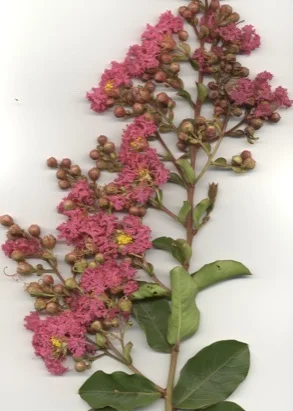
About Crape Myrtle
Crape Myrtle (Lagerstroemia indica)
Full sun, moist to well-drained, tolerates clay, loam, and sandy soils, pH 5.0-7.5; drought-tolerant once established but performs best with consistent summer moisture.
3-25 feet tall depending on cultivar; multi-stemmed with exfoliating cinnamon to gray bark; blooms July-September with large panicles of crinkled flowers in red, pink, lavender, or white; fruit a persistent brown capsule. Growth rate medium to fast.
Native region: Not native to Tennessee; ornamental introduction from China and Korea, naturalized in parts of the Southeast.
L. indica is the signature summer-blooming tree across Middle Tennessee, performing reliably in Columbia's Zone 7a heat and humidity with virtually no irrigation once established. The dominant maintenance problem is rampant topping, colloquially called "crape murder", which removes the natural vase form, creates weak epicormic sprouts, and eliminates most of the following season's flowers. Powdery mildew (Erysiphe australiana) is the most significant disease, preferring shaded or densely planted specimens; modern disease-resistant cultivars with L. fauriei parentage (e.g. 'Natchez', 'Tuscarora', 'Muskogee') show substantially reduced mildew incidence. Crapemyrtle aphid (Tinocallis kahawaluokalani) infests new growth in summer, excreting honeydew that supports sooty mold on foliage and hardscape below; predatory insects generally suppress populations without intervention by midsummer.
Quick Facts
- Common Name
- Crape Myrtle
- Scientific Name
- Lagerstroemia indica
- Plant Type
- Tree
- Region
- Middle Tennessee