About Sweet Alyssum
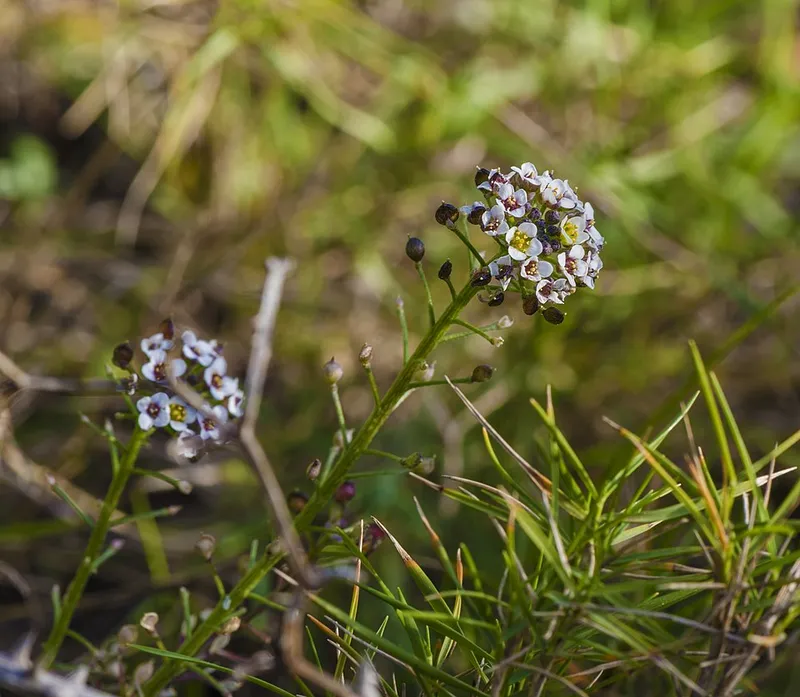
Sweet Alyssum (Lobularia maritima)
Alyssum, Sweet Alison
Full sun to part shade; medium moisture, well-drained; tolerates poor sandy or loamy soil; pH 6.0-7.0.
3-6 inches tall, 6-12 inches wide, spreading mat; blooms spring through early summer and again in fall with tiny white, pink, or purple honey-scented flower clusters; goes dormant or declines in peak summer heat above 85°F; self-seeds prolifically.
Propagation: direct sow in early spring or fall; seeds germinate in 7-14 days at 60-70°F soil temperature; established plants self-seed and often reappear without replanting.
Native region: Not native to Tennessee; ornamental introduction from the Mediterranean region.
In Middle Tennessee's Zone 6b/7a climate, L. maritima functions best as a cool-season annual, planted in early March or in September for fall bloom. The intense summer heat of July and August causes bloom cessation and partial dieback, but plants often recover with the return of cooler temperatures in September. Shearing back spent stems by one-third in late June promotes fresh growth and fall rebloom. The honey fragrance reliably attracts beneficial insects including parasitic wasps and hoverflies, making it a useful companion plant in vegetable gardens. In Columbia's clay soils, raised beds or containers prevent the crown rot that affects plants sitting in poorly drained ground after heavy spring rains.
Quick Facts
- Common Name
- Sweet Alyssum
- Scientific Name
- Lobularia maritima
- Plant Type
- Shrub
- Region
- Middle Tennessee