About Muscadine Grape
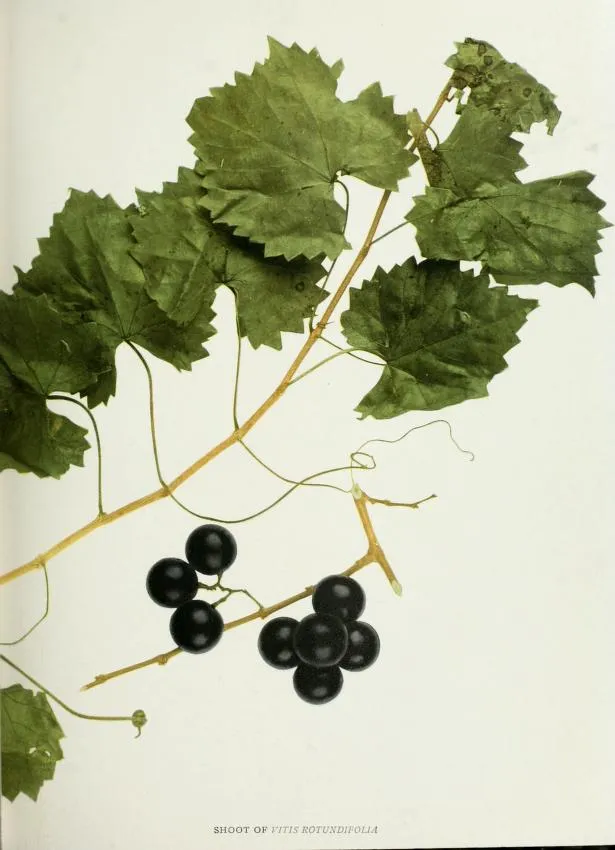
Muscadine Grape (Vitis rotundifolia)
Scuppernong, Southern Fox Grape
Full sun, medium to well-drained moisture, tolerates clay and sandy soils, pH 5.5-6.5; poor drainage is the most common establishment failure.
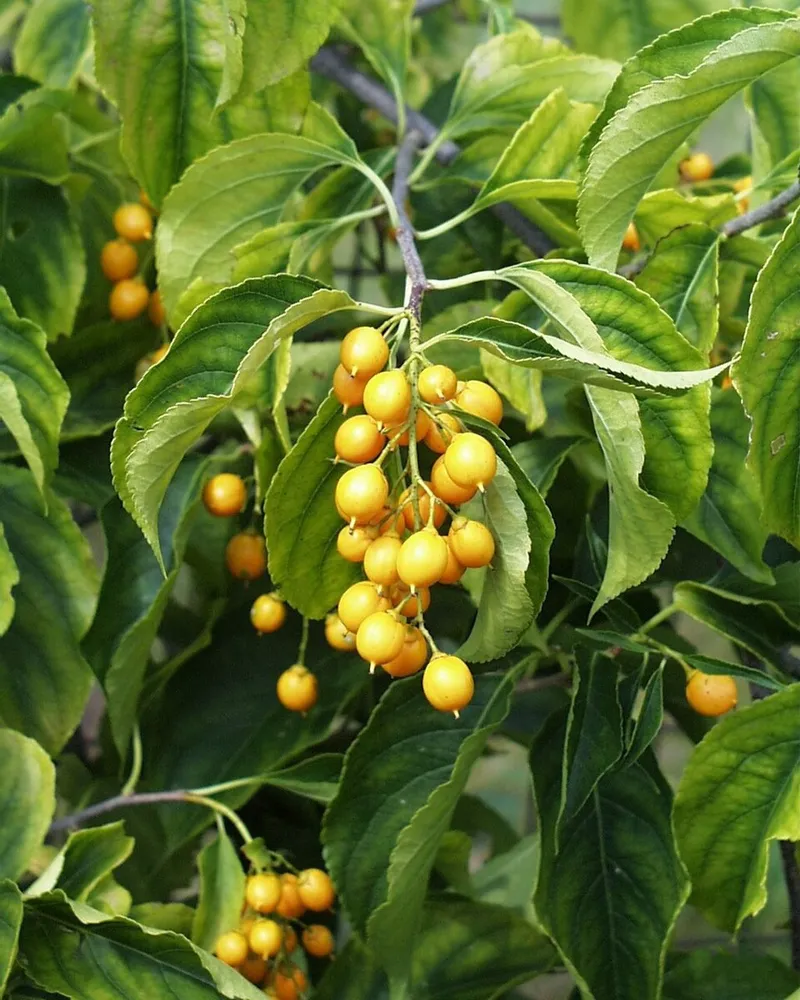
Vigorous deciduous vine climbing 60-100 feet by tendrils; lobed leaves 3-5 inches wide; small greenish flowers in May-June; fruit clusters of 3-40 round berries (3/4-1.5 inches), bronze or black-purple, ripening August-October; spreads by layering and bird-dispersed seed.
Propagation by hardwood cuttings in winter or softwood cuttings in summer; named cultivars grafted onto rootstock for commercial fruit production.
Native region: West and Middle Tennessee, primarily in moist bottomland forests, forest edges, and along waterways; less common in East Tennessee.
Muscadine is the only grape species with disease resistance sufficient for unsprayed production in Middle Tennessee's humid summers, the thick skin and loose cluster structure resist the bunch rots (Botrytis cinerea, Plasmopara viticola) that devastate European wine grapes in the I-65 corridor's subtropical humidity. Self-fertile cultivars ('Carlos', 'Noble') fruit as single vines; older straight-species selections may require a pollinator plant. Muscadine must be trained on a trellis system with annual pruning of lateral spurs to prevent fruit production from migrating out of reach. Fruit is attractive to wildlife including white-tailed deer, raccoons, and box turtles. Distinguishable from other native grapes (Vitis spp.) by the non-forked tendrils and distinctive musky fruit flavor.
Quick Facts
- Common Name
- Muscadine Grape
- Scientific Name
- Vitis rotundifolia
- Plant Type
- Vine
- Region
- Middle Tennessee