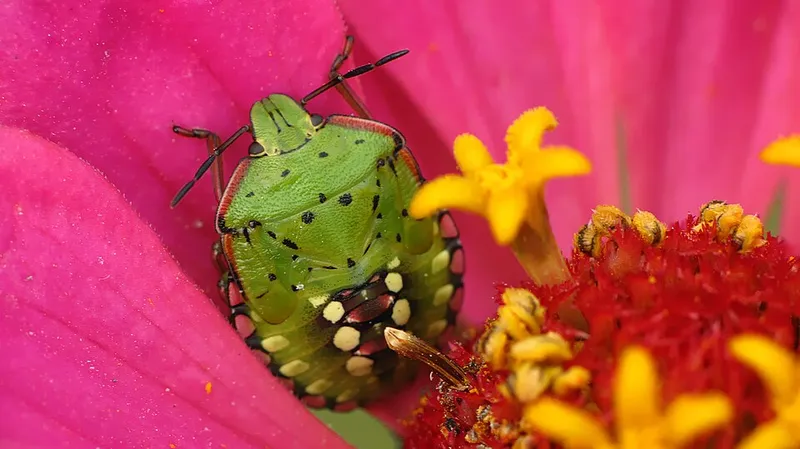
About Hairy chinch bug
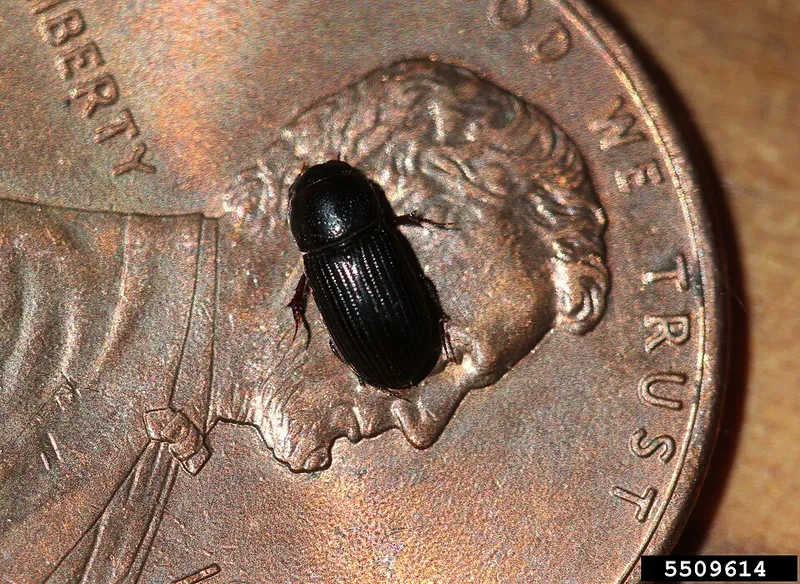
The Hairy Chinch Bug (Blissus leucopterus) is a small, sucking insect that feeds on turfgrass by inserting its piercing mouthparts into the leaf sheath and extracting plant sap. Adults are about one-sixth of an inch long, black body with white wings folded flat across the back, with a distinctive triangular black mark visible between the wing pads. Nymphs are bright red with a white band across the abdomen when they first hatch, making them easier to spot than the adults if you're looking close to the soil line in hot, dry turf.
Chinch bugs thrive in hot, dry, sunny conditions and are strongly associated with drought-stressed turf and lawns in full sun near hardscapes. They overwinter as adults in thatch and debris, become active in spring, and produce two generations per year in Tennessee. The first generation causes damage through May and June; the second generation is active July through September, which is when the most severe damage typically occurs. Affected areas show up as irregular yellow-to-straw patches in the hottest, driest parts of the lawn, along south-facing edges, against driveways and sidewalks, in boulevard strips. The damage looks almost identical to drought stress, and in fact drought stress makes chinch bug damage significantly worse because stressed plants cannot tolerate the additional sap loss.
I want to be direct about something: in my years of treating lawns along the I-65 corridor, I have seen chinch bugs cause real damage quite a few times, but never on fescue. Every confirmed chinch bug problem I've encountered has been on zoysia. That doesn't mean it can't happen on fescue, but the hairy chinch bug shows a strong preference for warm-season turf species in my experience here in Middle Tennessee. If you have a zoysia lawn and you're seeing dry-looking patches in midsummer that don't respond to irrigation, chinch bugs are high on my list.
For zoysia customers, the standard treatment plan's insecticide application using bee-safe chemistry covers chinch bugs, it's folded in at no additional cost. Chinch bugs technically fit the category of insects foraging on plant tissue, so the systemic insecticide reaches them. Preventive timing in May means coverage is in place before the damaging first generation peaks.
Quick Facts
- Common Name
- Hairy chinch bug
- Scientific Name
- Blissus leucopterus
- Category
- Turf Pest
- Region
- Middle Tennessee