About Asiatic Garden Beetle
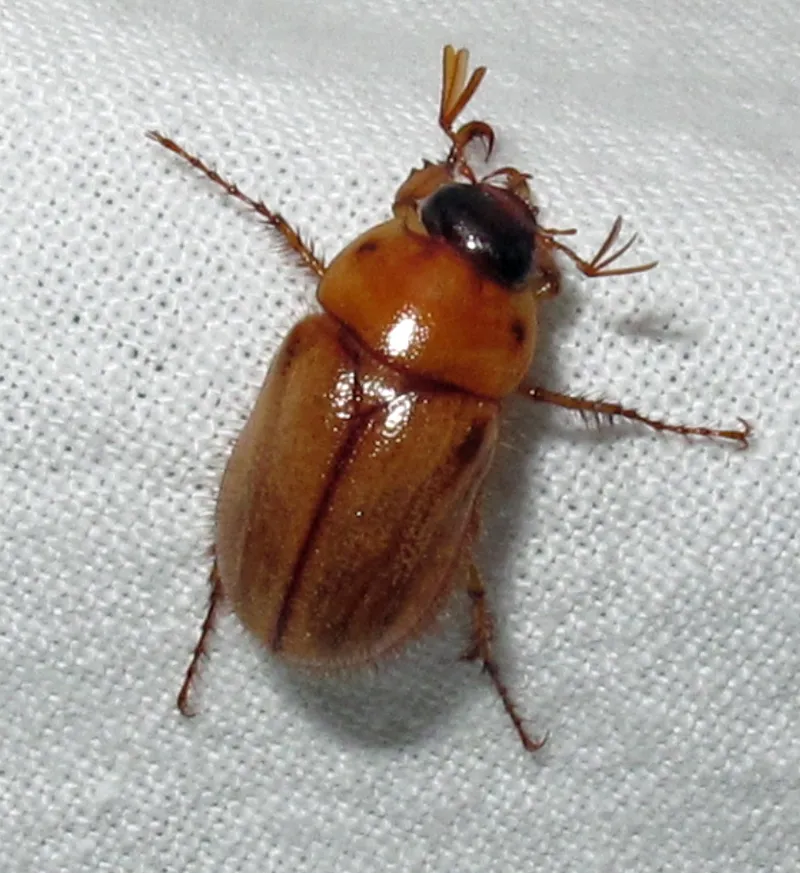
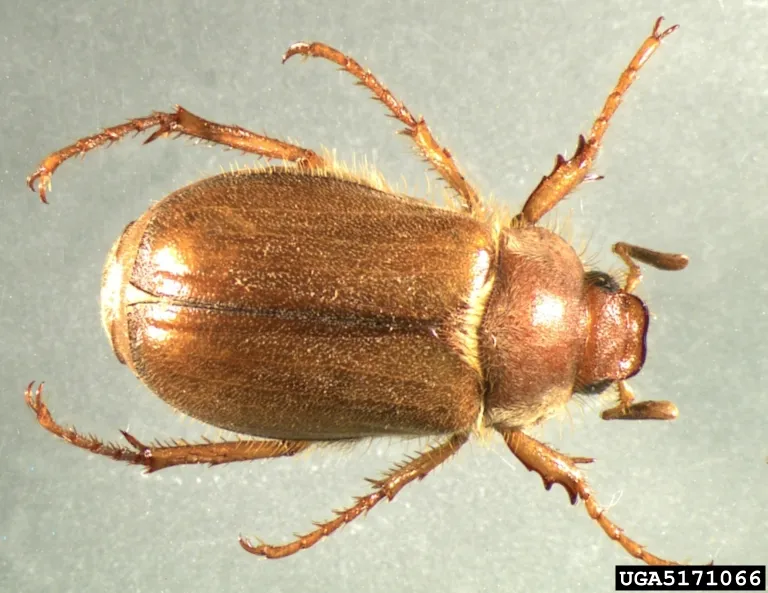
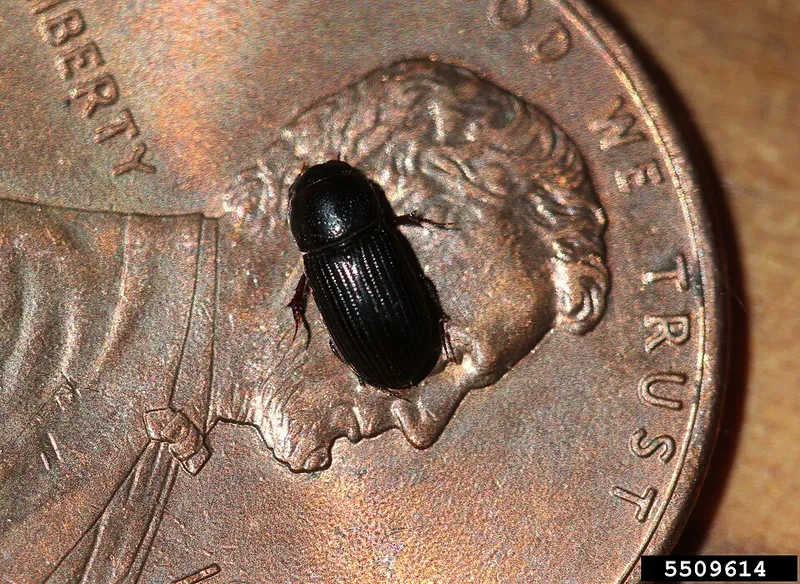
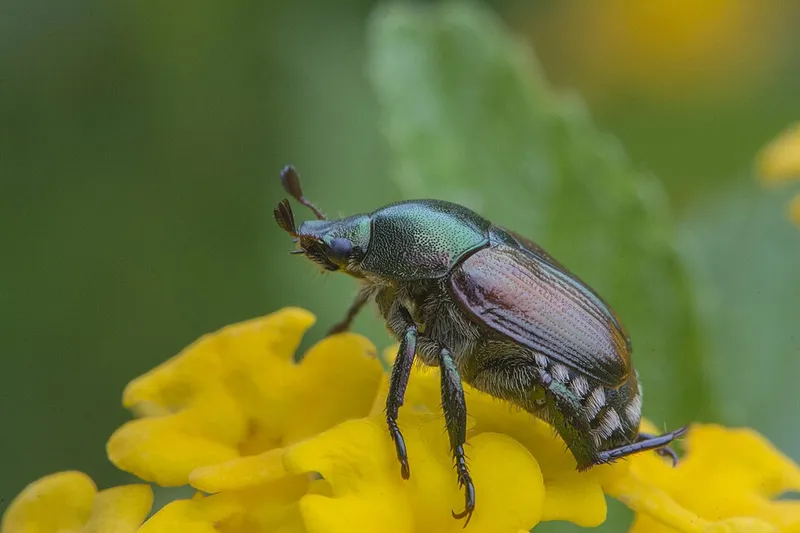
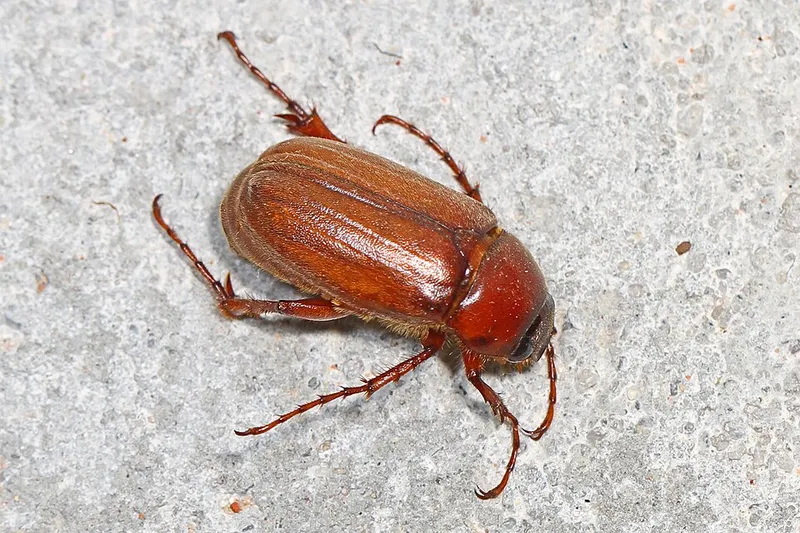
The Asiatic Garden Beetle (Maladera castanea) is a small, chestnut-brown scarab introduced from Japan and China that arrived in the northeastern United States in the 1920s and has since established across much of the East. Adults are roughly three-eighths of an inch long, distinctly smaller than a Japanese beetle, with a velvety, coppery-brown surface. Like masked chafers, adults are strongly nocturnal and fly to lights in July and August. During daylight they stay in the soil or thatch. The adults also feed on ornamental plant foliage at night, which can cause minor chewing damage on flowers and low-growing plants near turf edges.
The larvae are classic C-shaped white grubs: creamy white body, tan head capsule, three pairs of legs. They complete one generation per year. Eggs are laid in turf during July and August; young grubs feed on organic matter and fine roots through late summer; root-feeding damage concentrates in August and September as grubs reach their second and third instars. At peak size, Maladera castanea larvae are smaller than Japanese beetle or June bug grubs, but what they lack in individual size they can make up in density, high local populations can still devastate the root zone of a fescue lawn during Middle Tennessee's already-stressful summer window.
In my experience along the I-65 corridor, Asiatic garden beetle is not the species I most commonly encounter in grub-damage calls, but it does show up, particularly in lawns with older ornamental beds nearby that can support adult populations. The diagnosis is the same regardless of which grub species is present: peeling turf, secondary damage from raccoons and skunks digging for the grubs (which often does more visible harm than the grubs themselves), and root systems that look cut off cleanly at the soil profile.
Treatment follows exactly the same preventive protocol as all other white grub species. I apply chlorantraniliprole in May as part of the standard plan, before eggs are in the ground, before larvae hatch, before any root damage occurs. This chemistry moves into the plant tissue and kills feeding larvae throughout the summer. Waiting until visible damage appears in August means you have already lost significant root mass. Prevention beats rescue every time with scarab grubs, and the bee-safe chemistry I use handles every grub species in Middle Tennessee lawns.
Quick Facts
- Common Name
- Asiatic Garden Beetle
- Scientific Name
- Maladera castanea
- Category
- Turf Pest
- Region
- Middle Tennessee