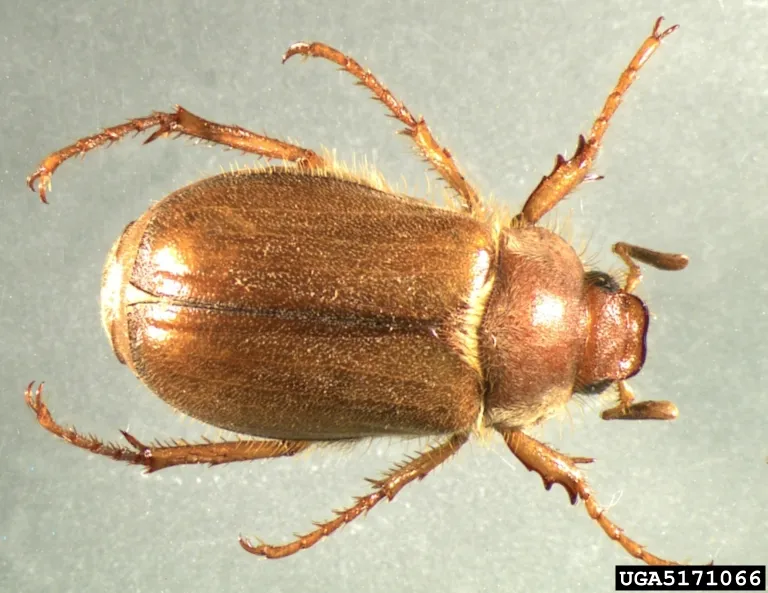
About European Chafer
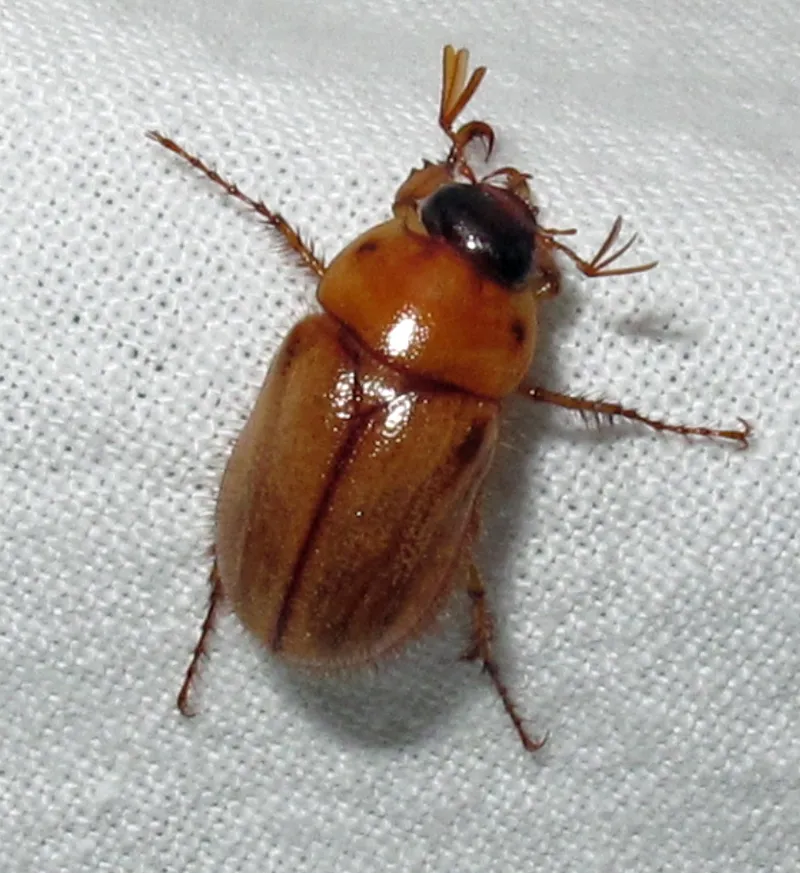
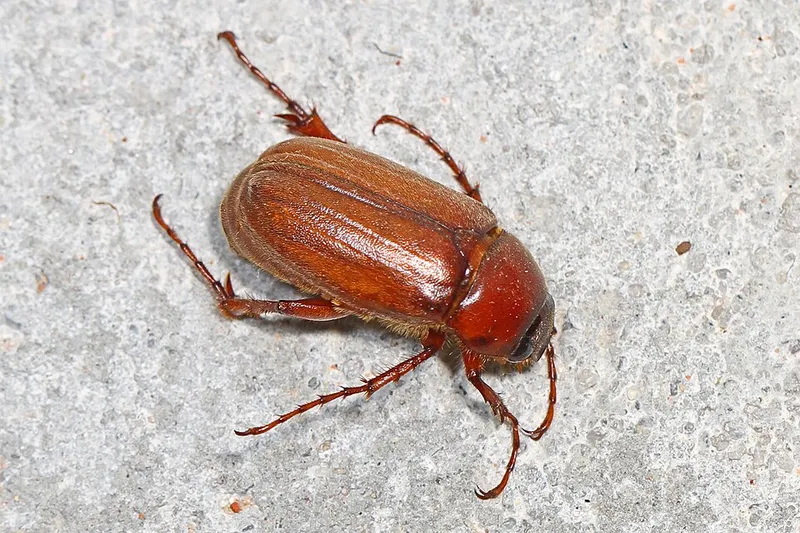
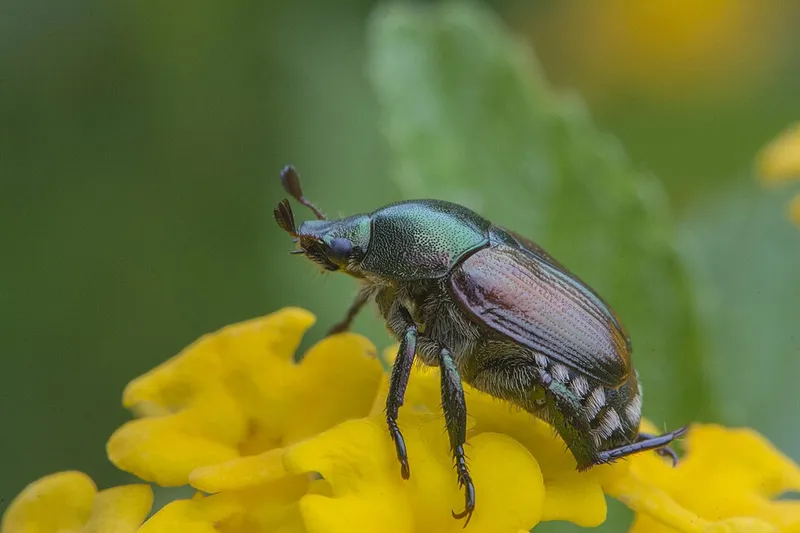
The European Chafer (Amphimallon majale) is an introduced scarab beetle that has expanded steadily across the eastern United States since its accidental arrival in New York in the 1940s. Adults are small to medium-sized, tan-brown beetles, slightly smaller than a Japanese beetle and lacking the metallic coloration. Unlike masked chafers, European chafer adults swarm visibly in midsummer, large mating aggregations form in tree canopies at dusk from late June through July, which is a distinctive identification cue you won't see with native white grub species. In Middle Tennessee, population pressure from this species is lighter than in the Northeast, but it has been documented moving south and is worth knowing.
The larval stage follows the same one-year white grub pattern as all scarab beetles: eggs laid in summer, young grubs feeding on organic matter through late summer, root-feeding damage intensifying in August and September as second and third instar larvae work through the root zone of fescue lawns. Damage is identical to any other white grub, irregular brown patches, turf that peels back at the soil line, and spongy footing. European chafer larvae are distinguishable from masked chafer larvae by the raster pattern, the arrangement of spines on the underside of the last abdominal segment, but for treatment purposes, species identification below the genus level doesn't change your approach.
In my service corridor from Columbia to Brentwood, European chafer is not the grub species I expect to find most often when I pull back damaged sod. Masked chafers and June bug larvae are more common here. But that doesn't matter, because the prevention chemistry I use covers all of them. Chlorantraniliprole applied in May targets any insect that feeds on turf roots or shoots regardless of genus. The timing is critical, you need the chemistry in the plant before eggs hatch in midsummer. If you're waiting until you see damage in August, you are dealing with large third-instar grubs that have already destroyed significant root mass, and at that stage your options are limited and your results will be poor.
European chafer is a secondary concern in Middle Tennessee right now, but grub pressure from the collective scarab community, European chafer, masked chafer, June bug, Japanese beetle, is real and consistent every year. The preventive standard-plan application handles all of them.
Quick Facts
- Common Name
- European Chafer
- Scientific Name
- Amphimallon majale
- Category
- Turf Pest
- Region
- Middle Tennessee