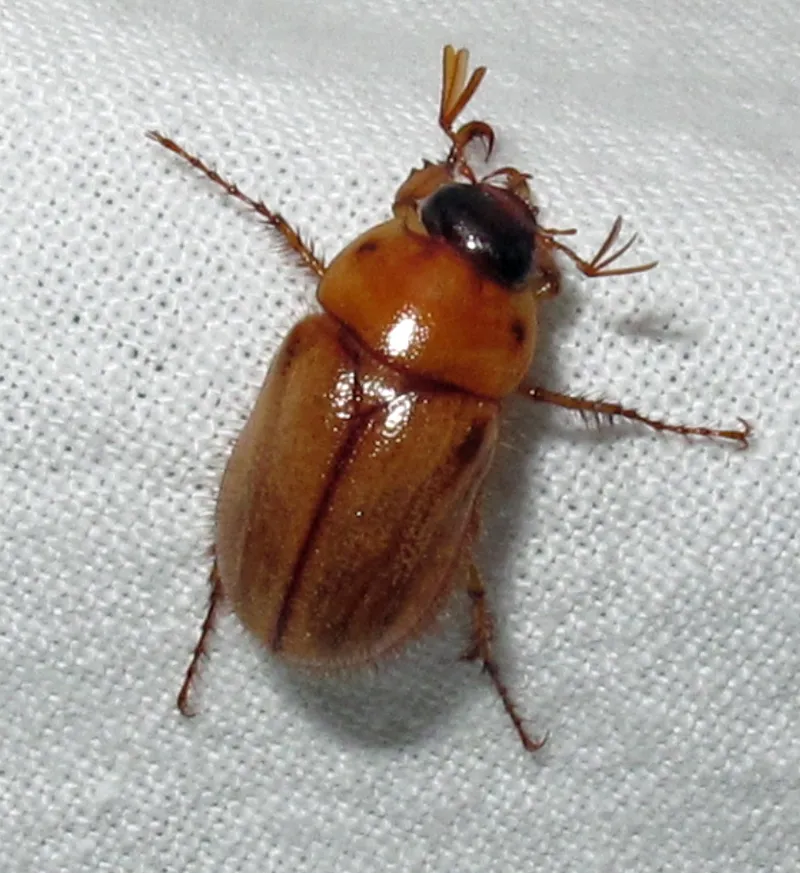
About Masked Chafer
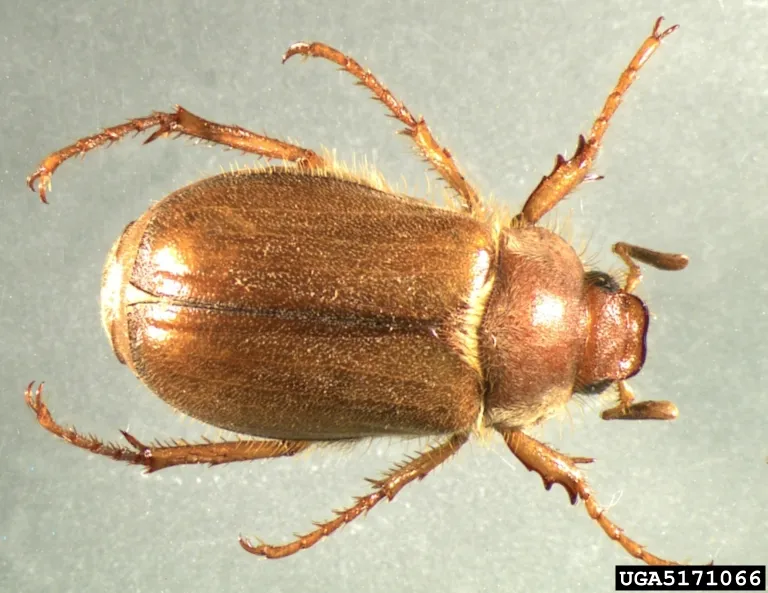
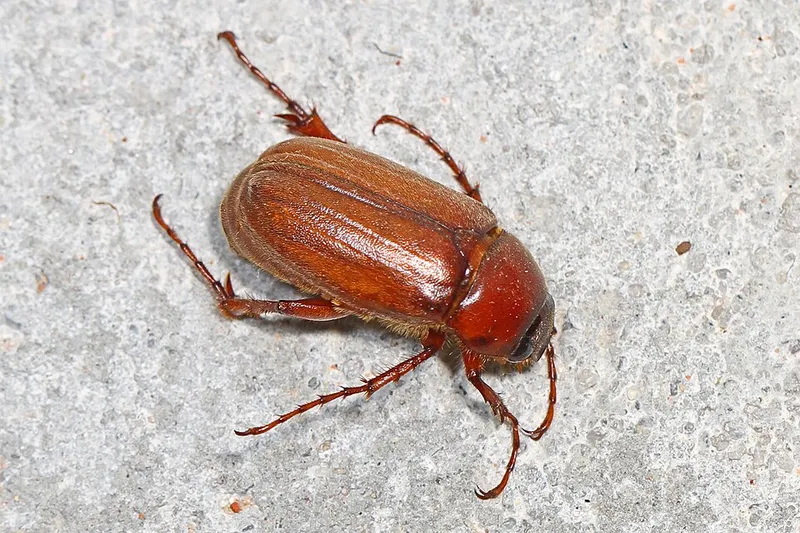
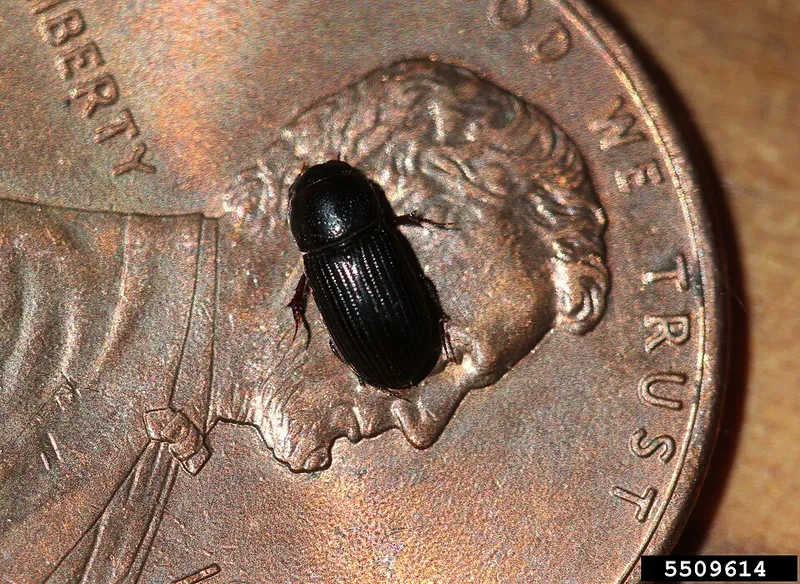
Masked chafers (Cyclocephala spp.) are native scarab beetles whose larvae are among the most common white grubs damaging turfgrass roots in Middle Tennessee. Adults are medium-sized, tan to light brown beetles with a darker brown band across the head, the "mask" that gives them their name. They are nocturnal fliers, strongly attracted to lights in late June and July, which is when you'll see them around porch lights and streetlamps in Columbia, Spring Hill, and Franklin. The beetles themselves cause no turf damage; it's entirely the larval stage that matters.
The lifecycle runs on a reliable one-year cycle. Adults fly and mate in early summer, laying eggs in the top two inches of soil through June and July. By August those eggs have hatched into small C-shaped white grubs feeding on turf roots. They're creamy white with a tan head capsule and three pairs of legs near the head. Grub feeding peaks in August and September when the larvae are in their second and third instars, large enough to sever root systems at meaningful scale. Damage shows up as irregular brown patches that feel spongy underfoot and peel back easily because the root system is destroyed. By October, grubs move deeper into the soil to overwinter, emerging again in spring before pupating.
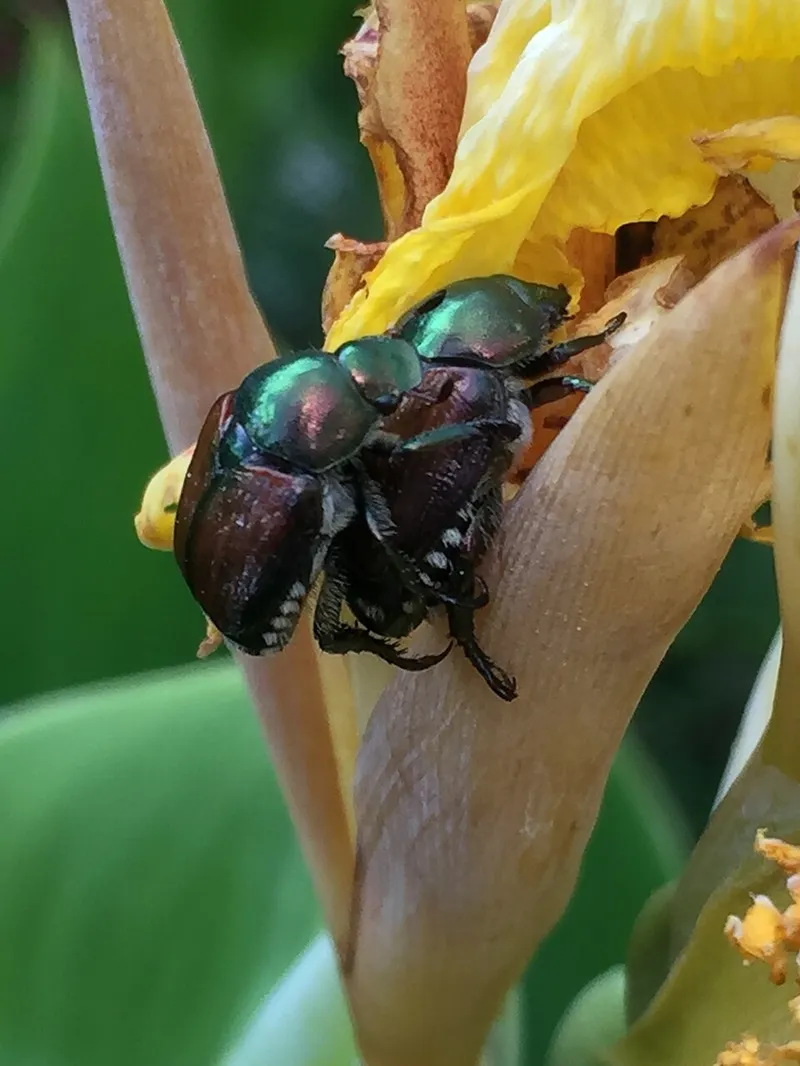
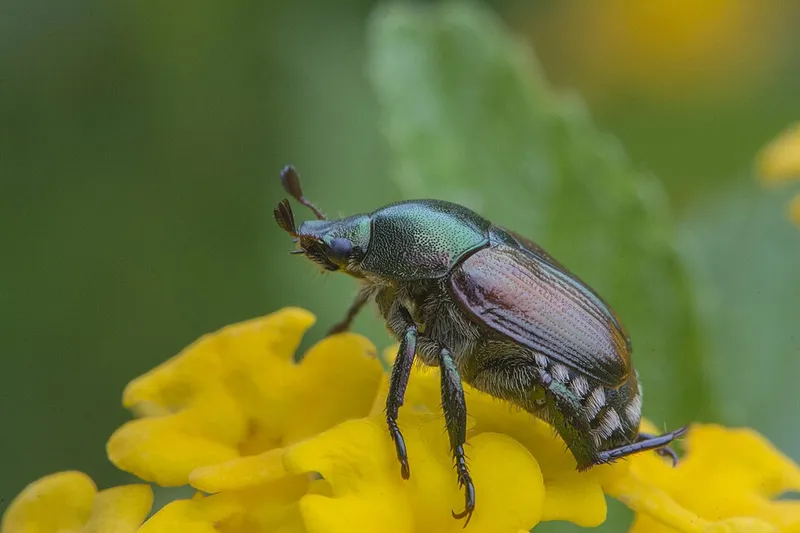
In Middle Tennessee's transition zone, masked chafers share lawns with other scarab species, including Japanese beetle larvae and June bug larvae, and all of them feed identically on fescue roots. The symptom is the same regardless of which species you're dealing with, the turf peels like a carpet. If you're seeing that damage in August or September, you've waited too long.
The key with any grub species, masked chafers included, is preventive timing. I apply chlorantraniliprole as a standard part of the treatment plan, typically in May before the eggs are even in the ground. That chemistry is systemic, it moves into the plant tissue and kills any insect that feeds on the roots, and it remains active in the soil for months. By the time grub eggs hatch in midsummer, the root zone is already protected. An important side benefit: the persistence of chlorantraniliprole means you actually carry some residual coverage into the following year from the prior application. That's the compounding effect of staying on the plan long-term. Rescue treatments with contact insecticides are far less effective once grubs are in their third instar, and products like Dylox that work at that late stage are not something I'm willing to put on a lawn.
Quick Facts
- Common Name
- Masked Chafer
- Scientific Name
- Cyclocephala spp.
- Category
- Turf Pest
- Region
- Middle Tennessee