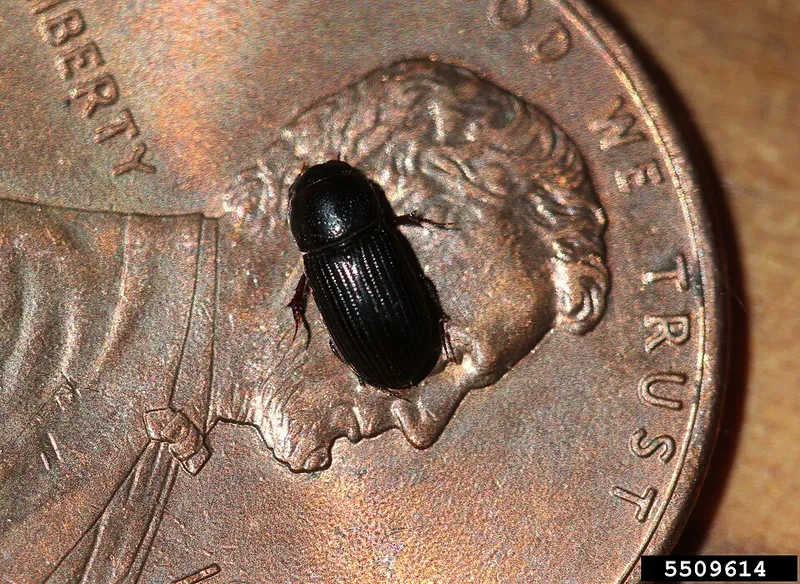
About Black Turfgrass Ataenius
Black Turfgrass Ataenius (Ataenius spretulus) is one of the smallest turfgrass-damaging scarab beetles in North America, adults are only about three-sixteenths of an inch long, shiny black, and easily missed during a standard lawn inspection. Most homeowners who see them assume they're just a harmless soil beetle. The larvae are also white grubs, but far smaller than Japanese beetle or June bug grubs: roughly a quarter inch at maturity. What distinguishes this species from most other turf scarabs is the potential for two generations per year in the mid-South, which means root damage can occur in both late spring and late summer rather than just the typical mid-to-late summer window.
Adults overwinter in leaf litter and woodland edges, becoming active in early spring when soil temperatures rise. The first generation lays eggs in April and May; larvae feed on roots through late spring and into early summer. A second flight occurs in midsummer, producing a second generation of root-feeding grubs that damage turf in late summer. Because the larvae are small, individual feeding impact per grub is lower than for Japanese beetle grubs, but population densities can be high, particularly on well-maintained, frequently irrigated turf, and at sufficient numbers the combined root feeding is significant. Thinning, yellowing turf in late spring that doesn't match a disease or drought pattern is one cue to dig and look for this species specifically.
In my service area from Columbia to Nolensville, black turfgrass ataenius is not the white grub species I encounter most frequently on residential fescue lawns. It tends to be more associated with intensively managed turf like golf course fairways and sports fields where irrigation and close mowing create favorable habitat. But it can and does show up in residential yards, particularly those that back up to wooded areas providing adult overwintering habitat.
For control, the preventive chlorantraniliprole application I include in the standard treatment plan in May addresses this species along with all other scarab grubs. The chemistry is systemic, enters the plant tissue, and is present in the root zone when first-generation larvae hatch. The dual-generation potential of Ataenius spretulus is another reason the persistent, season-long residual of chlorantraniliprole is valuable, it doesn't wear off after the first grub flight.
Quick Facts
- Common Name
- Black Turfgrass Ataenius
- Scientific Name
- Ataenius spretulus
- Category
- Turf Pest
- Region
- Middle Tennessee