About Bermudagrass mite
The Bermudagrass Mite (Eriophyes cynodoniensis) is a microscopic eriophyid mite, so small it cannot be seen with the naked eye, that lives and feeds inside the tightly folded leaf sheaths of bermudagrass stems. At roughly 200 microns in length, it is detectable only under magnification, which means most homeowners never know the mite is present; they only see the damage. Eriophyes cynodoniensis is host-specific to bermudagrass and closely related grasses. It does not affect tall fescue.
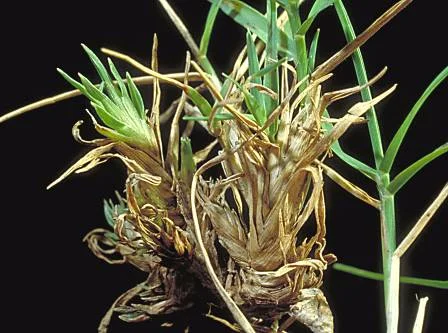
Feeding by large mite populations causes a distinctive symptom called "witches' broom" or "strawberry crown", the internodes shorten dramatically, leaves become small and distorted, and stems proliferate in tight rosette-like tufts at the growing tips rather than extending normally. Affected areas develop a stunted, tufted texture, and in severe infestations the lawn develops a rough, patchy appearance with areas that fail to grow in normally after mowing. Infestations are worst during hot, dry periods, particularly along south-facing edges, driveways, and areas with heat-reflecting hardscapes, exactly the conditions common in boulevard strips and driveway margins throughout Middle Tennessee.
Bermudagrass mite populations spread plant-to-plant through mowing (mower decks carrying infested clippings), physical contact between adjacent plants, and wind movement. Once established in a lawn, complete eradication is difficult; management focuses on suppression. Miticides labeled for turfgrass use, including products containing abamectin or bifenazate, can reduce populations significantly. Multiple applications are typically needed because no miticide penetrates inside the tightly folded leaf sheaths where eggs and nymphs shelter. Adequate irrigation during dry periods reduces stress-amplified damage, since drought-stressed bermudagrass sustains more damage per mite than healthy, actively growing turf.
For homeowners in my Columbia-to-Brentwood service area who are managing bermudagrass as their primary lawn, as opposed to fescue homeowners fighting bermuda as an invader, this mite is a legitimate management concern during hot summers. If your bermudagrass looks stunted and tufted rather than spreading smoothly after July, bermudagrass mite is on the short list of causes alongside drought and nutrient deficiency. The standard fescue treatment plan does not include miticide applications; bermudagrass mite control on dedicated bermuda lawns is handled as a separate service conversation.
Quick Facts
- Common Name
- Bermudagrass mite
- Scientific Name
- Eriophyes cynodoniensis
- Category
- Turf Pest
- Region
- Middle Tennessee