About Western Flower Thrips
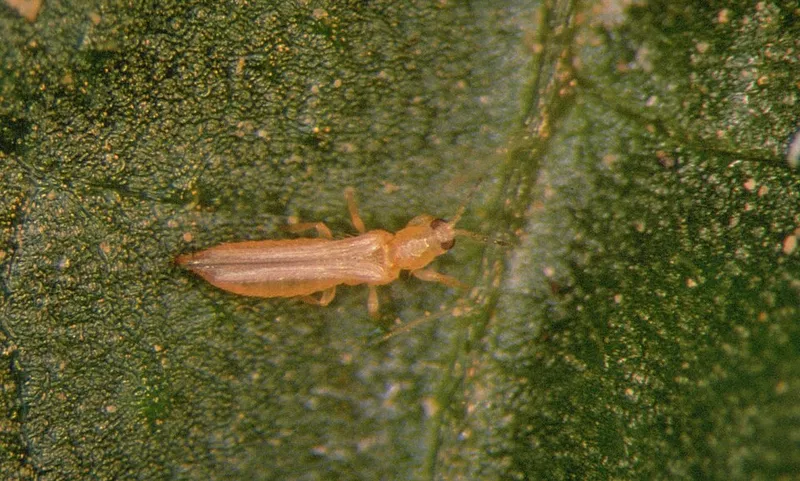
Western Flower Thrips (Frankliniella occidentalis)
Identification: Adults 1-1.5 mm, slender, pale yellow to brownish, with narrow fringed wings visible under magnification. Feeding is confirmed by the combination of flowers showing silver-gray scarring or browning petal margins, and the presence of very small, fast-moving insects within flower tissue when blooms are tapped onto white paper. The eastern flower thrips (F. tritici) is a closely related, morphologically similar species also common in Tennessee; both cause identical damage and are managed identically. F. occidentalis is the more significant pest of greenhouse and nursery stock and is the primary vector of Tomato spotted wilt virus (TSWV), which affects ornamental impatiens, salvia, and many other ornamentals.
Life cycle: Multiple generations per year, 12 or more annually in warm greenhouse conditions, 5-7 in Tennessee outdoor landscapes. Pupation occurs in the soil beneath host plants. Overwinters in plant debris and soil; adults become active in early spring and rapidly colonize flowers. Summer populations peak in June-August. The combination of rapid reproduction, cryptic flower-feeding habitat, and the presence of multiple resistance mechanisms to insecticides makes F. occidentalis among the most challenging thrips species to manage.
Damage signs: Silver-gray streaking or browning on flower petals from feeding punctures. Petals with papery, russeted surfaces. Deformed flowers with necrotic margins. Tiny black fecal specks within flower tissue. TSWV transmission causes concentric ring spots, stunting, and systemic decline on susceptible ornamentals in Tennessee landscapes, particularly impatiens and petunias. Damage is concentrated in flowers and growing tips rather than leaf surfaces, distinguishing thrips from spider mite injury.
Treatment window: At first flower bud appearance in May. Consistent monitoring of flowers with a white paper tap test guides timing. Populations in flower buds are protected from contact insecticides, systemic treatments and soil applications are more effective than foliar sprays alone.
UT-recommended approach: Spinosad applied at first adult detection is the most effective foliar treatment and has a good resistance management profile; rotate with other modes of action (e.g. abamectin) to delay resistance. Systemic imidacloprid at transplant in May provides early-season residual protection. Remove infested crop debris at season end to reduce overwintering soil populations.
Quick Facts
- Common Name
- Western Flower Thrips
- Scientific Name
- Frankliniella occidentalis
- Category
- Landscape Pest
- Region
- Middle Tennessee