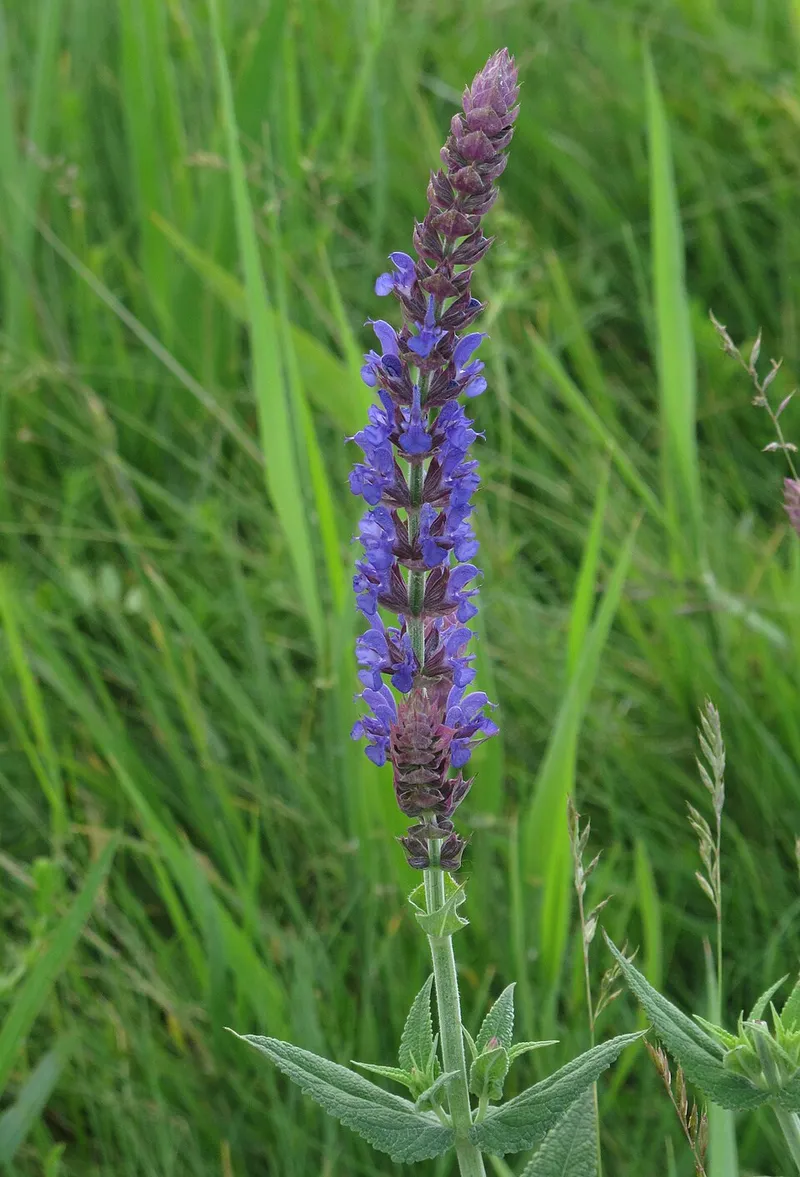
About salvia
Salvia (Salvia nemorosa)
Wood Sage, Woodland Sage, Balkan Clary
Full sun, medium to dry moisture, well-drained loam or sandy loam; does not tolerate wet clay or poorly drained sites, root rot is the primary failure mode in Middle Tennessee.
18-24 inches tall by 18 inches wide; blooms late spring to early summer (May-June in Middle Tennessee) with dense erect spikes of violet-blue to purple flowers; deadheading or shearing after the first flush can trigger a second bloom in late summer; spreads slowly by short rhizomes; drought-tolerant once established.
Native region: Not native to Tennessee; ornamental introduction from central Europe and western Asia.
Popular perennial salvias sold under cultivar names such as 'Caradonna', 'May Night' (Mainacht), and 'East Friesland' (Ostfriesland) are selections of S. nemorosa or hybrids with S. pratensis. These cultivars perform reliably in Middle Tennessee when site drainage is adequate, the critical factor in the heavy clay soils of the Columbia area. Raised beds or slopes are preferred over flat, moisture-retaining clay. Pollinators including bumblebees, long-tongued bees, and hummingbirds work the flowers heavily. Unlike many salvias, S. nemorosa cultivars are hardy through Zone 5 and reliably return after Middle Tennessee winters.
Quick Facts
- Common Name
- salvia
- Scientific Name
- Salvia nemorosa
- Plant Type
- Perennial
- Region
- Middle Tennessee