About Spruce Spider Mite
Spruce Spider Mite
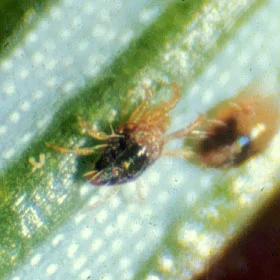
Identification: Oligonychus ununguis, the spruce spider mite, is a cool-season spider mite attacking conifers rather than broadleaved hosts. Adults are dark green to brown, 0.3-0.5 mm. Distinguishing field signs: fine silk webbing at branch tips and needle bases of spruce, juniper, arborvitae, and hemlock; stippled, grayish-brown needles; and inner needle drop progressing from interior branches outward. The cool-season activity pattern (spring and fall peaks, summer collapse) is shared with southern red mite but the host range is entirely different, conifers only.
Life cycle: Cool-season activity with peaks March-May and October-November in Tennessee. Overwinters as red eggs at the base of needles and in bark crevices. Eggs hatch in late February to March when temperatures warm. Populations build through April and May, then crash when summer heat arrives. A fall generation rebuilds on stressed conifers. Arborvitae (Thuja spp.) and juniper (Juniperus spp.) are among the most commonly infested landscape conifers in Middle Tennessee; blue spruce (Picea pungens) is also highly susceptible where planted.
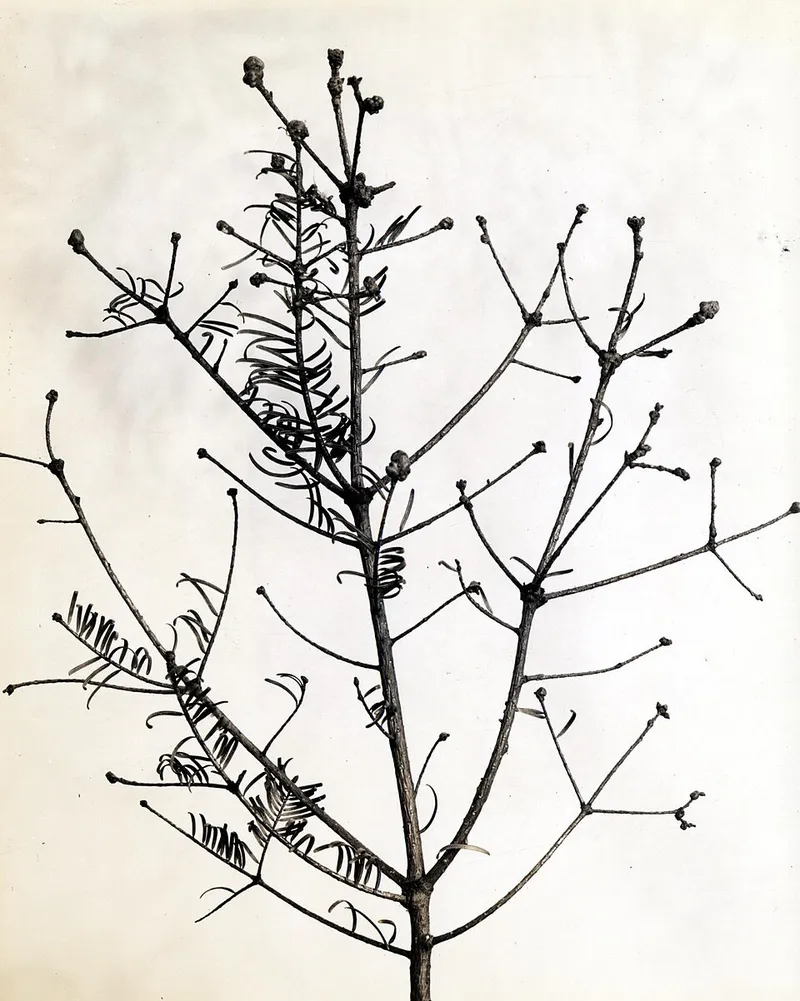
Damage signs: Grayish or yellowish stippling on needles beginning in spring on inner foliage, spreading outward with population increase. Needles turn brown and drop prematurely, creating bare interior zones that do not regenerate on arborvitae. Webbing at branch tips, especially on arborvitae, is visible with close inspection. Established arborvitae screens in the I-65 corridor that show progressive interior browning should be evaluated for spruce spider mite before assuming winter injury or drought stress.
Treatment window: Late February to April targeting the spring generation at egg hatch. October for the fall generation on severely stressed plants.
UT-recommended approach: Dormant oil application in late February or early March, before egg hatch, smothers overwintering eggs effectively on accessible plants. Abamectin or bifenazate at needle stippling appearance targets the spring generation. Avoid drought stress on arborvitae, which dramatically amplifies mite populations and accelerates interior needle drop.
Quick Facts
- Common Name
- Spruce Spider Mite
- Scientific Name
- N/A
- Category
- Landscape Pest
- Region
- Middle Tennessee