About Spotted Lanternfly
Spotted Lanternfly (Lycorma delicatula)
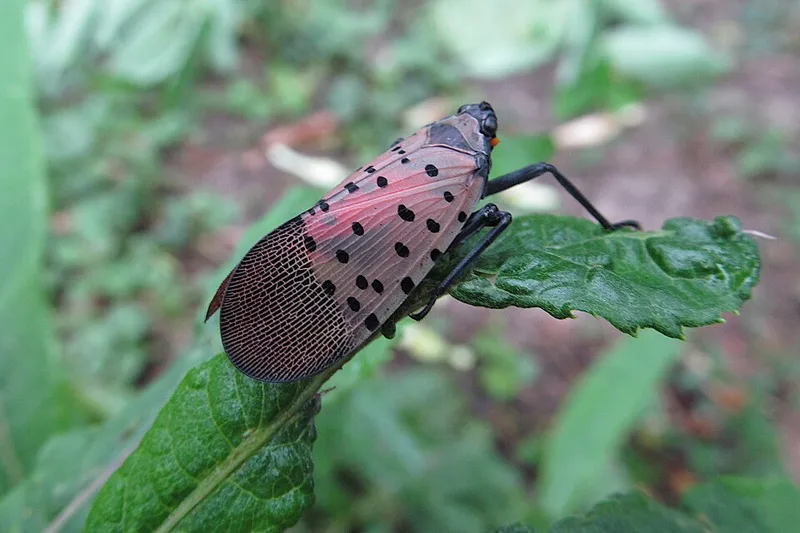
Identification: Lycorma delicatula adults are 25 mm long with distinctive wings: forewing grayish-tan with black spots; hindwing bright red with black spots and white band, visible only in flight. Nymphs progress through four instars, early instars are black with white spots; fourth instar adds red patches. Egg masses are laid in rows of 30-50 eggs covered with a waxy gray mud-like coating, resembling dried mud or putty on tree bark, pavement, or outdoor furniture. Preferred host is tree-of-heaven (Ailanthus altissima), but Lycorma delicatula feeds on 70+ plant species including grape, apple, hops, and stone fruits.
Life cycle: One generation per year. Eggs overwinter under the waxy coating on any flat surface. Nymphs hatch April-May and feed on a wide range of hosts. Fourth-instar nymphs and Lycorma delicatula adults strongly prefer tree-of-heaven but will aggregate on maples, black walnut, sycamore, and fruit trees. The adult stage appears July-November, feeding heavily in late summer and fall, mating, and laying egg masses before frost. Egg masses are the primary dispersal mechanism via transport on vehicles, outdoor equipment, and nursery stock.
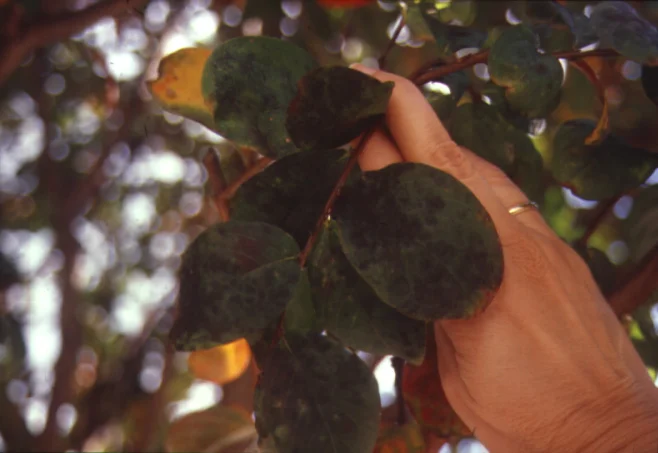
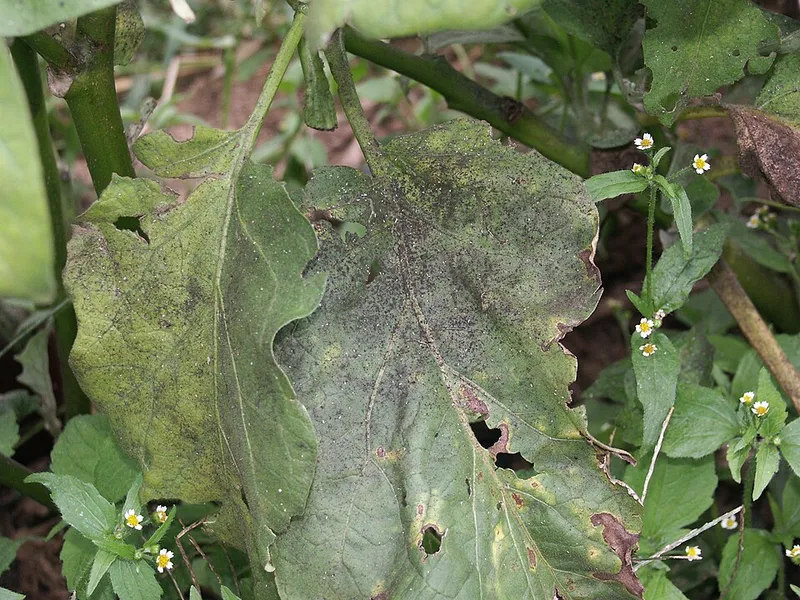
Damage signs: Weeping sap and fermented odor at feeding sites on stems. Sooty mold developing on honeydew deposits below feeding aggregations. Wilting and dieback on grape, hops, and young tree-of-heaven from heavy feeding. Large Lycorma delicatula aggregations on trunks in late summer are a striking visual sign. Tennessee is under a Spotted Lanternfly Watch Area, the pest has been confirmed in adjacent states and spread into Tennessee is considered likely.
Treatment window: Egg masses can be scraped and destroyed from fall through May before hatch. Nymphs treated May-June when young and susceptible. The adult stage is treated July through October during feeding aggregations.
UT-recommended approach: Scrape and destroy egg masses from vehicles, outdoor furniture, and tree bark during fall through spring. Remove tree-of-heaven (Ailanthus) from property to eliminate the preferred host that sustains high populations. Contact insecticides (bifenthrin, carbaryl) are effective on nymphs and the adult stage of Lycorma delicatula. Report new sightings to TDA, Tennessee maintains an active monitoring and response program.
Quick Facts
- Common Name
- Spotted Lanternfly
- Scientific Name
- Lycorma delicatula
- Category
- Landscape Pest
- Region
- Middle Tennessee