About Black Walnut
Black Walnut (Juglans nigra)
Eastern Black Walnut
Full sun, medium moisture, prefers deep, fertile, well-drained loam to silt loam; tolerates clay loam; slightly acid to neutral pH 6.0-7.5; drought-tolerant once established.
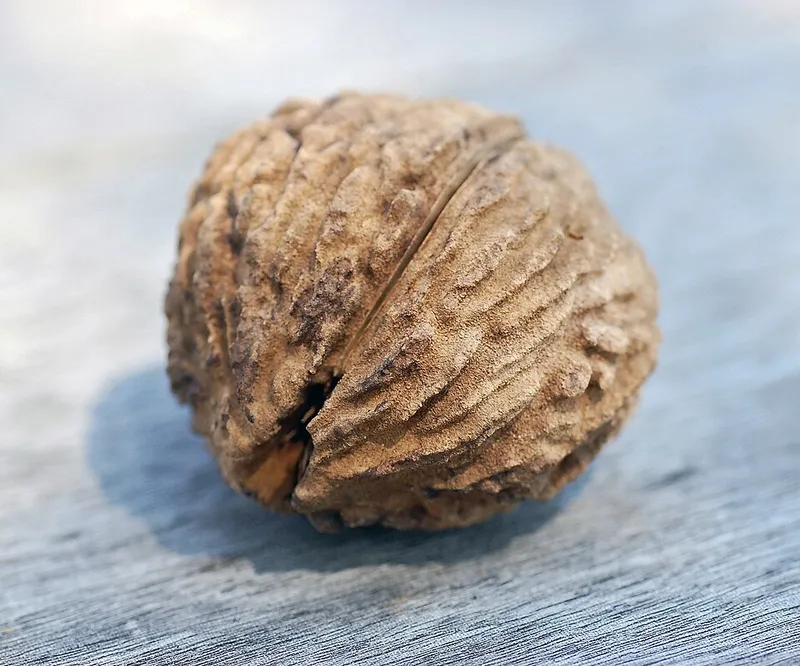
70-90 feet tall by 40-60 feet wide; compound leaves with 15-23 leaflets; yellow-green catkins in spring; round green-husked nuts 4-6 cm diameter, husks staining black on contact, ripening September-October. Growth rate medium to fast. Long-lived at 150-200 years.
Native region: Statewide in Tennessee in rich upland woods, bottomlands, and old farm fields; one of the most characteristic trees of Middle Tennessee's Highland Rim and Central Basin.
J. nigra produces juglone (5-hydroxy-1,4-naphthoquinone) from roots, husks, and leaf litter, which is allelopathic to many common landscape plants including tomatoes, apples, blueberries, rhododendrons, and many perennials, a critical siting consideration in residential landscapes. Juglone-tolerant plants (maples, oaks, most grasses) can be grown within the root zone, which extends well beyond the drip line. The nuts are commercially significant and attract heavy squirrel and deer activity. Thousand cankers disease (Geosmithia morbida + walnut twig beetle Pityophthorus juglandis) is an emerging threat moving eastward through Appalachia; Tennessee populations should be monitored for small cankers coalescing into branch dieback. The dark, rich wood is among the most valuable furniture and veneer timber in North America.
Quick Facts
- Common Name
- Black Walnut
- Scientific Name
- Juglans nigra
- Plant Type
- Tree
- Region
- Middle Tennessee