About Snails
Snails
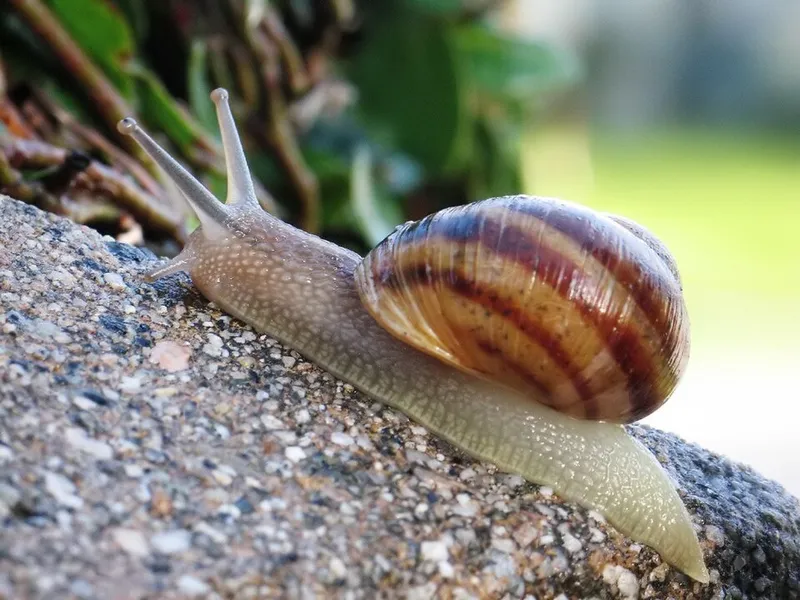
Identification: Terrestrial snails differ from slugs by the presence of a coiled shell, 15-50 mm in diameter depending on species. The brown garden snail (Cornu aspersum, formerly Helix aspersa) is the most common landscape pest species. Snails are easier to detect than slugs because the shell persists even after the animal dies. Like slugs, they leave a dried silver slime trail. They shelter in plant crowns, under debris, and in rock crevices during dry or cold periods and can seal themselves inside the shell and aestivate for weeks under drought conditions.
Life cycle: One to two generations per year in Tennessee. Eggs (round, white, 3 mm) are laid in clusters of 20-80 in moist soil beneath mulch or rocks. Juveniles carry a visible shell from hatching. Maturation requires 1-2 years. Snails are active in wet or humid conditions from late spring through fall and, unlike slugs, are slightly more tolerant of dry conditions due to shell protection. The persistent moisture from Middle Tennessee dew makes nightly feeding periods predictably long from April through October.
Damage signs: Ragged to smooth-edged holes in leaves, particularly on low-growing hostas, sedums, strawberries, and ground-covering perennials. Dried slime trails on plant surfaces and hardscape in early morning. Shell fragments from dead individuals in mulch or at bed edges. Damage pattern is similar to slug injury; the presence of shells or shell fragments confirms snail activity. Dense ivy or pachysandra ground covers provide ideal snail habitat and should be inspected where plant damage is recurring.
Treatment window: April through October during active feeding periods. Evening application of baits maximizes contact with nocturnal foraging adults.
UT-recommended approach: Iron phosphate baits applied in the evening are effective for both snails and slugs and are safe around pets and wildlife. Metaldehyde is an alternative with higher efficacy but requires careful application away from children and pets. Hand collection at night by flashlight is practical in small gardens. Reduce dense ground cover and thick mulch layers that provide daytime shelter. Copper tape and diatomaceous earth barriers protect high-value container plantings.
Quick Facts
- Common Name
- Snails
- Scientific Name
- N/A
- Category
- Landscape Pest
- Region
- Middle Tennessee