About Potato Leafhopper
Potato Leafhopper
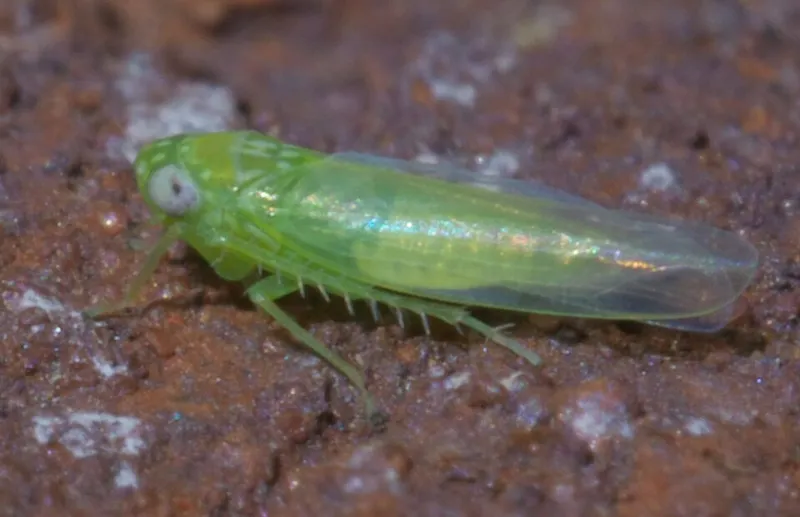
Identification: Empoasca fabae · small, wedge-shaped, 3-3.5 mm, bright green with white spots on the head and thorax. A fast-moving insect that walks sideways and jumps or flies when disturbed. Polyphagous, feeds on a wide range of host plants including beans, potatoes, alfalfa, maple, birch, and many ornamentals. In landscape settings, young maple trees (Acer spp.) and redbud (Cercis canadensis) are commonly damaged hosts in Middle Tennessee.
Life cycle: Does not overwinter in Tennessee, migrates north from Gulf Coast states each spring on southerly winds, arriving in Middle Tennessee in May. Multiple overlapping generations build through summer. Population density fluctuates significantly year to year depending on migration patterns and spring weather. Adults and nymphs are present from late May through October.
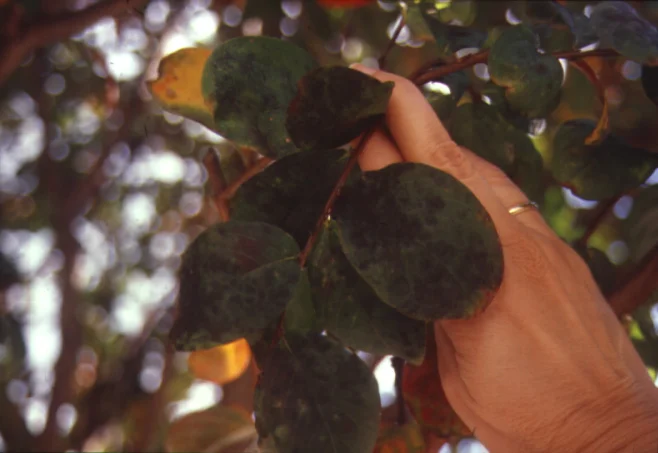
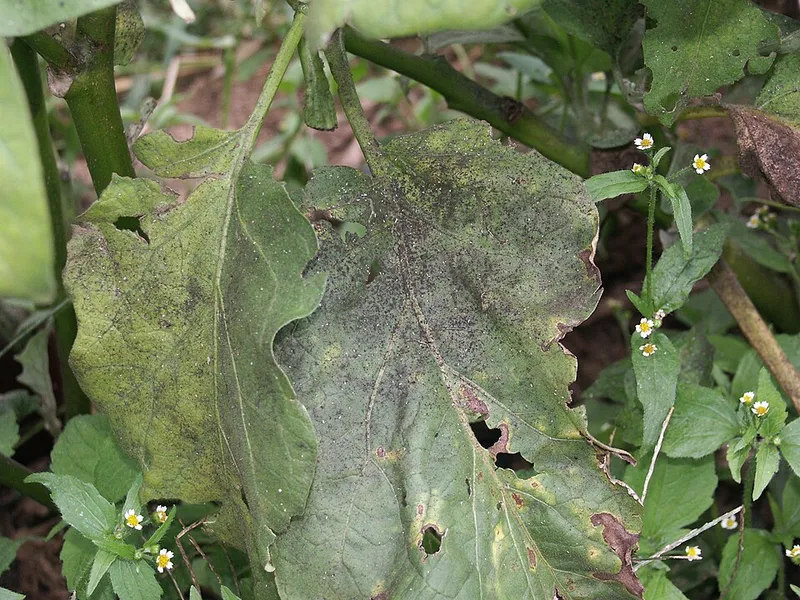
Damage signs: Hopperburn, a distinctive marginal leaf scorch and downward leaf curl caused not by mechanical feeding damage but by a salivary toxin injected during feeding that disrupts phloem transport. Affected leaves show yellow-to-brown margins that progress inward; in severe cases, shoot tips die back. Hopperburn on young maples and redbud in Middle Tennessee is frequently misdiagnosed as drought stress, heat scorch, or chemical injury before leafhopper populations are identified.
Treatment window: Late May through June when first-generation nymphs are present and plant growth is most vulnerable. Treatment becomes less critical on established woody plants after summer shoot elongation hardens off.
UT-recommended approach: Insecticidal soap or pyrethrin targets mobile nymphs and adults. Systemic imidacloprid provides residual protection on high-value young trees for the migration season. On garden vegetables, row cover exclusion from transplant prevents infestation without chemical input. Monitor new growth on young maples for leaf curl symptoms, early detection at the nymph stage is more cost-effective than treating established populations.
Quick Facts
- Common Name
- Potato Leafhopper
- Scientific Name
- N/A
- Category
- Landscape Pest
- Region
- Middle Tennessee