About Melon Aphid
Melon Aphid (Aphis gossypii)
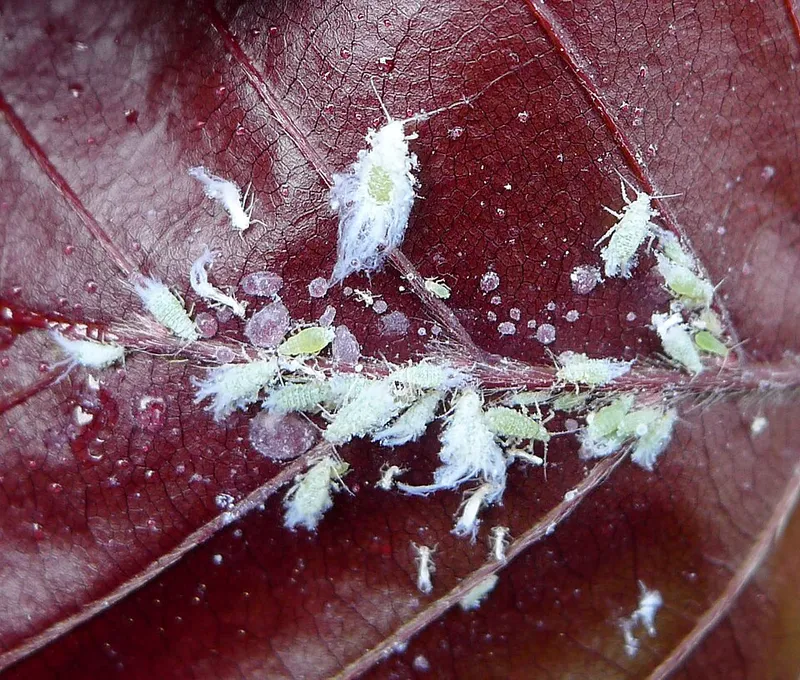
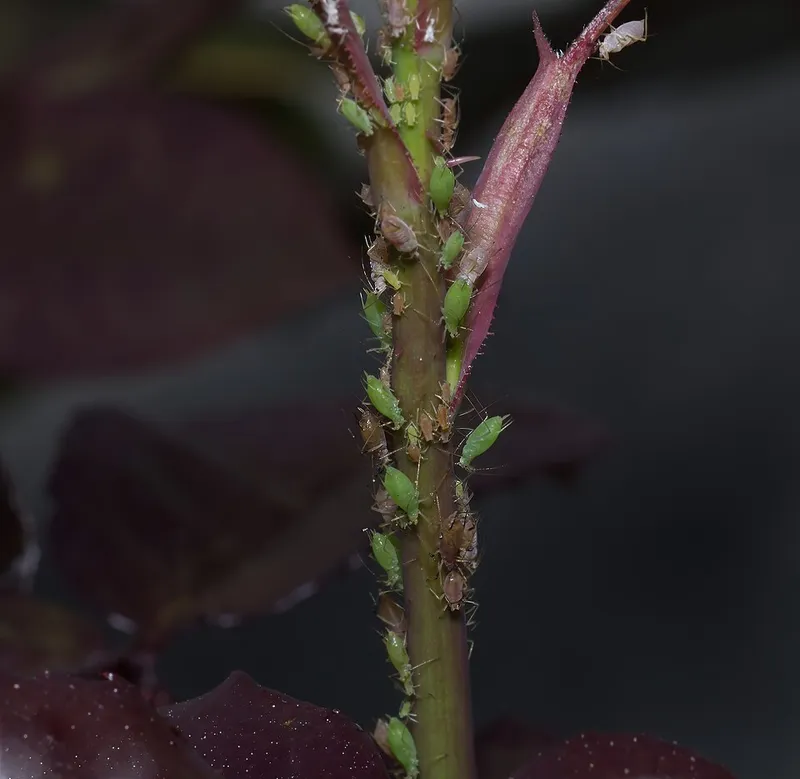
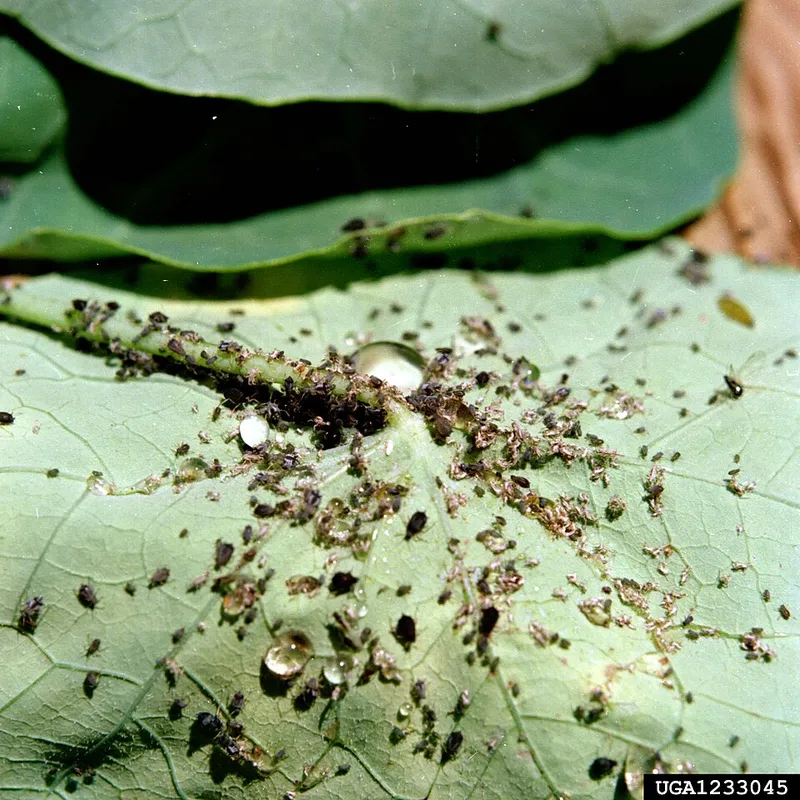
Identification: Adults are highly variable in color, pale yellow, green, or dark green to nearly black, often with multiple color forms present in a single colony. Size 0.9-1.8 mm; cornicles are short, dark, and cylindrical (not swollen as in M. persicae). This variable coloration and small body size are diagnostic. Hosts include hibiscus, crepe myrtle, gardenia, catalpa, and a wide range of ornamental and vegetable plants. A. gossypii is a primary vector of cucumber mosaic virus and other ornamental plant viruses.
Life cycle: No primary overwintering host in Tennessee; overwinters as eggs on buckthorn, mock orange, and rose in the North, but in Middle Tennessee's Zone 6b/7a climate, populations may persist through mild winters on perennial hosts. Viviparous (live-birth) reproduction under warm conditions allows extremely rapid colony formation. Ten or more generations per year in Tennessee summers; peak populations on landscape ornamentals occur June through August. Natural enemies, aphid midges, parasitoid wasps, lady beetles, provide substantial regulation when not disrupted.
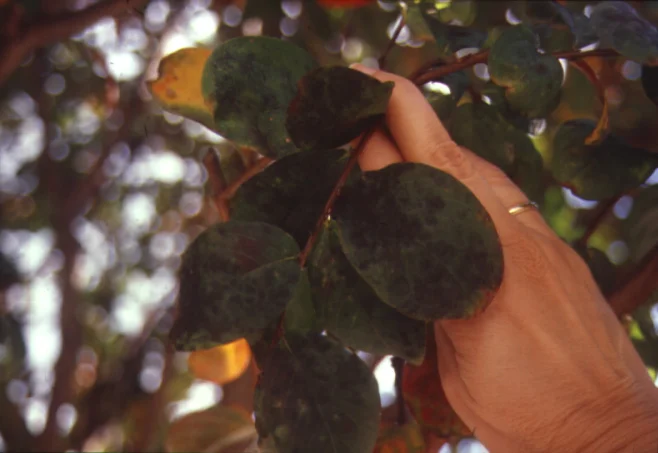
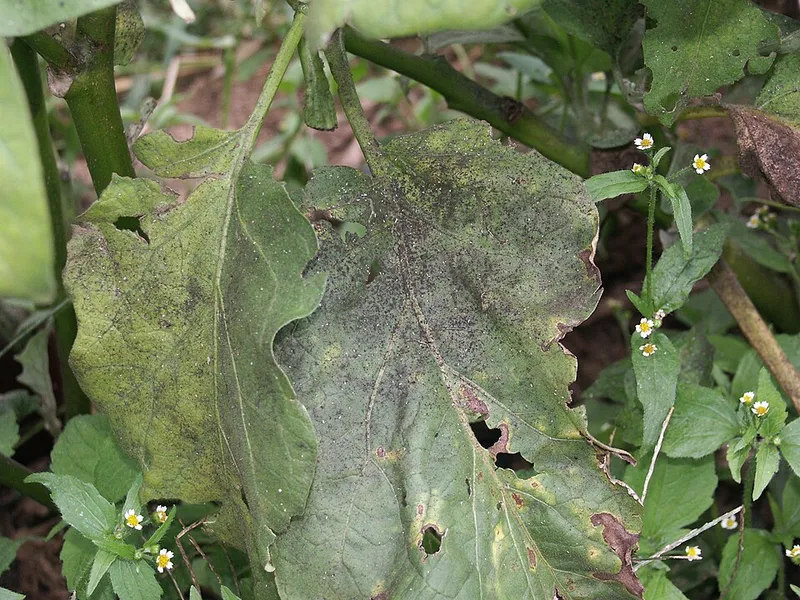
Damage signs: Dense colonies on shoot tips and leaf undersides of hibiscus and crepe myrtle. Curled, cupped, or stunted new leaves. Heavy honeydew deposits with sooty mold accumulation on leaves and hardscape below infested plants. Crepe myrtle (Lagerstroemia spp.) is among the most consistently infested plants in Middle Tennessee landscapes; colonies on crepe myrtle are often conspicuous by midsummer and persist through September. Casual defoliation rarely occurs, aesthetic and sooty mold impact are the primary concerns.
Treatment window: May through August when colonies are building on new growth. Early June intervention on crepe myrtle prevents the sooty mold accumulation that persists well into fall.
UT-recommended approach: Strong water spray from a hose dislodges colonies on accessible plants effectively and preserves natural enemies. Insecticidal soap or neem oil applied to leaf undersides provides knockdown with low natural-enemy impact. Systemic imidacloprid soil drench on crepe myrtle provides season-long residual but should be avoided on plants in bloom due to pollinator exposure risk.
Quick Facts
- Common Name
- Melon Aphid
- Scientific Name
- Aphis gossypii
- Category
- Landscape Pest
- Region
- Middle Tennessee