About Flighted Spongy Moth Complex
Flighted Spongy Moth Complex
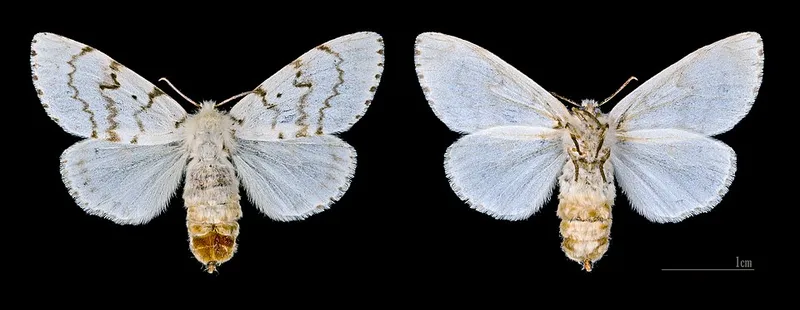
Identification: The flighted spongy moth complex refers to Lymantria dispar japonica and L. dispar asiatica · Asian strains of spongy moth in which females are fully capable of flight, unlike the European strain (L. dispar dispar) established in eastern North America where females are flightless. This distinction is critical for spread risk: flighted females can actively disperse 25-40 km, compared to the passive balloon-dispersal of larvae in the European strain. The Asian strains are not established in the US and are subject to active federal eradication efforts; detections in Tennessee would represent an incipient invasion.
Life cycle: Similar to European spongy moth, one generation per year, overwintering as egg masses. The key biological difference is female flight capability in Asian strains, which dramatically increases the potential invasion radius from a founding population compared to the European strain's slow creeping range expansion.
Damage signs: Identical to European spongy moth, defoliation of oaks, beech, birch, and other broadleafs. Asian strains have a broader host range that includes conifers (Pinus, Larix), which the European strain rarely attacks at economically damaging levels. This broader host range is an additional concern for Tennessee landscapes with significant conifer plantings.
Treatment window: Same as European spongy moth, early-instar larval stage in April. Prevention through inspection of imported goods, shipping containers, and vehicles from infested Asian ports is the primary management strategy.
UT-recommended approach: Inspect shipping containers, vehicles, and outdoor equipment arriving from Asia or Pacific ports for egg masses. Report any suspected spongy moth egg mass on unusual surfaces (shipping containers, vehicles, machinery) to the Tennessee Department of Agriculture. The Asian strain distinction matters primarily for regulatory and eradication response, not for the contact-level landscape management a homeowner would apply.
Quick Facts
- Common Name
- Flighted Spongy Moth Complex
- Scientific Name
- N/A
- Category
- Landscape Pest
- Region
- Middle Tennessee