About Eastern Tent Caterpillar
Eastern Tent Caterpillar (Malacosoma americanum)
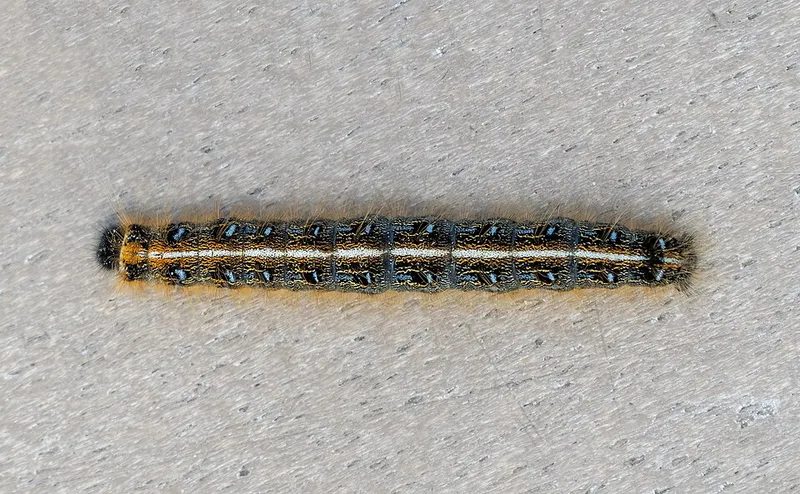
Identification: Larvae are black with a continuous white dorsal stripe and rows of blue and yellow-orange spots along the sides, 50-60 mm at maturity. The communal silk tent constructed at branch forks of host trees, particularly wild cherry (Prunus serotina) and crabapple (Malus spp.), is the primary field sign and one of the most conspicuous early-spring pest signs in Middle Tennessee. Tents expand as larvae grow, reaching 30-40 cm. Adults are reddish-brown moths with two white diagonal stripes on the forewing. Do not confuse with fall webworm (Hyphantria cunea), which builds tents at branch tips in late summer; eastern tent caterpillar tents are at branch forks in spring.
Life cycle: One generation per year. Egg masses overwinter as shiny, dark, hardened bands encircling small twigs of cherry and crabapple, each mass contains 150-350 eggs. Larvae hatch in late March to early April in Middle Tennessee coinciding with bud break. They feed communally from the tent during morning and evening, retreating to the tent midday and overnight. Full-size larvae disperse in May, wandering to pupate in leaf litter, fence rails, and plant debris. Moths emerge in late June-July, mate, and lay eggs on twigs before dying.
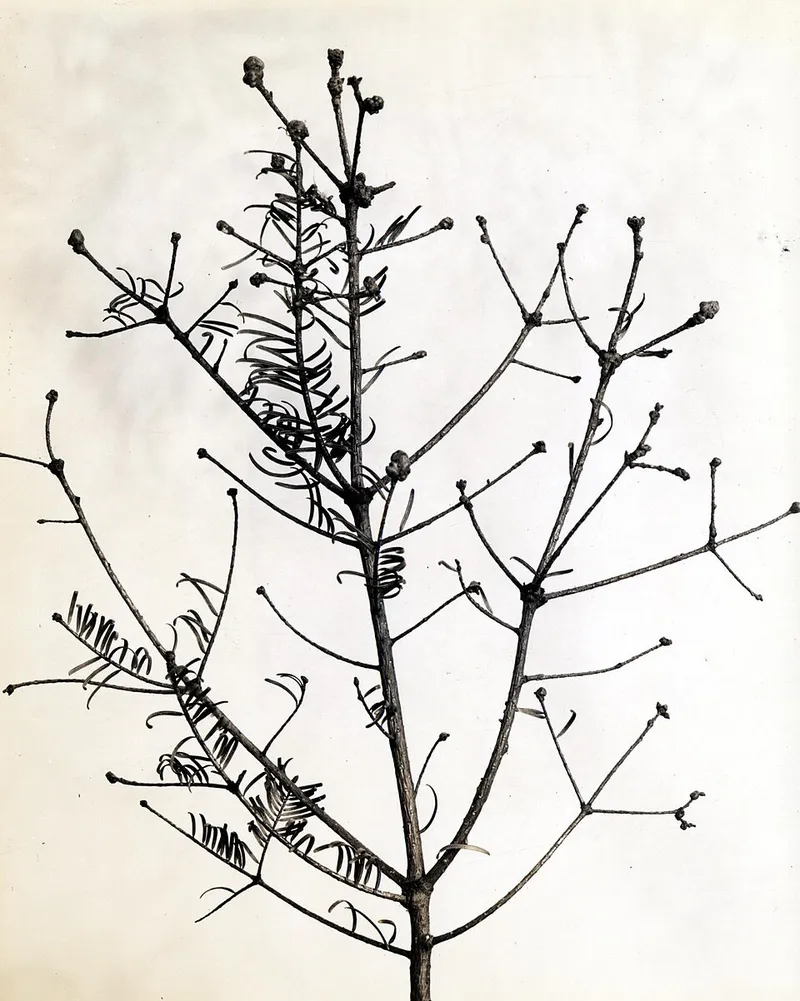
Damage signs: Complete or near-complete defoliation of wild cherry, crabapple, and ornamental plum branches in early spring. Established deciduous trees tolerate one defoliation per season without lasting damage; repeated consecutive-year defoliation weakens trees and may kill young specimens. Tent caterpillar outbreaks are cyclical in Middle Tennessee, with heavy pressure years occurring every 5-10 years when parasitoid populations lag behind host populations.
Treatment window: At egg hatch in late March to early April when larvae are small and the tent is still compact (10 cm or less). Early intervention is far more effective than treating large, mature larvae.
UT-recommended approach: Physical removal of egg masses during winter (bands on small twigs) eliminates the population before hatch. Small tents can be physically removed and destroyed at hatch. Btk (Bacillus thuringiensis var. kurstaki) or spinosad applied at hatch targets early-instar larvae effectively. Large, mature larvae in May are not worth treating, they stop feeding within 2-3 weeks and defoliation is complete; focus instead on scouting for egg masses the following winter.
Quick Facts
- Common Name
- Eastern Tent Caterpillar
- Scientific Name
- Malacosoma americanum
- Category
- Landscape Pest
- Region
- Middle Tennessee