About Brown Marmorated Stink Bug
Brown Marmorated Stink Bug (Halyomorpha halys)
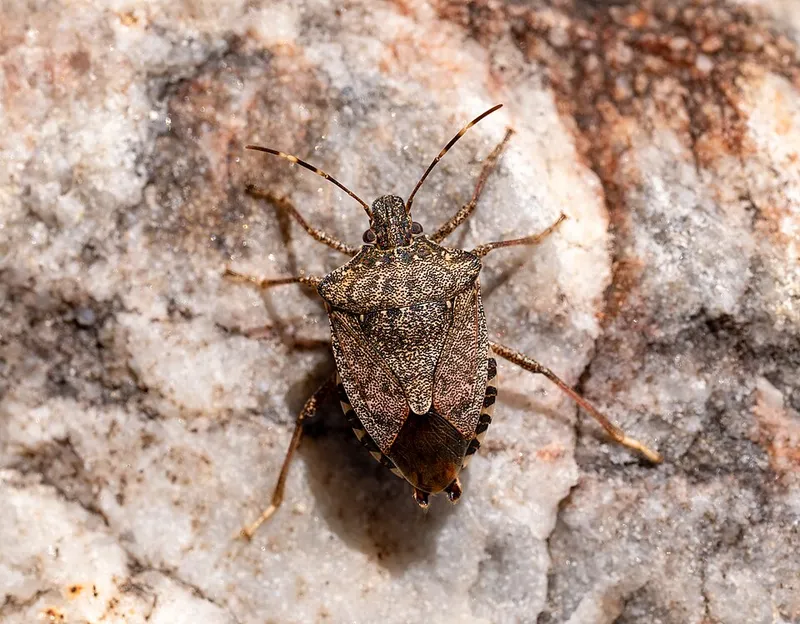
Identification: Shield-shaped, 14-17 mm, mottled brown with alternating light and dark bands on the antennae and abdominal margins. The banded antennae and smooth shoulder margin (vs. toothed in native stink bugs) are the key field marks. An invasive species from Asia first detected in Pennsylvania in the late 1990s; now established throughout Tennessee. Emits a pungent cilantro-like odor from thoracic glands when disturbed.
Life cycle: One generation per year in Tennessee. Overwinters as adults in sheltered sites, attic spaces, wall voids, brush piles, and dense evergreen foliage. Adults emerge from overwintering sites in April-May and begin feeding on host plants. Females lay 20-30 eggs in masses on leaf undersides from June through August. Nymphs develop through five instars; new adults appear by September and begin seeking overwintering sites.
Damage signs: Piercing-sucking feeding on fruit, seeds, and foliage causes cat-facing (distorted, scarred) injury on tree fruit; on landscape ornamentals including tree-of-heaven, catalpa, redbud, and serviceberry, feeding produces stippled, necrotic spots on foliage and fruit. Primarily a nuisance pest in residential landscapes through overwintering aggregation in structures; agricultural damage to peaches, apples, and soybeans in Middle Tennessee is economically significant.
Treatment window: May through August on landscape plants when nymphs and adults are actively feeding. Sealing structure entry points in September-October before overwintering aggregation prevents indoor infestations.
UT-recommended approach: Exclusion (sealing cracks, door sweeps, window screens) is the primary management strategy for structural overwintering. Pyrethroid perimeter treatments in fall reduce entry. On high-value ornamental or fruit plants, kaolin clay and pyrethroid applications reduce feeding damage. Avoid broad chemical landscape treatments, the pest's high mobility and reinvasion rate make sustained chemical suppression impractical in residential settings.
Quick Facts
- Common Name
- Brown Marmorated Stink Bug
- Scientific Name
- Halyomorpha halys
- Category
- Landscape Pest
- Region
- Middle Tennessee