About Serviceberry
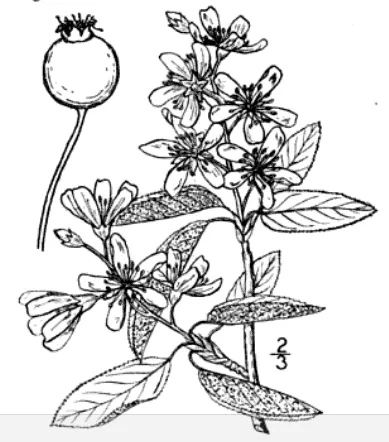
Serviceberry (Amelanchier arborea)
Juneberry, Downy Serviceberry, Shadbush
Full sun to light shade, medium to moderately dry moisture, tolerates clay and loam, pH 4.5-7.0.
15-25 feet tall by 15-25 feet wide; white flowers in drooping racemes in March-April before leaf-out; fruit is a small pome 6-10 mm diameter, ripening red to dark purple in June. Growth rate slow to medium.
Seed germination code C (cold stratification, 60-90 days); propagation also possible from softwood cuttings.
Native region: Statewide in Tennessee, frequent on dry woodland slopes, bluffs, and woodland edges; one of the earliest-blooming native trees in Middle Tennessee.
Amelanchier arborea is among the most wildlife-valuable small trees in eastern North America, the June fruit is consumed by over 40 bird species including eastern bluebird, cedar waxwing, and wood thrush, as well as white-tailed deer and black bear. The fruit is also edible for humans, tasting similar to a mild blueberry. In Middle Tennessee landscapes, serviceberry fits well in woodland edges and under taller canopy where it receives some afternoon shade; full hot sun on dry clay sites leads to summer leaf scorch. Cedar-quince rust (Gymnosporangium clavipes) can cause orange pustular spots on fruit and leaves in years following wet springs, especially near eastern red cedar (Juniperus virginiana). Susceptibility to borers increases under drought or mechanical damage stress.
Quick Facts
- Common Name
- Serviceberry
- Scientific Name
- Amelanchier arborea
- Plant Type
- Tree
- Region
- Middle Tennessee