About Azalea
Azalea (Rhododendron spp.)
Azalea
Part shade to filtered sun; moist, well-drained, acidic soil essential; pH 4.5-6.0; intolerant of alkaline or compacted clay without amendment.
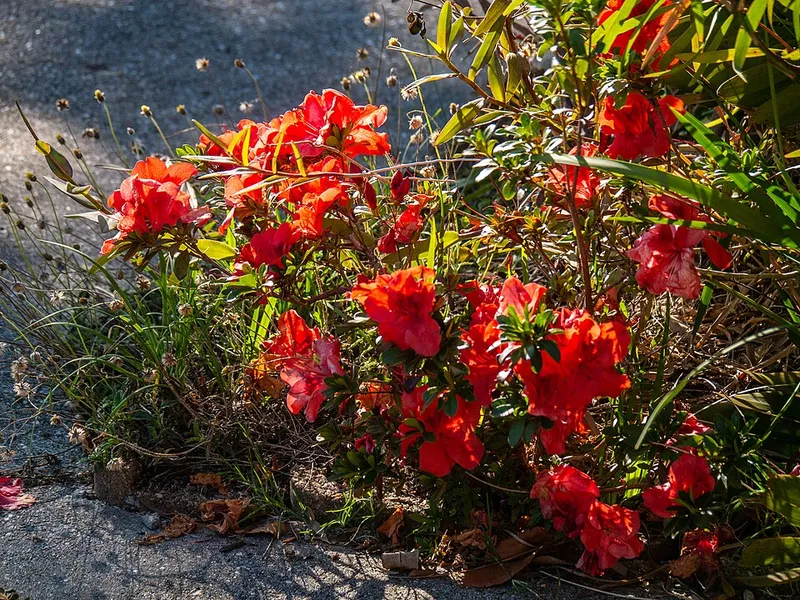
3-8 feet tall and wide depending on species and cultivar; deciduous or evergreen; blooms March-May (exact timing varies by cultivar) with funnel-shaped flowers in white, pink, red, orange, or purple; spreads slowly by natural layering.
Propagation: softwood cuttings in June-July under mist; slow to root (6-10 weeks); most homeowners purchase container-grown plants.
Native region: Several native species occur in Tennessee, including Rhododendron canescens (Piedmont azalea) in Middle TN woodland edges; most landscape azaleas are Asian introductions or hybrids.
Azaleas are among the most pH-sensitive shrubs in Middle Tennessee landscapes. The limestone-derived soils common through Maury County tend toward neutral or slightly alkaline pH (6.5-7.5), which causes iron chlorosis, interveinal yellowing on new growth, in azaleas not sited in amended beds or containers with acidified soil. Applying sulfur or acidifying fertilizers corrects pH over time, but results are slow in alkaline parent material. Root rot (Phytophthora cinnamomi) is the most common cause of sudden plant death and is almost always associated with poor drainage; planting on slight mounds or in raised beds is the most reliable prevention. Azalea lace bugs (Stephanitis pyrioides) cause stippled, gray-bleached foliage from June onward, a persistent pest in Tennessee that typically requires 2-3 insecticidal soap or spinosad applications per season to manage.
Quick Facts
- Common Name
- Azalea
- Scientific Name
- Rhododendron spp.
- Plant Type
- Shrub
- Region
- Middle Tennessee