About Asian Longhorned Beetle
Asian Longhorned Beetle (Anoplophora glabripennis)
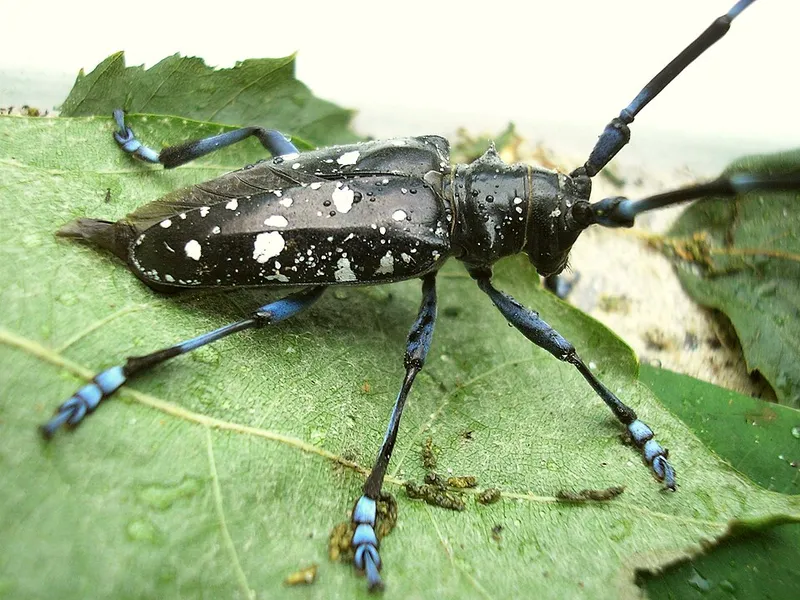
Identification: Adults are large, 20-35 mm, with a distinctive black body covered in irregular white spots and extremely long, banded black-and-white antennae (often longer than the body). Round exit holes (9-12 mm diameter) are the primary field sign, noticeably larger and perfectly circular compared to the D-shaped holes of emerald ash borer. Larvae are large, cream-colored, legless borers feeding deep in heartwood. A federally regulated quarantine pest; confirmed sightings must be reported to USDA APHIS immediately.
Life cycle: One generation per year or one per two years depending on temperature. Adults emerge June through October, feeding on twigs and leaf petioles before ovipositing. Females chew oval pits in bark and insert one egg per pit. Larvae bore through the cambium into heartwood, creating large oval galleries. Overwinters as larvae deep in wood. Full larval development takes 1-2 years before pupation in the sapwood near the exit tunnel.
Damage signs: Round exit holes (9-12 mm) with sawdust-like frass at the base of the tree or on branches. Weeping sap or resin at oviposition pits. Branch dieback and structural weakening from deep heartwood galleries. Hosts include maple (Acer spp.), elm, birch, willow, and poplar, sugar and Norway maples are especially susceptible. Established trees of any size can be killed. Tennessee is currently outside established populations but the pest has spread from northeastern US into adjacent states.
Treatment window: No chemical treatment is approved for active infestations under USDA protocols, infested trees must be chipped and destroyed. Prevention focuses on not moving firewood from infested areas into Middle Tennessee.
UT-recommended approach: Report suspected sightings to TDA or USDA APHIS rather than treating. There is no effective chemical management once infestation is confirmed. High-value maple specimens in the I-65 corridor should be inspected annually for round exit holes, particularly on trunks and major scaffold branches where the beetle preferentially oviposits.
Quick Facts
- Common Name
- Asian Longhorned Beetle
- Scientific Name
- Anoplophora glabripennis
- Category
- Landscape Pest
- Region
- Middle Tennessee