About Western Arborvitae
Western Arborvitae (Thuja plicata)
Giant Arborvitae, Western Red Cedar
Full to part sun, moist to well-drained, prefers deep fertile loam but tolerates clay with adequate moisture, pH 5.0-7.5; more drought-tolerant and heat-tolerant than T. occidentalis.
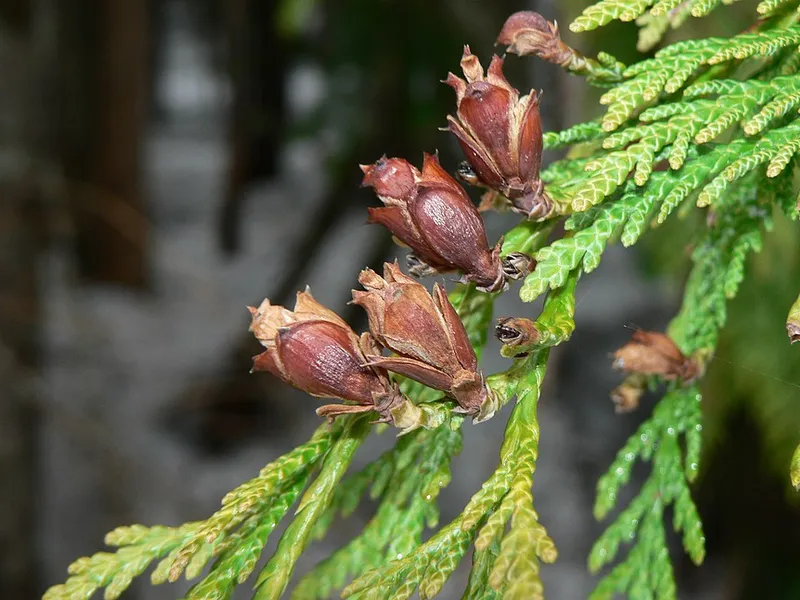
50-70 feet tall by 15-25 feet wide (species form); scale-like, glossy dark-green foliage in flattened sprays with a sweet, resinous scent when crushed; small oblong cones 10-15 mm. Growth rate medium to fast. Significant cultivar variation in size and form.
Native region: Not native to Tennessee; native to the Pacific Northwest. Planted as an ornamental screen in Middle Tennessee.
Distinct from T. occidentalis by its glossier, more pliable foliage, stronger resinous scent, and significantly better heat and humidity tolerance, qualities that make it the superior choice for Middle Tennessee screening applications over eastern arborvitae. In Columbia-area landscapes, T. plicata cultivars such as 'Green Giant' have largely replaced T. occidentalis for tall privacy screens because of faster growth rates (up to 3 feet per year under optimal conditions) and lower bagworm pressure. Bagworms still attack this species but with somewhat less frequency than occidentalis; monitor and treat at larval emergence. Deer browse is reduced compared to occidentalis due to the resinous foliage chemistry. Phytophthora root rot can develop on poorly drained sites.
Quick Facts
- Common Name
- Western Arborvitae
- Scientific Name
- Thuja plicata
- Plant Type
- Tree
- Region
- Middle Tennessee