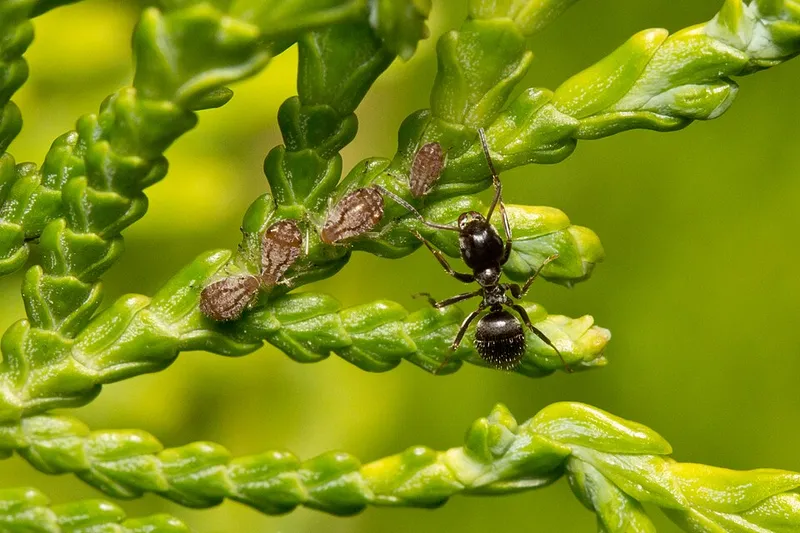
About Eastern Arborvitae
Eastern Arborvitae (Thuja occidentalis)
American Arborvitae, Northern White Cedar
Full to part sun, moist to wet, prefers fertile loam to clay loam with consistent moisture, pH 5.5-7.5; tolerates poorly drained soils better than most conifers.
40-60 feet tall by 10-15 feet wide (species form); many cultivars range from 3 feet ('Hetz Midget') to 30 feet ('Emerald Green'); scale-like foliage in flattened sprays; small oblong cones 8-12 mm. Growth rate slow to medium depending on cultivar.
Native region: Not native to Middle Tennessee at lower elevations; native range is northern boreal forests and the Great Lakes region. Planted widely as an ornamental and screen plant statewide.
This is the most commonly planted screening conifer in Middle Tennessee residential landscapes, but it is at the southern edge of its comfort zone in Zone 6b/7a. The primary failure modes here are summer heat stress, bagworm defoliation, and spider mite injury during hot, dry spells. Bagworms (Thyridopteryx ephemeraeformis) are the single greatest threat, a single undetected season can kill an established screen in a row of arborvitae; early summer monitoring and Bt (Bacillus thuringiensis) applications at larval emergence are essential. Deer browse foliage heavily in winter, often stripping lower branches to browse height. Thuja plicata (western arborvitae) outperforms this species in heat and pest pressure for Middle Tennessee applications.
Quick Facts
- Common Name
- Eastern Arborvitae
- Scientific Name
- Thuja occidentalis
- Plant Type
- Tree
- Region
- Middle Tennessee